Maharashtra Cabinet clears PPP Policy 2026 amendments to fast-track infrastructure
Synopsis
Maharashtra's Cabinet has overhauled its PPP Policy 2026 with 11 targeted amendments — trimming one layer of bureaucratic scrutiny, introducing a ₹200 crore VGF allocation, and adding a brand-new asset monetisation clause. The changes are tethered to the 'Viksit Maharashtra @ 2047' vision and signal a shift toward a more institutionalised, fast-track infrastructure model.
Key Takeaways
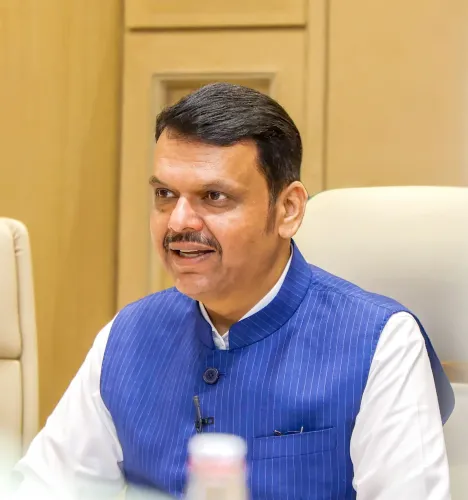
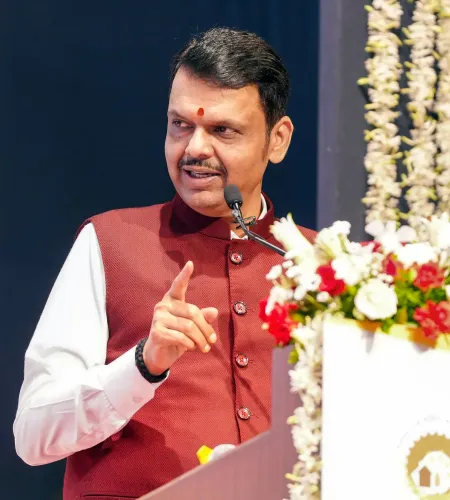
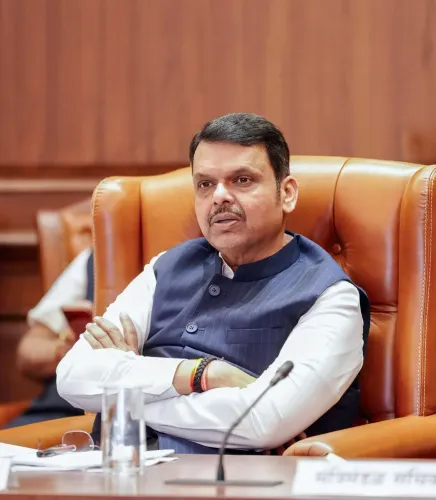
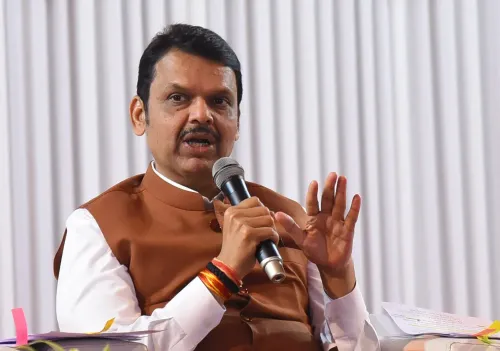
Maharashtra Cabinet approved 11 amendments to the PPP Policy 2026 on 27 October 2026 , chaired by CM Devendra Fadnavis .
A Viability Gap Funding (VGF) allocation of ₹200 crore has been provisioned for FY 2026–27 .
One tier of scrutiny by the Network Planning Group on in-principle approvals has been removed to reduce delays.
Projects up to ₹25 crore go to the Empowered Committee ; projects at ₹25 crore and above require Cabinet Infrastructure Committee approval.
A new Asset Monetisation clause (Clause 13) has been introduced to unlock revenue from non-commercially-viable public assets.
The framework is anchored on the 'Viksit Maharashtra @ 2047' vision document.
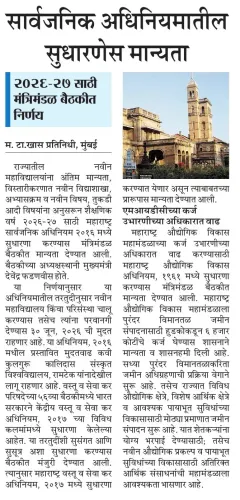
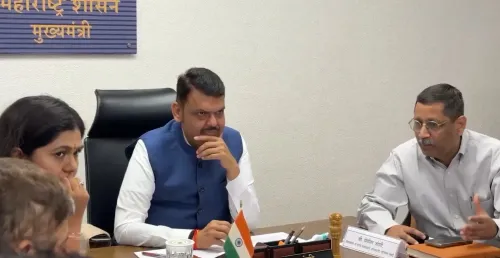
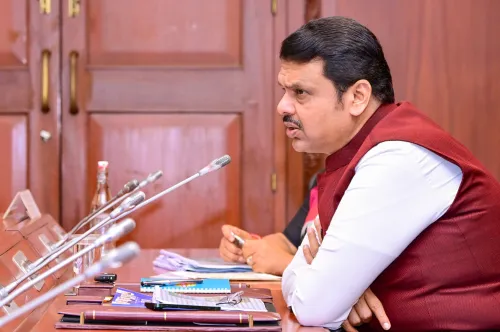
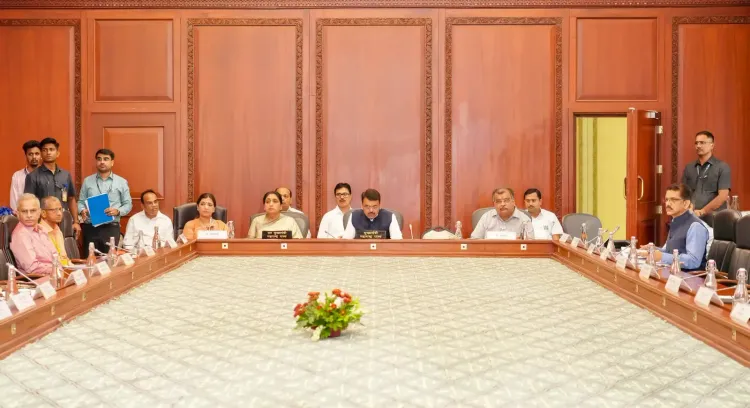
The Maharashtra Cabinet, chaired by Chief Minister Devendra Fadnavis, on Tuesday, 27 October 2026, approved 11 structural and procedural amendments to the state's Public-Private Partnership (PPP) Policy 2026, aiming to accelerate infrastructure development, reduce bureaucratic delays, and bring greater clarity to project governance across Maharashtra.
Key Structural Changes
The revised framework introduces clear definitions for Viability Gap Funding (VGF) and establishes updated guidelines on developer and project authority ownership and risk allocation. A VGF allocation of ₹200 crore has been provisioned for the financial year 2026–27. Crucially, one tier of scrutiny by the Network Planning Group committee on in-principle project approvals has been removed to cut red tape and speed up decision-making.
The amendments were advanced following requests from the Maharashtra Institution for Transformation (MITRA) for enhanced clarity and simplification. Going forward, the Chief Executive Officer of MITRA will be invited to meetings of the Cabinet Infrastructure Committee (CCI) during PPP project approval phases — a structural change that embeds MITRA's advisory role directly into the approval pipeline.
Approval Thresholds and Governance
The updated policy draws a clear financial line for project approvals. Projects involving government assistance, land, or premiums up to ₹25 crore will require formal sign-off from the Empowered Committee. Projects valued at ₹25 crore and above must secure approval from the Cabinet Infrastructure Committee, based on the Empowered Committee's recommendations. A grievance mechanism has also been established for disputes exceeding ₹5 crore.
Asset Monetisation as a New Policy Pillar
A significant addition to the framework is the introduction of Clause 13 on Asset Monetisation — a new concept designed to unlock revenue from public assets such as land and buildings that are not commercially viable under standard PPP models. The initiative is explicitly tied to the goals of the 'Viksit Maharashtra @ 2047' vision document, which serves as the policy's overarching anchor. This brings Maharashtra in line with a broader national trend of sweating underutilised government assets to fund infrastructure without direct budgetary outlay.
Project Lifecycle Under the Revised Framework
Under the updated guidelines, PPP projects will follow a structured progression from inception to completion. The process begins with preliminary feasibility studies, public interest evaluations, and Value for Money assessments conducted by the concerned department, with optional Project Development Fund (PDF) support. Techno-economic feasibility reports, draft Request for Proposals (RFPs), and concession agreements will be formulated alongside transaction advisors and law firms.
Projects must secure mandatory approvals from the Empowered Committee or CCI before market launch, followed by transparent competitive bidding evaluated on a single financial parameter. Final award approvals, execution of concession agreements with selected developers or Special Purpose Vehicles (SPVs), and implementation monitoring will be overseen by the Empowered Committee.
What This Means for Maharashtra's Infrastructure Outlook
The amendments arrive as Maharashtra continues to position itself as a leading destination for large-scale infrastructure investment. By streamlining approvals, embedding a dedicated transformation body into the governance chain, and introducing asset monetisation as a formal financing tool, the state government is signalling a shift from ad hoc project clearances to a more institutionalised PPP architecture. The effectiveness of the revised framework will ultimately depend on how swiftly departments operationalise the new approval thresholds and whether the grievance mechanism proves accessible to private developers.
Point of View
Yet Maharashtra's record with monetising underutilised government land is patchy, often stalled by litigation and departmental turf wars. Embedding MITRA into CCI meetings is a welcome governance step, but only if MITRA's recommendations carry weight rather than being noted and parked. The ₹200 crore VGF outlay is modest relative to the state's infrastructure ambitions — it will need topping up quickly if the pipeline of projects under 'Viksit Maharashtra @ 2047' is as large as billed.
NationPress
27 Oct 2026
Frequently Asked Questions
What are the key changes in Maharashtra's PPP Policy 2026 amendments?
The Maharashtra Cabinet approved 11 amendments on 27 October 2026, including clearer VGF definitions, the removal of one Network Planning Group scrutiny tier, new approval thresholds (Empowered Committee for projects up to ₹25 crore; CCI for ₹25 crore and above), and a new Asset Monetisation clause under Clause 13. A ₹200 crore VGF has been provisioned for FY 2026–27.
What is the Viability Gap Funding allocation under the revised PPP policy?
A Viability Gap Funding allocation of ₹200 crore has been provisioned for the financial year 2026–27 under the revised PPP Policy 2026. VGF is a government grant used to make infrastructure projects financially viable for private developers.
What is the new Asset Monetisation clause introduced in the policy?
Clause 13 of the revised PPP Policy introduces Asset Monetisation as a new framework concept, designed to generate revenue from public assets — such as government land and buildings — that are not viable for standard PPP development. The clause is aligned with the 'Viksit Maharashtra @ 2047' vision.
What is the role of MITRA in the revised PPP framework?
The Maharashtra Institution for Transformation (MITRA) was the body that requested the amendments for greater clarity and simplification. Under the revised policy, MITRA's Chief Executive Officer will now be invited to Cabinet Infrastructure Committee meetings during PPP project approval phases, giving the body a formal seat at the approval table.
How does the revised policy simplify project approvals?
The policy removes one tier of scrutiny by the Network Planning Group on in-principle project approvals, reducing the number of clearance stages. It also sets clear financial thresholds — projects up to ₹25 crore go to the Empowered Committee, while larger projects require Cabinet Infrastructure Committee approval — bringing predictability to the process.