Maharashtra Global Workforce Mobility Policy 2026: Skill Passports, ITI revamp, 170 mn jobs target
Synopsis
Maharashtra has launched one of India's most structured state-level overseas employment frameworks — with Skill Passports, ITI curriculum overhauls, language tech tie-ups and a return-integration plan. Chief Minister Fadnavis is making an explicit bet that India's youth dividend, channelled through Maharashtra, can fill the gap left by ageing workforces in developed nations, with 170 million new global jobs on the table by 2030.
Key Takeaways
CM Devendra Fadnavis directed country-specific 'Skill Passports' and safe overseas recruitment mechanisms on 21 September 2026 under the Global Workforce Mobility Policy 2026 .
The policy framework covers skill development, language training, certification, documentation and pre-departure orientation , plus re-integration of returning workers.
The World Economic Forum's Future of Jobs Report 2025 projects 170 million new global jobs by 2030 , with 92 million jobs displaced.
India has labour mobility agreements with 28 countries ; demand is highest in engineering, healthcare, construction and technical fields .
An MoU was signed between Digital India Bhashini , MITRA and MAHIMA to provide free foreign-language training using translation technology for ITI and polytechnic students .
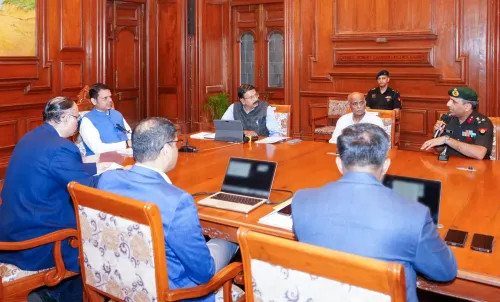
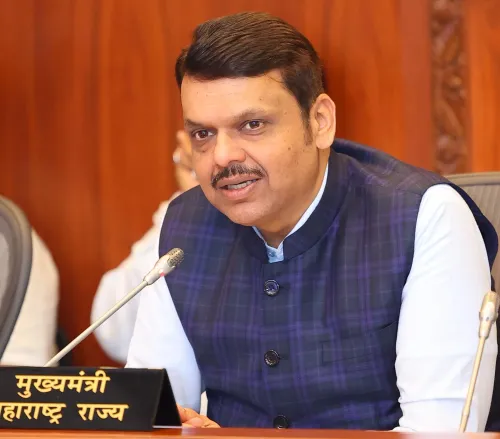
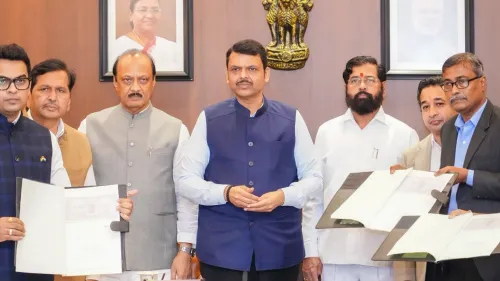
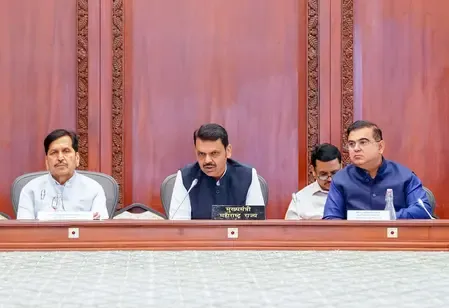
Maharashtra Chief Minister Devendra Fadnavis on Monday, 21 September 2026, directed officials to roll out country-specific 'Skill Passports,' overhaul curricula at Industrial Training Institutes (ITIs) and training centres, and set up safe overseas recruitment mechanisms under the state's newly articulated Global Workforce Mobility Policy 2026. The directives were issued at a one-day international conference in Mumbai, jointly organised by the Maharashtra Institution for Transformation (MITRA), the Protocol Department, the Department of Skills, Employment, Entrepreneurship and Innovation, and the Maharashtra Agency for Holistic International Mobility and Advancement (MAHIMA).
Why Maharashtra Is Betting on Global Labour Markets
Fadnavis pointed to shifting global demographics as the core driver: ageing populations in developed nations are generating sustained demand for skilled workers across engineering, healthcare, construction and technical fields. Citing the World Economic Forum's Future of Jobs Report 2025, he noted that nearly 170 million new jobs will be created globally by 2030, while 92 million jobs will be displaced. Maharashtra, he said, is positioned to capture a significant share of that demand by aligning India's youth potential with global requirements — a concept he framed as 'Circular Mobility of Talent.'
India has already signed labour mobility agreements with 28 countries, creating a foundation on which the state intends to build. Fadnavis said Maharashtra would play a 'key role' in ensuring the country meets international workforce expectations.
What the Policy Framework Entails
The policy prioritises six pillars: skill development, demand-aligned training, language instruction, certification, documentation assistance and pre-departure orientation. Departments have been directed to leverage the experience of recruitment agencies to communicate foreign workforce needs to training institutes, adopt blended digital and practical training methods, set timelines and baseline tests for online language courses, and integrate digital translation tools into instruction.
Notably, the framework also addresses the return leg of mobility — the government has committed to re-integrating skilled professionals coming back from abroad with domestic industries, an often-overlooked dimension of overseas employment policy.
MoU With Digital India Bhashini to Break Language Barriers
A Memorandum of Understanding (MoU) was signed at the conference between Digital India Bhashini, MITRA and MAHIMA to provide free training in foreign and industry-specific languages using translation technology. The initiative is aimed specifically at ITI and polytechnic students, addressing one of the most persistent barriers to overseas employment for first-generation workers.
What Ministers Said
Protocol Minister Jaykumar Rawal said international labour mobility should be seen as an 'economic partnership' connecting skills, investment, diaspora and global markets. He emphasised coordination with foreign consulates, industries, universities and skill institutions to link Maharashtra's talent with global opportunities.
Skills Minister Mangal Prabhat Lodha added that professional training would be complemented by cultural orientation, helping workers adapt to foreign environments. Workers heading overseas, he said, would also serve as 'ambassadors,' strengthening ties between Maharashtra and host nations.
What Comes Next
With the Skill Passport framework, ITI curriculum revamp and the Bhashini MoU now formally directed, implementation timelines will be the next test. The success of the policy will ultimately depend on whether demand-side intelligence from recruitment agencies is translated effectively into training outcomes — and whether the re-integration mechanism for returning workers gains institutional traction.
Point of View
But language technology alone cannot substitute for structural job-matching. The return-integration clause is the policy's most underrated element: India has historically exported workers without a coherent plan for their re-entry, and if MAHIMA can make that work, Maharashtra would set a national template. The 170-million-jobs figure from the WEF report is a global aggregate, not a Maharashtra entitlement — the state still needs bilateral demand-validation before training pipelines are built at scale.
NationPress
21 Sept 2026
Frequently Asked Questions
What is Maharashtra's Global Workforce Mobility Policy 2026?
It is a state-level policy framework directed by Chief Minister Devendra Fadnavis on 21 September 2026 to prepare Maharashtra's youth for international employment through Skill Passports, ITI curriculum overhauls, language training and safe overseas recruitment mechanisms. The policy also includes a plan to re-integrate returning workers with domestic industries.
What are the 'Skill Passports' announced by CM Fadnavis?
Skill Passports are country-specific credential documents that the Maharashtra government has directed officials to create for workers seeking overseas employment. They are designed to standardise and authenticate skill certification in line with requirements of destination countries.
Which countries are covered under India's labour mobility agreements?
India has signed labour mobility agreements with 28 countries where demand is strong for professionals in engineering, healthcare, construction and technical fields. Maharashtra's new policy intends to leverage these agreements to channel trained workers from the state to those markets.
What is the Digital India Bhashini MoU signed at the conference?
An MoU was signed between Digital India Bhashini, MITRA and MAHIMA to provide free training in foreign and industry-specific languages using translation technology, targeting ITI and polytechnic students. It is aimed at removing language barriers that have historically limited overseas employment for first-generation workers.
Why did CM Fadnavis cite the World Economic Forum's Future of Jobs Report 2025?
Fadnavis referenced the WEF report to frame the scale of global opportunity: it projects nearly 170 million new jobs globally by 2030, alongside 92 million displaced roles. The Maharashtra government argues that aligning the state's youth with this demand through structured training is both an economic and a demographic opportunity.