Maharashtra to Introduce Special Bill for Empowering Women Farmers: Deputy CM Pawar
Synopsis
Maharashtra's Deputy Chief Minister Sunetra Ajit Pawar announces a Special Bill aimed at empowering women farmers in the upcoming assembly session. This initiative is part of a broader commitment to enhance their rights and dignity in the agricultural sector.
Key Takeaways
Special Bill for women farmers to be introduced.
Legal recognition and support to address grievances.
Integration of technology and AI in farming.
75% subsidies for drone purchases in Pune to be expanded.
30% of agricultural scheme benefits reserved for women.
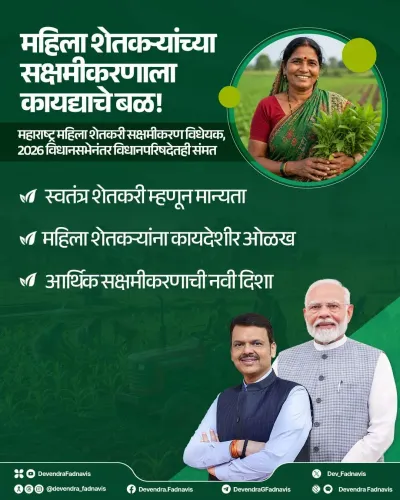
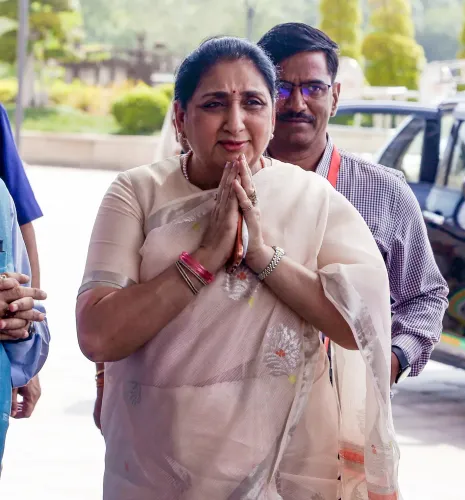
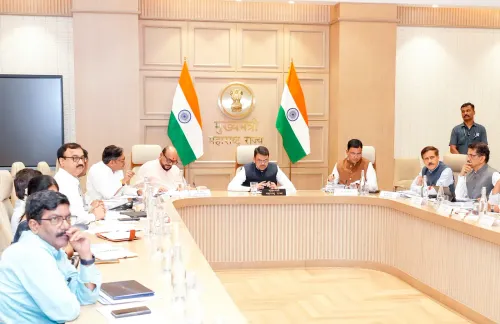
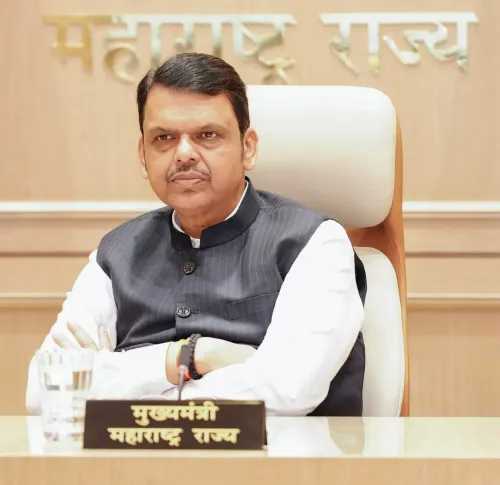
Mumbai, March 11 (NationPress) In a significant announcement, Maharashtra's Deputy Chief Minister Sunetra Ajit Pawar stated on Wednesday that the government is dedicated to safeguarding the rights and dignity of women farmers. She confirmed that a Special Bill aimed at empowering these women will be introduced in the forthcoming assembly session.
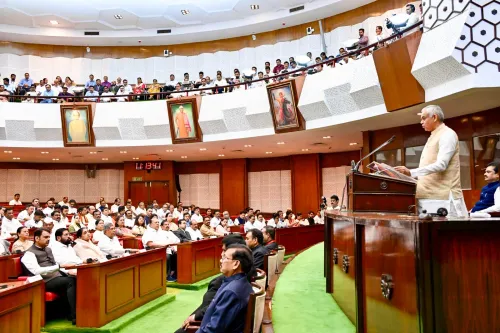
While addressing a seminar themed 'Empowerment of Women Farmers' at the Central Hall of Vidhan Bhavan, the Deputy CM revealed plans to set up a state-level 'Gender Resource Center' inspired by central initiatives. This center aims to tackle the unique challenges faced by women in agriculture.
The seminar was co-hosted by the Government of Maharashtra and the Maharashtra Legislature to commemorate the International Year of Women Farmers 2026 and International Women's Day.
Pawar elaborated on several transformative initiatives, including legal recognition, technology integration, and the Pune pattern.
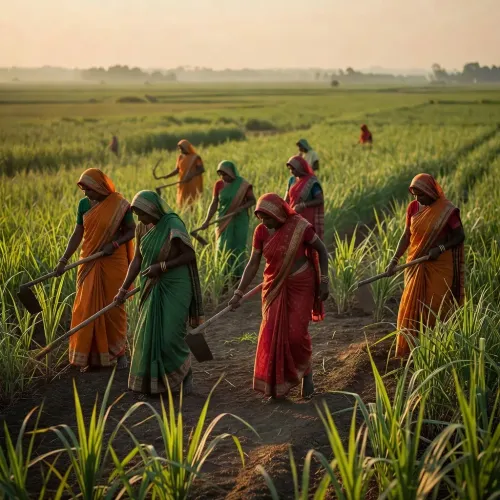
"A new legislation will be proposed to uphold the rights of women farmers. This will address issues like the absence of names on 7/12 land records and ensure that gender-specific data is included in agricultural statistics. Through the 'Namo Drone Didi' initiative, women will be trained as drone pilots. Moreover, the government will support the integration of Artificial Intelligence (AI) in farming practices," she stated.
She added that following the success of the Pune district model, which provided 75% subsidies for drone acquisitions by women farmers, this approach will be expanded statewide. Currently, approximately 30% of agricultural scheme benefits are reserved for women.
About 1.8 million women are already beneficiaries of the PM-Kisan scheme. Initiatives like 'Lakhpati Didi' and 'She Marts' are aimed at linking women farmers with global markets. Special subsidies for sectors such as animal husbandry, fisheries, and beekeeping are also being considered, she mentioned.
Dr. Neelam Gorhe, Deputy Chairperson of the Legislative Council, stressed the importance of a comprehensive action plan. She pointed out that while women contribute nearly 80% of agricultural labor, they are often only recognized as "cultivators" instead of "farmers." "In many households, women take on the role of the primary provider as men migrate to urban areas for employment. It is vital for these women to obtain farmer certificates to qualify for government schemes, especially in families affected by farmer suicides," Dr. Gorhe remarked.
Aditi Tatkare, Minister for Women and Child Development, emphasized the collaboration between the Agriculture and WCD departments.
She highlighted that credit societies, such as the one in Nagpur with over 30,000 women participants, are offering critical financial support.
She promised ongoing assistance for collective industries and agri-allied businesses through the 'Mukhyamantri Majhi Ladki Bahin' scheme.
Pankaja Munde, Minister for Environment, praised women as the true "entrepreneurs" of agriculture.
"Regardless of whether their names appear on the 7/12 extracts, women effectively manage both household and farming responsibilities. They are not merely homemakers; they are essential to the rural economy," she stated, welcoming the government's decision to include mothers' names in official records.
Point of View
Legal protections and support systems are essential for their empowerment and economic independence.
NationPress
24 Sept 2026
Frequently Asked Questions
What is the purpose of the Special Bill for women farmers?
The Special Bill aims to empower women farmers by ensuring their rights, providing legal recognition, and addressing specific grievances in the agricultural sector.
How will the government support women farmers through this initiative?
The government plans to implement training programs, subsidies, and establish a Gender Resource Center to provide comprehensive support to women farmers.
What initiatives are included for women farmers?
Initiatives include the Namo Drone Didi scheme for drone pilot training, special subsidies for various agricultural sectors, and creating avenues for connecting women farmers to international markets.
How many women currently benefit from the PM-Kisan scheme?
Approximately 1.8 million women benefit from the PM-Kisan scheme.
Why are farmer certificates important for women?
Farmer certificates are crucial for women to access government schemes and support, particularly in households affected by challenges such as farmer suicides.