Mandaviya Addresses MPs, MLAs on Labour Reform at NFPRC Workshop
Synopsis
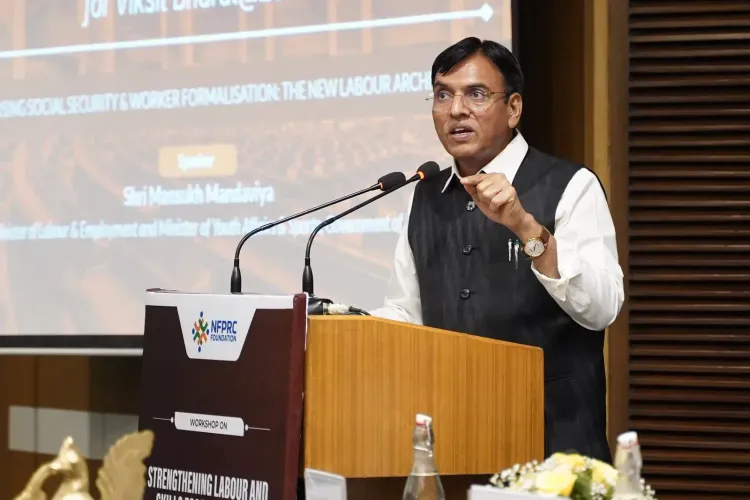
Union Labour Minister Mansukh Mandaviya addressed MPs and MLAs at an NFPRC Foundation workshop in New Delhi on 26 June 2026, arguing that the Modi government's four labour codes balance workers' 'Ease of Living' with employers' 'Ease of Doing Business' — and urging legislators to accelerate state-level rule notification.
Key Takeaways
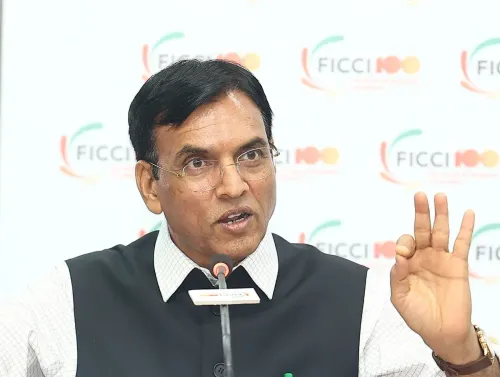
Mansukh Mandaviya addressed MPs and MLAs at the NFPRC Foundation workshop in New Delhi on 26 June 2026 .
The workshop theme was 'Strengthening Labour and Skills Ecosystem' , with the minister highlighting dual goals: 'Ease of Living' for workers and 'Ease of Doing Business' for employers.
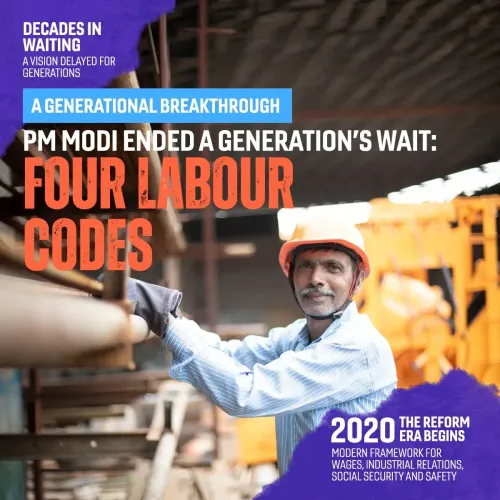
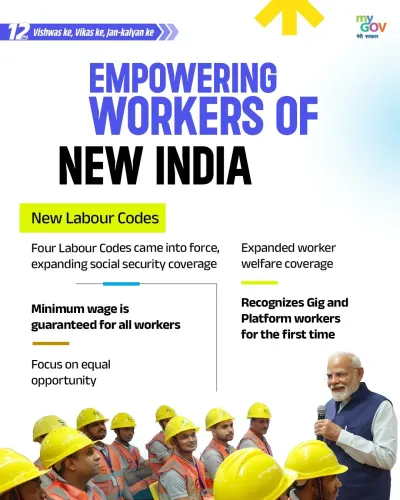
India's four labour codes , enacted between 2019 and 2020 , consolidated 44 central labour laws into a single compliance framework.
State governments must notify their own rules under the codes before the reforms become operational — a process the centre is actively pushing through legislative outreach.
The engagement with state legislators signals the government's intent to close the gap between central legislation and ground-level implementation.
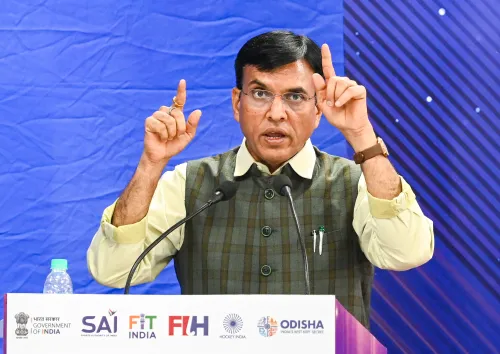
Union Labour and Sports Minister Mansukh Mandaviya addressed Members of Parliament and Members of Legislative Assemblies on the theme 'Strengthening Labour and Skills Ecosystem' at an NFPRC Foundation workshop held in New Delhi on Friday, 26 June 2026. The minister used the platform to outline the Modi government's approach to labour reform, framing the policy agenda as one that simultaneously advances workers' welfare and business competitiveness.
Context
Mandaviya told the assembled legislators that the labour reforms undertaken under Prime Minister Narendra Modi strike a balance between 'Ease of Living' for workers and 'Ease of Doing Business' for employers — a dual objective the minister described as 'historic.' The workshop, organised by the NFPRC Foundation, brought together elected representatives from both Parliament and state legislatures, signalling a deliberate effort to build legislative consensus around ongoing reform implementation.
The choice of audience — sitting MPs and MLAs — reflects the centre's recognition that the success of national labour policy depends heavily on state-level action. State governments must frame and notify their own rules under the new framework before the codes can take full effect on the ground.
Policy Backdrop
Between 2019 and 2020, Parliament consolidated 44 central labour laws into four codes: the Code on Wages, the Industrial Relations Code, the Code on Social Security, and the Occupational Safety, Health and Working Conditions Code. The consolidation was designed to reduce compliance complexity for employers while extending formal social security coverage to workers in the unorganised sector — a segment that accounts for the vast majority of India's workforce.
The four codes have been enacted at the central level but their operationalisation hinges on states notifying corresponding rules, a process that has proceeded at an uneven pace across the country. Outreach to state legislators is therefore a key lever for the Ministry of Labour and Employment to accelerate adoption.
Stakeholders and Impact
The reforms carry direct implications for India's estimated 50 crore-strong workforce, particularly the large unorganised segment that previously lacked access to portable social security benefits. For employers — especially small and medium enterprises — the codes promise a single compliance window replacing a patchwork of overlapping statutes.
State legislators present at the workshop are positioned as both advocates and implementers: they can push their respective state governments to expedite rule notification and can flag ground-level implementation challenges back to the centre. The skilling dimension of the ministry's mandate, which Mandaviya also oversees through the Ministry of Youth Affairs and Sports, adds a workforce development layer to the labour reform agenda.
What's Next
The immediate watch point is the pace at which state governments notify rules under the four labour codes, which will determine when the consolidated framework moves from statute to operational reality for workers and businesses. Further ministerial engagements with legislators and industry bodies are expected as the government seeks to close the gap between central legislation and state-level implementation.
Mandaviya's address also signals that skilling programmes are likely to be positioned as a complement to the structural labour reforms — linking the regulatory simplification agenda to workforce capability-building ahead of the next parliamentary session.
Point of View
Positioning labour codes not merely as a pro-business measure but as a welfare intervention, which is a softer political sell ahead of state elections. The dual mandate Mandaviya holds — Labour and Youth Affairs — allows the government to bundle skilling narratives with regulatory reform, broadening the coalition of stakeholders who see benefit in the codes. Progress on state rule notifications will be the true test of whether this legislative outreach translates into on-the-ground change.
NationPress
25 Sept 2026
Frequently Asked Questions
What did Mansukh Mandaviya say at the NFPRC Foundation workshop?
Mandaviya addressed MPs and MLAs on 'Strengthening Labour and Skills Ecosystem,' saying the Modi government's labour reforms balance 'Ease of Living' for workers with 'Ease of Doing Business' for employers.
What are India's four labour codes?
The four labour codes — Code on Wages, Industrial Relations Code, Code on Social Security, and Occupational Safety Code — were enacted between 2019 and 2020, consolidating 44 central labour laws to simplify compliance and expand social security coverage.
Why have the four labour codes not been fully implemented yet?
Full implementation requires each state government to frame and notify its own rules under the codes. This process has moved at an uneven pace, which is why the central government is engaging legislators to accelerate state-level adoption.
What is the NFPRC Foundation?
The NFPRC Foundation organised the workshop in New Delhi where Mandaviya spoke to MPs and MLAs about labour and skills policy on 26 June 2026.
How does Mansukh Mandaviya's ministry connect labour reform to skilling?
Mandaviya holds the dual portfolio of Labour and Employment as well as Youth Affairs and Sports, allowing the government to link regulatory labour reform with workforce skilling programmes under a single ministerial mandate.