Mandaviya Holds BRICS Bilateral Talks, Pitches India's Labour DPIs
Synopsis
Union Labour Minister Mansukh Mandaviya held bilateral talks with UAE, Russia, Indonesia and Iran on the sidelines of the 12th BRICS Labour and Employment Ministers' Meeting, advocating India's e-Shram and NCS portals as Digital Public Infrastructure models for inclusive labour markets and south-south cooperation through BRICS CONNECT.
Key Takeaways
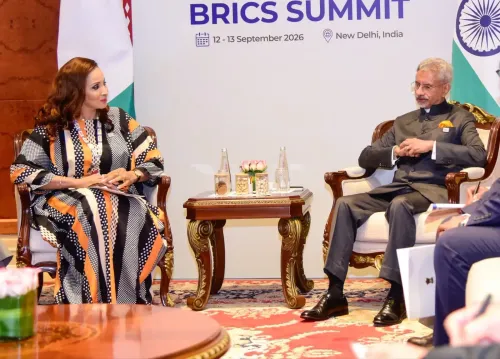
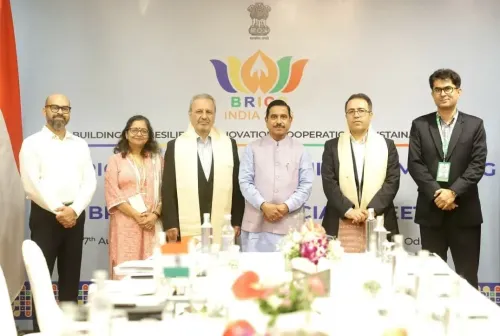
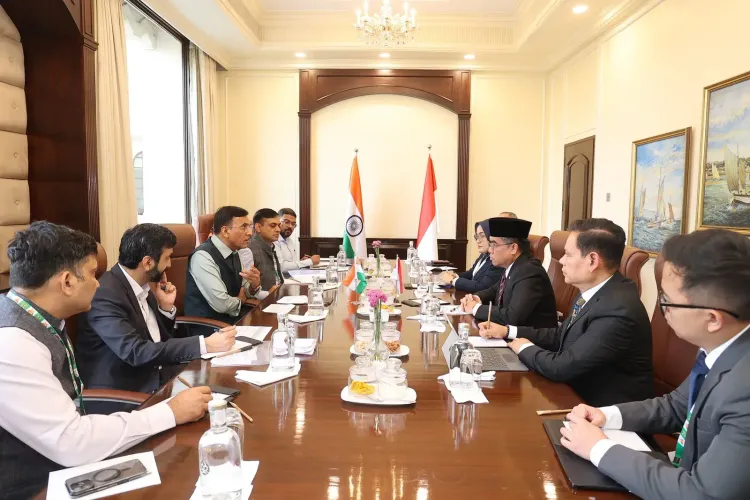
Minister Mansukh Mandaviya held bilateral meetings with labour counterparts of UAE, Russia, Indonesia, and Iran at the 12th BRICS Labour and Employment Ministers' Meeting on 15 July 2026 .
India's e-Shram portal — with over 30 crore registered unorganised workers — and the National Career Service (NCS) portal were presented as pioneering Digital Public Infrastructure models.
Discussions focused on using digital solutions to make labour markets more inclusive and efficient , and on expanding international labour mobility .
BRICS CONNECT was highlighted as a platform to advance joint skilling, workforce planning and digital innovation across member states.
The bilateral with the UAE is especially significant given existing agreements on Indian migrant worker protection in the Gulf region.
The push aligns with India's strategy of leveraging its demographic dividend through structured overseas employment corridors and south-south cooperation.
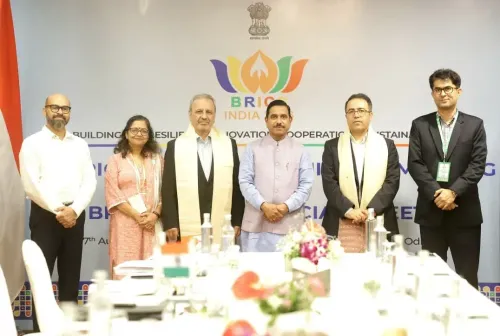
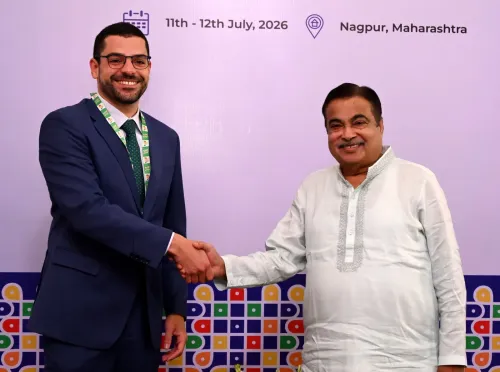
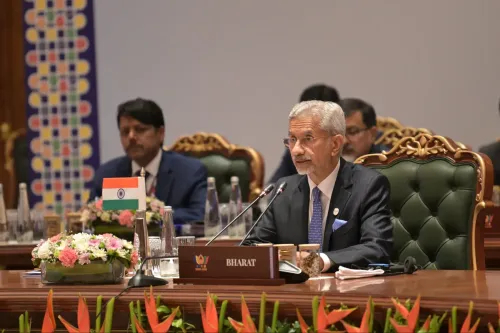
Union Labour and Sports Minister Mansukh Mandaviya held bilateral meetings with his counterparts from the UAE, Russia, Indonesia, and Iran on the sidelines of the 12th BRICS Labour and Employment Ministers' Meeting on Wednesday, 15 July 2026, deliberating on digital solutions to build more inclusive and efficient labour markets.
Context
Minister Mandaviya described the meetings as 'productive,' with discussions centred on harnessing digital tools to expand social protection and improve employment services. He used the platform to showcase two of India's flagship labour-sector portals — e-Shram and the National Career Service (NCS) portal — as pioneering Digital Public Infrastructure, or DPI, models capable of driving international labour mobility.
The meetings with counterparts from four BRICS-affiliated nations signal India's intent to position its digital labour architecture as a replicable template for developing economies within the grouping.
Policy Backdrop
e-Shram, launched in August 2021, is a centralised national database for unorganised-sector workers, linking over 30 crore registered workers to social-security schemes through a unique identification number. The National Career Service portal, operational since 2015, modernised India's legacy employment exchanges by offering job-matching, career counselling, and apprenticeship services at scale.
India had previously elevated its DPI stack — encompassing Aadhaar, UPI, DigiLocker, and labour portals — as a global public good during its G20 Presidency in 2023, advocating for their adoption across the Global South. The BRICS Labour Ministers' forum, which has convened annually since 2015, has increasingly served as a venue for India to advance this agenda among emerging-economy peers.
The bilateral with the UAE carries particular weight: the Gulf nation is one of the largest destinations for Indian migrant workers, and existing bilateral agreements on worker protection and recruitment make the labour-mobility dimension of the discussions directly consequential for millions of Indian workers abroad.
Stakeholders and Impact
The primary beneficiaries of the frameworks being discussed are India's unorganised-sector and migrant workers, who stand to gain from improved portability of social-security entitlements and streamlined overseas employment pathways. BRICS labour ministries collectively represent economies that host and export significant shares of the global workforce.
Mandaviya also highlighted the potential of BRICS CONNECT — a platform under discussion among BRICS labour ministries — to foster joint skilling programmes, workforce-data sharing, and digital innovation across member states. The emphasis on south-south cooperation aligns with India's broader demographic-dividend strategy, as the country seeks structured channels to deploy its young workforce in Eurasian and Gulf labour markets.
For partner nations, India's DPI models offer a low-cost, scalable blueprint for formalising informal labour and delivering social protection without building expensive physical infrastructure.
What's Next
Attention will now turn to whether the bilateral conversations translate into formal outcome documents, memoranda of understanding, or pilot projects — particularly under the BRICS CONNECT framework — at the next full BRICS summit or a follow-up labour-ministers session. Progress on a mutual-recognition arrangement for skilling credentials between India and partner nations would be a concrete marker of the cooperation taking shape.
India's sustained push to internationalise its labour DPI stack suggests that agreements emerging from these sideline meetings could shape the next phase of overseas employment policy and worker-welfare diplomacy well beyond the BRICS grouping.
Point of View
Targeting a set of partners — Russia, Iran, UAE, Indonesia — that are central to India's Eurasian and Gulf labour-export corridors. By foregrounding e-Shram and NCS as exportable models rather than merely domestic achievements, the ministry is effectively making a soft-power argument: that India's governance innovations in the labour space are ready for multilateral adoption. The focus on BRICS CONNECT for skilling and workforce data-sharing could, if operationalised, give India structural influence over how the Global South manages labour mobility in the coming decade. The real test will be whether these conversations produce binding frameworks or remain aspirational talking points in ministerial communiques.
NationPress
15 Oct 2026
Frequently Asked Questions
What is the BRICS Labour and Employment Ministers' Meeting?
The BRICS Labour and Employment Ministers' Meeting is an annual gathering of labour ministers from BRICS member nations to coordinate on employment policy, future-of-work challenges, and social-protection frameworks. The 12th edition took place in July 2026.
What is India's e-Shram portal?
e-Shram is a national digital registry launched by India in August 2021 to register unorganised-sector workers and link them to social-security schemes through a unique identification number. It has registered over 30 crore workers.
What is the National Career Service (NCS) portal?
The National Career Service portal, launched in 2015, is a Ministry of Labour platform that provides job-matching, career counselling, apprenticeship listings and employment services, replacing the older physical employment-exchange model.
What is BRICS CONNECT?
BRICS CONNECT is a platform under discussion among BRICS labour ministries designed to promote joint skilling initiatives, workforce-data sharing, and digital innovation across member and partner states to strengthen south-south cooperation.
Why did Mandaviya hold a bilateral with the UAE at the BRICS meeting?
The UAE is one of the largest destinations for Indian migrant workers. The bilateral focused on leveraging digital tools and existing bilateral worker-protection agreements to improve labour mobility and social-security portability for Indian workers in the Gulf.