Manmohan Singh gets posthumous clean chit: Shiv Sena(UBT) demands Modi apology
Synopsis
The Supreme Court's posthumous clean chit to Dr Manmohan Singh in the Talabira-II coal case has reignited a sharp political battle. Shiv Sena(UBT)'s 'Saamana' editorial demands PM Modi acknowledge the allegations were 'false and politically motivated' — and the fact that Dr Singh never lived to see his own exoneration makes the question of accountability harder to deflect.
Key Takeaways
The Supreme Court granted a complete posthumous exoneration to former PM Dr Manmohan Singh in the Talabira-II coal block allocation case .
A special court had issued summonses to Dr Singh in 2015 ; the case remained pending for nearly 20 years before the final verdict.
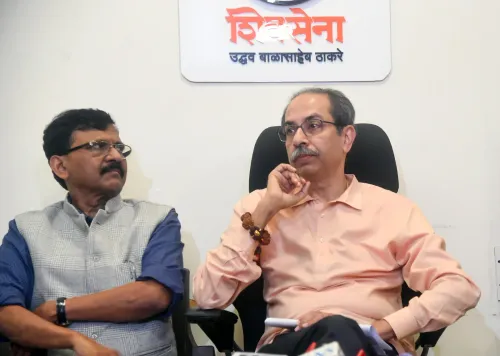
Shiv Sena (UBT) used its mouthpiece 'Saamana' to demand a formal apology from Prime Minister Narendra Modi .
The faction called the allegations 'false and politically motivated,' arguing they gave opponents undue electoral advantage during the UPA era.
Dr Singh did not live to receive the judicial vindication, which the editorial described as a systemic and moral failure.
The Supreme Court has granted a complete posthumous exoneration to former Prime Minister Dr Manmohan Singh in the long-pending Talabira-II coal block allocation case, prompting the Shiv Sena Uddhav Balasaheb Thackeray (UBT) faction to launch a sharp attack on the ruling Bharatiya Janata Party (BJP) and demand a formal apology from Prime Minister Narendra Modi.
Background of the Case
The Talabira-II coal block, located in Odisha, was at the centre of a long-running allocation dispute. In 2015, a special court had issued summonses to Dr Singh and several others in connection with the case. The Supreme Court subsequently stayed those proceedings, but the matter remained unresolved for years — until the final verdict delivered a complete clearance.
What Saamana Said
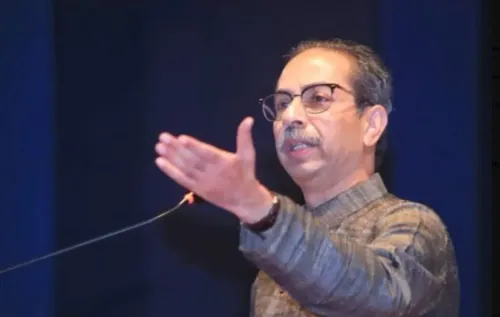
In a strongly worded editorial published in the party's mouthpiece 'Saamana', the Uddhav Thackeray-led faction described the verdict as a decisive removal of what it called the single political stain attempted to be cast upon Dr Singh. The editorial questioned the ruling establishment directly: 'Will Prime Minister Modi now admit that those allegations were false and politically motivated? Will he offer an apology, if not to the nation, then at least to the soul of Dr Singh?'
The editorial underscored that Dr Singh was 'Mr Clean' in every true sense and never required judicial validation to establish his integrity — a distinction the faction argued makes the prolonged legal cloud over him all the more unjust.
Systemic Failure and Political Exploitation
The Shiv Sena (UBT) editorial argued that the outcome exposes a deep callousness within the country's system, noting that a clean political figure was forced to carry unfounded allegations throughout his lifetime, only to receive exoneration after his passing. The faction asserted that the 20-year shadow of these allegations allowed political opponents to extract undue advantage during the UPA administration and beyond, calling the deliberate tarnishing of a clean leader for electoral gain 'a grave sin.'
Notably, this verdict arrives months after Dr Singh's death, meaning the former Prime Minister never personally witnessed the judicial vindication of his record — a point the editorial described as a failure of both the judiciary and the political establishment.
The Broader Question
The Saamana editorial concluded by posing a pointed question to the nation: should citizens feel relief at the clearing of a political smear, or grief that Dr Singh was denied this satisfaction during his lifetime? The Thackeray faction called on both the judiciary and the political class to reflect on the systemic delays that allowed this case to linger for two decades. With the verdict now final, pressure is likely to mount on the BJP to formally respond to the opposition's demand for accountability.
Point of View
Coming after Dr Singh's death, makes it uniquely uncomfortable for the BJP. The Talabira coal case was never just about coal; it was a central plank in the opposition-to-UPA narrative that helped define the 2014 election. Two decades of legal proceedings ended not with a conviction but with a complete exoneration, and the man who bore the burden is no longer alive to claim it. The Shiv Sena(UBT) is right to press for accountability, but the harder question mainstream coverage is avoiding is structural: how many such cases — filed at the height of political combat — are still working their way through courts, attaching stigma to figures who may never see resolution?
NationPress
14 Sept 2026
Frequently Asked Questions
What is the Talabira-II coal block case involving Dr Manmohan Singh?
The Talabira-II coal block case relates to the allocation of a coal block in Odisha during the UPA government. A special court issued summonses to Dr Manmohan Singh and others in 2015, but the Supreme Court stayed proceedings. The case concluded with the Supreme Court granting Dr Singh a complete posthumous exoneration.
What did the Supreme Court decide in the Manmohan Singh coal case?
The Supreme Court granted a full posthumous 'clean chit' to former Prime Minister Dr Manmohan Singh, clearing him of all allegations in the Talabira-II coal block allocation case. The verdict ended nearly two decades of legal proceedings without any finding of wrongdoing against him.
Why is Shiv Sena(UBT) demanding an apology from PM Modi?
Shiv Sena(UBT) argues that the allegations against Dr Singh were 'false and politically motivated,' used to tarnish a clean leader for electoral gain. The party's 'Saamana' editorial demands PM Modi publicly acknowledge this and apologise, at minimum, to Dr Singh's memory.
Who is affected by this verdict?
The verdict directly vindicates the legacy of the late former Prime Minister Dr Manmohan Singh. It also has political implications for the BJP, which faces opposition demands for accountability, and for the Congress and UPA-era allies, who have long maintained Dr Singh's integrity was unfairly attacked.
What does Shiv Sena(UBT) mean by calling Dr Singh 'Mr Clean'?
The 'Saamana' editorial used the phrase 'Mr Clean' to describe Dr Singh's reputation for personal integrity and incorruptibility, arguing he never needed a court verdict to validate his character. The faction's point is that the judicial exoneration confirms what was already evident — and that the prolonged legal cloud was a political construct, not a genuine legal concern.