Modi Cabinet Clears Intelligent Traffic Management System
Synopsis
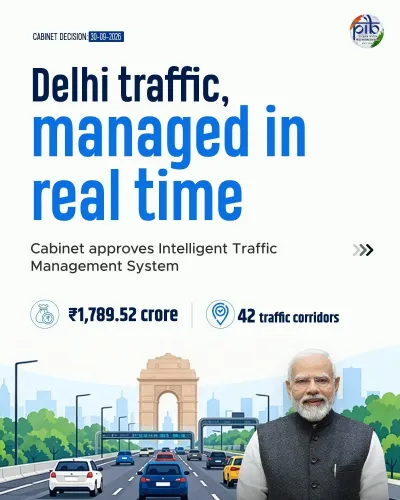
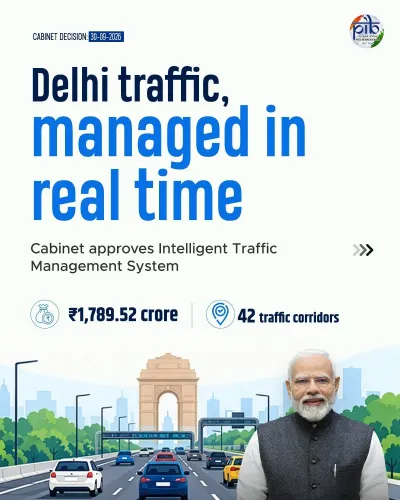
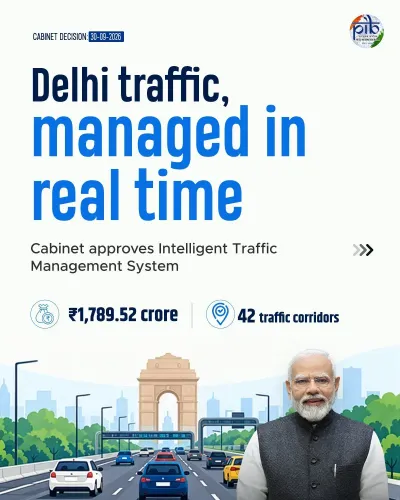
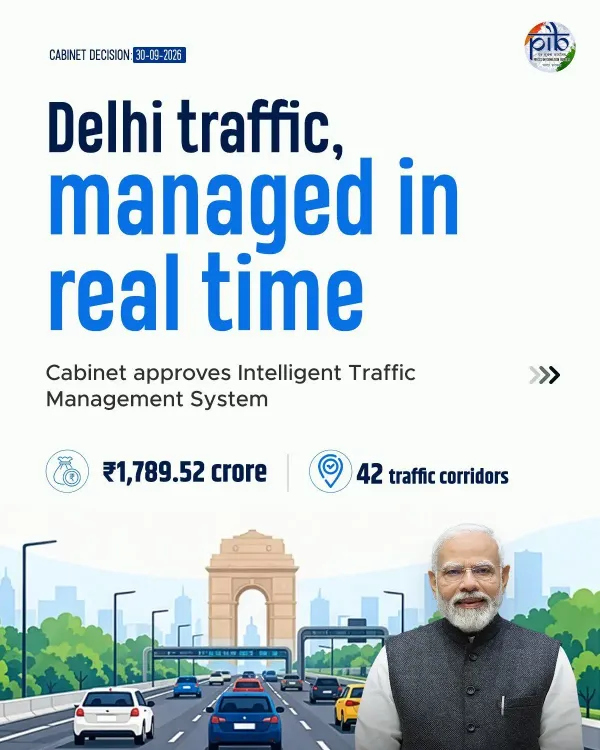
The Union Cabinet chaired by PM Narendra Modi approved an Intelligent Traffic Management System covering 42 corridors, to be implemented in three phases over 24 months followed by five years of operation and maintenance, Minister Sarbananda Sonowal announced on September 30, 2026.
Key Takeaways
The Union Cabinet, chaired by PM Narendra Modi , approved the Intelligent Traffic Management System (ITMS) on September 30, 2026 .
The project will cover 42 identified traffic corridors across India.
Implementation will proceed in three phases over 24 months .
A five-year operation and maintenance period follows the implementation phase.
The decision extends India's technology-based urban mobility push, which traces back to the Smart Cities Mission of 2015 .
Specific corridor identities, project cost, and lead implementing agency have not yet been confirmed.
India's urban roads are about to get a technological overhaul. Union Ports and Shipping Minister Sarbananda Sonowal announced on Wednesday, September 30, 2026 that the Union Cabinet, chaired by Prime Minister Narendra Modi, approved the implementation of an Intelligent Traffic Management System (ITMS) — a phased, tech-driven push to bring order to the country's most congested traffic corridors.
42 Corridors, Three Phases, Five Years of Upkeep
The approved project will span 42 identified traffic corridors across the country. Implementation will unfold in three phases over 24 months, after which a dedicated five-year operation and maintenance window kicks in — a structure designed to ensure the infrastructure does not simply go dark after the ribbon-cutting.
The phased model signals an intent to stress-test early deployments before scaling. It also distributes fiscal and logistical load, a lesson drawn from previous smart-city rollouts where simultaneous nationwide pushes strained both budgets and execution capacity.
From Smart Cities to System-Wide Traffic Intelligence
This approval sits within a decade-long arc. India's Smart Cities Mission, launched in 2015, first seeded intelligent transport components in select urban pockets. That pilot-first approach is now giving way to corridor-level, network-wide deployment — a meaningful step up in ambition and scope.
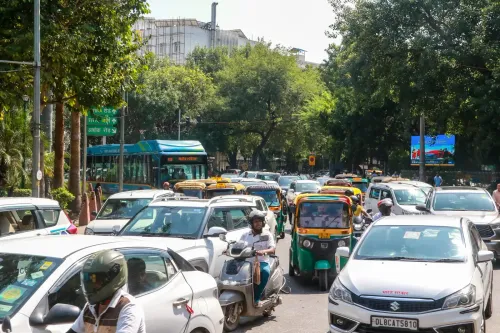
Urban congestion is not merely a convenience problem. It drains fuel, raises emissions, delays freight, and costs the economy measurable output every working day. An ITMS — typically integrating adaptive signal control, surveillance, incident detection, and real-time data feeds — targets exactly that drain.
What Commuters and Cities Can Expect Next
The immediate questions are specific: which 42 corridors are selected, which ministry or agency leads implementation on the ground, and what technology stack underpins the system. None of those details were confirmed in the Cabinet announcement shared by Minister Sonowal. Watch for the detailed project report and corridor identification notices that typically follow Cabinet approval in the coming weeks.
If the rollout holds its 24-month implementation timeline, the first corridors could be live before the end of 2028 — putting smart traffic signals and real-time monitoring on some of India's busiest stretches well ahead of the next general election cycle.
Point of View
Fragmented smart-city transport pilots toward a corridors-first, nationally coordinated model — a sign that the Centre is willing to own urban mobility outcomes rather than devolve them entirely to city-level bodies. The built-in five-year maintenance clause is notable: it signals an attempt to avoid the 'inaugurate-and-abandon' pattern that has dogged past infrastructure tech deployments. Politically, the decision hands the BJP a tangible urban governance deliverable ahead of multiple state election cycles. The real test, however, will be corridor selection — whether the 42 stretches are chosen on congestion data or on political geography will define whether this is genuine reform or managed optics.
NationPress
30 Sept 2026
Frequently Asked Questions
What is the Intelligent Traffic Management System approved by the Cabinet?
It is a technology-driven system designed to manage and optimise traffic flow across 42 identified corridors in India. It typically integrates adaptive signal control, surveillance cameras, incident detection, and real-time data analytics to reduce congestion and improve road safety.
Which 42 corridors will be covered under India's ITMS project?
The specific corridors have not been publicly identified yet. The Cabinet approved the project framework on September 30, 2026 ; detailed corridor lists are expected in subsequent government notifications.
How long will the ITMS project take to implement?
The project will be implemented in three phases over 24 months , followed by a five-year operation and maintenance period .
What is the cost of India's Intelligent Traffic Management System?
The project cost has not been officially disclosed as part of the Cabinet announcement made on September 30, 2026 . Further budget details are expected once the project DPR is released.
How does this ITMS decision relate to India's Smart Cities Mission?
India's Smart Cities Mission, launched in 2015 , first introduced intelligent transport components in select urban areas. The new ITMS approval scales that approach to a corridor-level, nationwide deployment across 42 traffic stretches .