PM Modi, Slovakia's Pellegrini Hold Talks on Trade, Energy
Synopsis
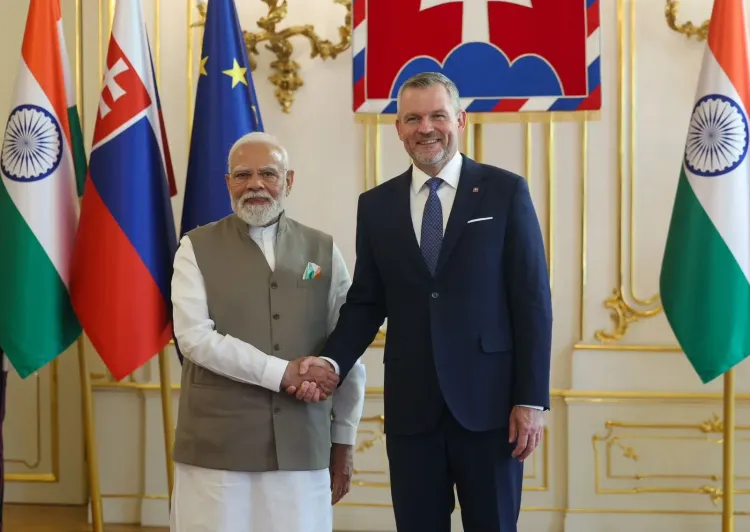
Prime Minister Narendra Modi held talks with Slovak President Peter Pellegrini on 15 June 2026, covering manufacturing, transport, biofuels, energy and digital technology. The meeting signals India's push to deepen ties with Central European EU members as part of a broader economic diversification strategy.
Key Takeaways
PM Modi and Slovak President Peter Pellegrini held bilateral talks on 15 June 2026 covering manufacturing, transport, innovation, investment, energy, biofuels and digital technology.
Slovakia has maintained diplomatic relations with India since 1993 , underpinned by a Double Taxation Avoidance Agreement last updated in 2012 .
Biofuel cooperation aligns with India's National Policy on Biofuels (2018) , which targets reduced crude oil import dependence through ethanol and biodiesel blending.
Slovakia is a major EU automotive and engineering hub , making it a strategic partner for Indian manufacturers seeking European supply-chain links.
Digital technology was flagged as an area of 'immense scope' for cooperation, reflecting India's broader push to position its IT sector within European industrial ecosystems.
Outcomes such as joint working groups or MoUs, if announced, could feature at the next India-EU Summit .
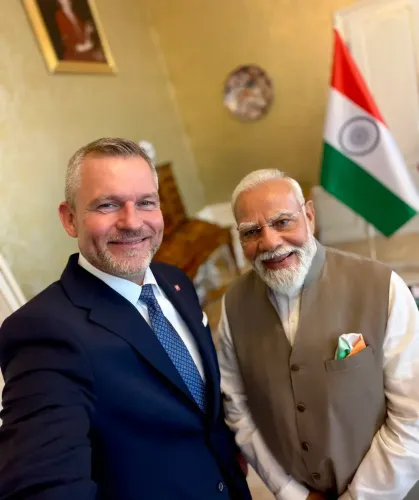
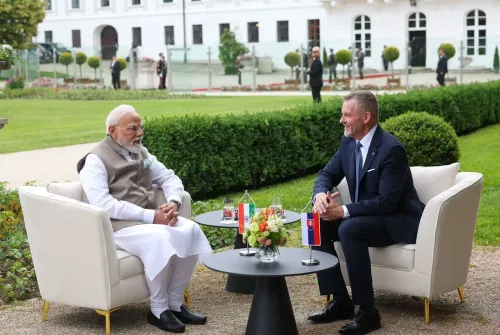
Prime Minister Narendra Modi held wide-ranging talks with Slovak President Peter Pellegrini on Monday, 15 June 2026, covering manufacturing, transport, innovation, investment, energy, biofuels and digital technology cooperation between the two nations.
Context
Modi shared details of the engagement on X, writing that the discussions 'covered diverse subjects such as closer ties in manufacturing, transport, innovation and investment linkages, energy, biofuels and more,' adding that 'there is also immense scope to cooperate in the field of digital technology.' The breadth of the agenda signals a deliberate effort to elevate the bilateral relationship beyond its traditional diplomatic baseline.
Slovakia, a Central European member of both the European Union and NATO, has maintained diplomatic relations with India since 1993. The two countries share a foundational economic framework through a Double Taxation Avoidance Agreement originally signed in 1986 and updated in 2012.
Policy Backdrop
India's push on biofuels reflects the country's National Policy on Biofuels (2018), which set ethanol and biodiesel blending targets aimed at reducing dependence on crude oil imports. Raising this in talks with a European head of state underlines how energy security has become a standing pillar of India's bilateral diplomacy.
On the manufacturing and transport front, Slovakia is one of Europe's most concentrated automotive manufacturing hubs, making it a natural partner for Indian firms seeking supply-chain linkages or technology transfers. Modi had previously engaged Slovak leaders on the margins of the India-EU Summit in 2017, with engineering and IT identified as priority sectors even then.
The digital technology dimension adds a newer layer: India's large software and services ecosystem is increasingly positioned as a complement to European industrial strength, with Central and Eastern European economies viewed as growth corridors for Indian IT firms.
Stakeholders and Impact
Indian manufacturers exploring European market entry and Slovak automotive and engineering firms looking for cost-competitive sourcing or co-production partners stand to benefit most directly from any follow-through on the agenda discussed. Energy investors on both sides are watching the biofuel and renewable energy signals closely.
India's broader strategy of deepening ties with Central and Eastern European EU members — rather than concentrating engagement on larger Western European economies — gives countries like Slovakia outsized relevance in New Delhi's European calculus. Any resulting joint working groups or memoranda of understanding would feed into the wider India-EU relationship and potentially the Visegrad-India dialogue framework.
What's Next
The immediate watch is whether the talks yield formal institutional outcomes — working groups, MoUs or a joint statement — that translate the agenda into binding commitments. Progress on these fronts could be referenced at the next India-EU Summit, where bilateral deliverables with individual member states often receive multilateral visibility.
As India accelerates its diversification of energy sources and manufacturing partnerships ahead of its own industrial targets, the India-Slovakia relationship may evolve from a quietly stable diplomatic pairing into an active economic corridor within the larger European engagement framework.
Point of View
Reducing over-reliance on the bloc's larger Western economies. By foregrounding biofuels alongside manufacturing and digital technology, New Delhi is threading its domestic energy-security agenda into its foreign-policy conversations — a pattern that has become increasingly consistent across bilateral summits. For Slovakia, deeper engagement with India offers both market access and a signal of its own relevance within the India-EU relationship. Whether this meeting produces durable institutional outcomes will determine if it is a diplomatic milestone or a well-intentioned conversation.
NationPress
14 Sept 2026
Frequently Asked Questions
What did PM Modi and Slovak President Pellegrini discuss?
They discussed closer cooperation in manufacturing, transport, innovation, investment, energy, biofuels and digital technology during their bilateral meeting on 15 June 2026.
What are India-Slovakia relations like?
India and Slovakia have maintained diplomatic relations since 1993. The two countries share a Double Taxation Avoidance Agreement, originally signed in 1986 and updated in 2012, and have previously engaged on trade in engineering and IT sectors.
Why is biofuel cooperation important for India?
India's National Policy on Biofuels (2018) targets higher ethanol and biodiesel blending to cut crude oil imports. Raising biofuels in bilateral talks reflects the government's energy-security agenda.
Why is Slovakia significant for India's European strategy?
Slovakia is a major EU automotive and engineering hub. India has been systematically deepening ties with Central and Eastern European EU members to diversify beyond larger Western European economies and access new manufacturing and investment corridors.
What outcomes are expected from the Modi-Pellegrini talks?
Formal outcomes such as joint working groups or MoUs have not yet been confirmed. Any institutional follow-through could be highlighted at the next India-EU Summit or within the Visegrad-India dialogue framework.