MP CM Office Launches Jal Ganga Sanvardhan Abhiyan Water Drive
Synopsis
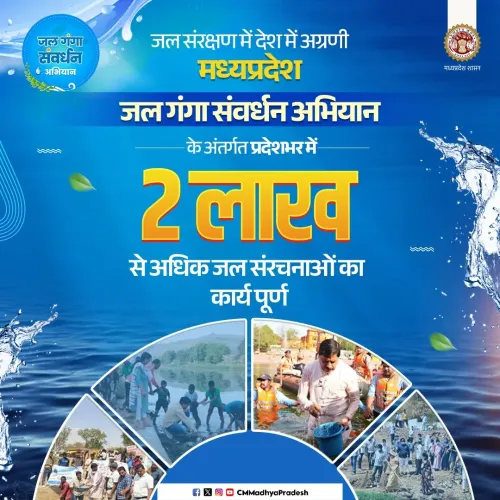
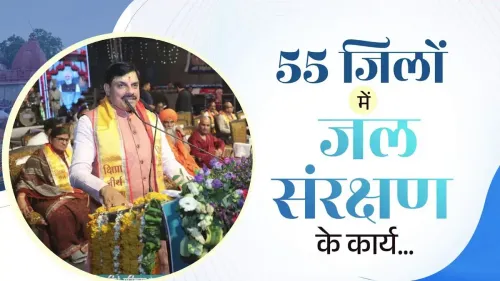
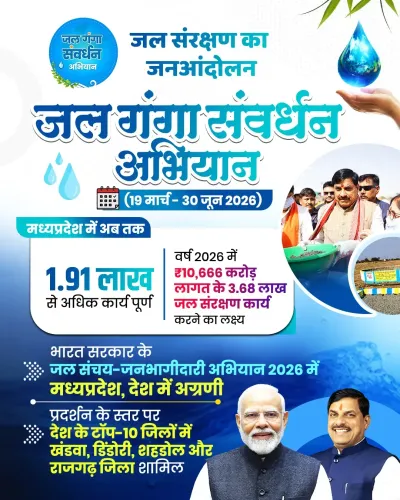
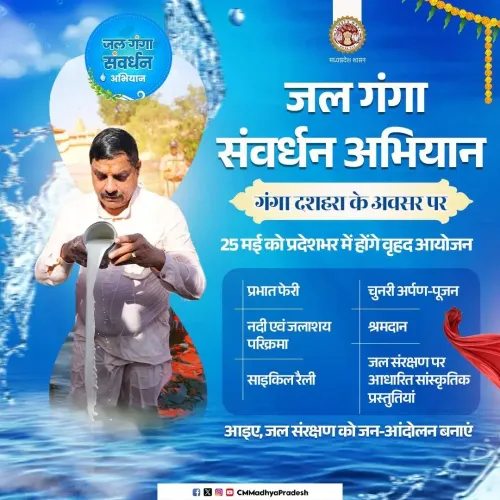
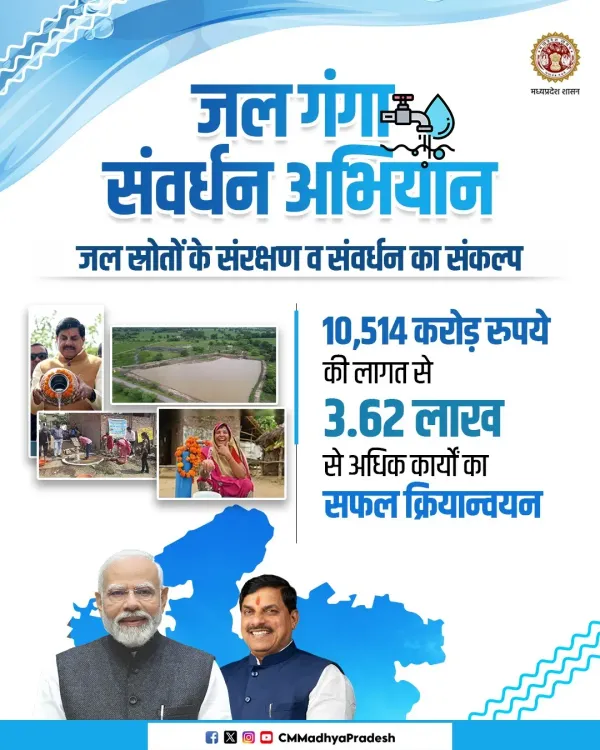
The Chief Minister's Office of Madhya Pradesh has announced the Jal Ganga Sanvardhan Abhiyan, a water conservation drive spanning over 3.62 lakh works costing ₹10,514 crore, with special Gram Panchayat programmes running from 25 to 30 June 2026 under CM Dr. Mohan Yadav.
Key Takeaways
The Jal Ganga Sanvardhan Abhiyan is Madhya Pradesh's latest state-wide water conservation campaign, announced on 25 June 2026 .
The campaign covers more than 3.62 lakh works at an estimated cost of ₹10,514 crore .
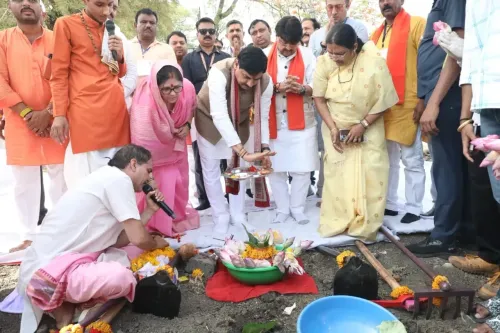
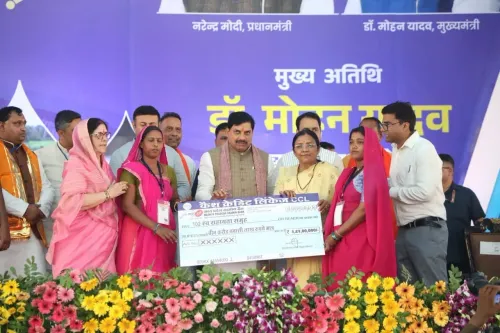
Special village-level programmes are scheduled across Gram Panchayats from 25 to 30 June 2026 .
The initiative involves both the Panchayat and Rural Development Department and the Urban Development Department .
The campaign builds on Madhya Pradesh's earlier Mukhya Mantri Jal Swavalamban Abhiyan (2016) and complements central schemes like Jal Jeevan Mission and Atal Bhujal Yojana .
Primary beneficiaries are rural communities and farmers across the state.
The Chief Minister's Office of Madhya Pradesh announced the Jal Ganga Sanvardhan Abhiyan on Thursday, 25 June 2026, outlining a large-scale water conservation campaign involving more than 3.62 lakh works at an estimated cost of ₹10,514 crore, with special programmes scheduled across Gram Panchayats from 25 to 30 June.
Context
The post, shared from the official @CMMadhyaPradesh handle and tagging Chief Minister Dr. Mohan Yadav along with the Panchayat and Rural Development Department and the Urban Development Department, describes the campaign as 'jal sanrakshan ki disha mein mazboot kadam' — 'a strong step in the direction of water conservation.' The campaign is framed around river rejuvenation, groundwater recharge, and community-level water harvesting across the state.
The six-day window of special village-level programmes, running from 25 June to 30 June 2026, is designed to mobilise Gram Panchayats — the foundational rural self-governance units — as the primary implementing bodies on the ground.
Policy Backdrop
Madhya Pradesh has a sustained record in state-led water conservation. The Mukhya Mantri Jal Swavalamban Abhiyan, launched in 2016, set a precedent for watershed development and rainwater harvesting at the village level, and the Jal Ganga Sanvardhan Abhiyan appears to build on that institutional architecture.
At the national level, central schemes such as Jal Jeevan Mission and Atal Bhujal Yojana have emphasised source strengthening and community participation in groundwater management — objectives that align closely with the state campaign's stated goals. Several Indian states have scaled up similar drives in response to mounting groundwater stress and increasingly erratic monsoon patterns.
Dr. Mohan Yadav, who has served as Chief Minister since December 2023, has positioned water security as a core governance priority, and this campaign represents one of the larger announced outlays under his administration's rural development agenda.
Stakeholders and Impact
The primary beneficiaries of the campaign are rural communities and farmers across Madhya Pradesh, who are most directly affected by groundwater depletion and seasonal water scarcity. The involvement of Gram Panchayats as implementing units is intended to ensure last-mile accountability and community ownership of the works.
The Panchayat and Rural Development Department and the Urban Development Department have both been tagged in the announcement, indicating a cross-departmental coordination structure. With over 3.62 lakh works planned, the scale of the campaign spans a significant share of the state's rural geography.
What's Next
The immediate focus will be on the rollout of special programmes at Gram Panchayat level through 30 June 2026. Progress reports, utilisation certificates, and physical completion data from these works will be key indicators of implementation quality in the weeks ahead.
If the campaign sustains momentum through the monsoon season, it could strengthen Madhya Pradesh's position as a model for state-driven water conservation — and potentially inform policy benchmarks for other water-stressed states navigating similar challenges.
Point of View
514 crore scale and the tight six-day mobilisation window suggest this is as much a visibility exercise as an administrative one — Gram Panchayats are being activated simultaneously, maximising grassroots optics. Anchoring the campaign in the Panchayat-and-Rural-Development framework mirrors a broader national pattern of routing conservation spending through local bodies to claim community ownership. The real test will come in utilisation data: large announced outlays in Indian state conservation drives have historically faced scrutiny over actual works completed versus sanctioned.
NationPress
25 Jun 2026
Frequently Asked Questions
What is the Jal Ganga Sanvardhan Abhiyan in Madhya Pradesh?
The Jal Ganga Sanvardhan Abhiyan is a Madhya Pradesh government campaign focused on water conservation, groundwater recharge, and river rejuvenation through more than 3.62 lakh works across the state, announced by the Chief Minister's Office on 25 June 2026.
How much money has been allocated for the Jal Ganga Sanvardhan Abhiyan?
The campaign has an announced cost of ₹10,514 crore, covering over 3.62 lakh individual conservation works across Madhya Pradesh.
What is the role of Gram Panchayats in this water conservation drive?
Gram Panchayats are the primary implementing units for the campaign. Special programmes are being held at Gram Panchayat level from 25 to 30 June 2026 to mobilise communities and oversee local water conservation works.
Who is leading the Jal Ganga Sanvardhan Abhiyan?
The campaign is being driven by the Madhya Pradesh government under Chief Minister Dr. Mohan Yadav, with the Panchayat and Rural Development Department and the Urban Development Department both involved in implementation.
How does the Jal Ganga Sanvardhan Abhiyan relate to earlier MP water schemes?
It builds on the foundation of the Mukhya Mantri Jal Swavalamban Abhiyan launched in 2016, which focused on watershed development and rainwater harvesting, and complements central government schemes such as Jal Jeevan Mission and Atal Bhujal Yojana.