MP CM Office: Thousands of farmers get institutional credit access
Synopsis
The Chief Minister's Office of Madhya Pradesh announced on August 20, 2026 that thousands of farmers have been brought under the institutional credit system, highlighting the state's push to replace informal moneylenders with formal banking channels through schemes like the Kisan Credit Card.
Key Takeaways
The Chief Minister's Office of Madhya Pradesh announced on August 20, 2026 that thousands of farmers are being supported through institutional credit.
The initiative channels farmers away from high-interest informal lenders into formal banking and cooperative credit systems.
The Kisan Credit Card (KCC) scheme, launched in 1998 by RBI and NABARD , is the primary vehicle for agricultural credit delivery.
Madhya Pradesh supplements central KCC infrastructure with its own interest-subvention programmes to lower borrowing costs for small farmers.
Exact beneficiary numbers and details of any new state-specific scheme referenced in the post are yet to be officially confirmed.
Thousands of farmers in Madhya Pradesh are being brought under the formal credit system, the Chief Minister's Office of Madhya Pradesh announced on Thursday, August 20, 2026 — a push that strikes at one of Indian agriculture's oldest vulnerabilities: the grip of the moneylender.
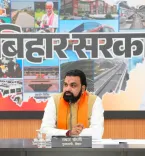
The post, shared from the official CMO account, declared 'हज़ारों किसानों को संस्थागत ऋण व्यवस्था का सहारा' — 'thousands of farmers supported by the institutional credit system' — signalling a fresh round of outreach under formal lending channels.
Why institutional credit matters for MP's farmers
Madhya Pradesh is one of India's largest agrarian states, with farming households spread across rain-fed and irrigated belts from the Narmada valley to the Vindhya plateau. For decades, small and marginal farmers here have relied on informal lenders — local traders, landlords, commission agents — who charge interest rates that can spiral beyond 24 percent annually. Institutional credit, by contrast, arrives at subsidised rates through banks and cooperative societies, giving farmers a fighting chance to invest in inputs without falling into a debt trap.The Kisan Credit Card backbone
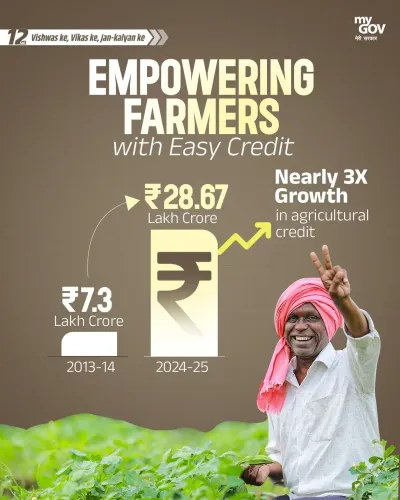
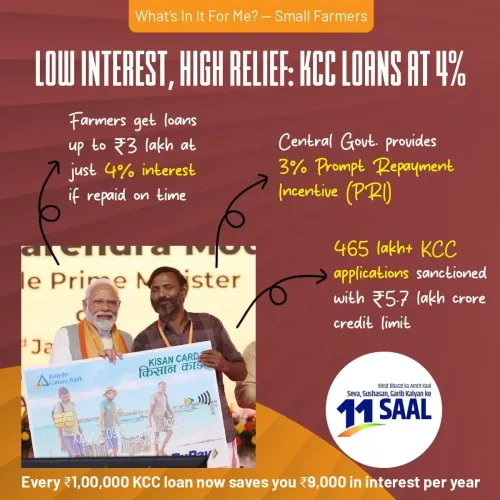
The primary vehicle for this outreach is the Kisan Credit Card (KCC) scheme, introduced nationally in 1998 by the Reserve Bank of India and NABARD. The scheme delivers revolving crop loans, post-harvest credit, and allied-activity financing through the banking network. Since the early 2000s, the central government has steadily raised the annual agricultural credit target to deepen penetration, and state governments — including Madhya Pradesh — layer their own interest-subvention programmes on top to further reduce the cost of borrowing for small farmers.State-level push behind the numbers
Madhya Pradesh regularly runs camps and banking-outreach drives to saturate KCC coverage in underserved blocks. The CMO's announcement fits a pattern of high-visibility farmer-welfare messaging that accompanies each new disbursement cycle — translating a national policy architecture into a ground-level headline that reaches the farm gate. The emphasis on 'thousands' of beneficiaries signals scale, even as the precise figures and any new state-specific scheme referenced in the post remain to be confirmed through official releases. For a state where agriculture employs the majority of the workforce, every farmer pulled from informal credit into the banking system is one less household exposed to the compounding misery of usurious debt. That arithmetic is what makes institutional credit not just a welfare metric — but a structural reform, one village at a time.Point of View
A state where agrarian distress has historically shaped election outcomes, publicising KCC coverage is both a policy signal and a political one. The deeper structural question — whether disbursement is reaching the most marginal, landless, or tenant farmers who fall outside standard bank eligibility — is the test that outlasts the headline. Watch the next state budget for interest-subvention allocations and coverage targets to gauge how serious the push really is.
NationPress
20 Aug 2026
Frequently Asked Questions
What is institutional credit for farmers in India?
Institutional credit refers to loans provided to farmers through formal channels such as banks, cooperative societies, and microfinance institutions, typically at regulated or subsidised interest rates — as opposed to informal moneylenders who charge much higher rates.
What is the Kisan Credit Card scheme?
The Kisan Credit Card (KCC) is a central government scheme launched in 1998 by RBI and NABARD that gives farmers access to flexible, revolving credit for crop production, post-harvest expenses, and allied activities through the banking system.
How does Madhya Pradesh support farmers through credit?
Madhya Pradesh implements the national KCC scheme and runs its own interest-subvention and credit-linked programmes to reduce borrowing costs for small and marginal farmers across the state.
Why do farmers in India depend on moneylenders instead of banks?
Many small and marginal farmers lack collateral, formal land records, or proximity to bank branches, making informal lenders their only accessible option despite the much higher interest rates they charge.
What did the MP CM Office announce on August 20, 2026?
The Chief Minister's Office of Madhya Pradesh announced on August 20, 2026 that thousands of farmers in the state are being supported through the institutional credit system, signalling a fresh round of formal lending outreach.