Muslim clerics divided over Jamiat chief Arshad Madani's 'Jihad' remark
Synopsis
Senior Muslim clerics from multiple organisations have publicly broken with Jamiat Ulema-e-Hind chief Arshad Madani over his invocation of 'Jihad' at a Uttarakhand meeting — with some calling it politically driven and others arguing the theological conditions for Jihad simply do not exist in present-day India. The dissent is internal, pointed, and revealing.
Key Takeaways
Maulana Syed Arshad Madani , President of Jamiat Ulema-e-Hind , invoked 'Jihad' at the Uttarakhand state executive meeting, drawing a parallel to colonial-era 1803 .
BSSS chief Maulana Chaudhary Ifraheem Husain called the remark 'completely contrary to Islam' and labelled it a political statement.
All India Muslim Jamaat President Maulana Shahabuddin Razvi Bareilvi said Madani failed to specify the conditions or necessity of Jihad in India.
Maulana Syed Saif Abbas Naqvi argued the theological preconditions for Jihad — a sinless prophet or Imam — do not exist today.
Critics within the community also targeted the All India Muslim Personal Law Board (AIMPLB) , accusing it of political rather than religious motivations.
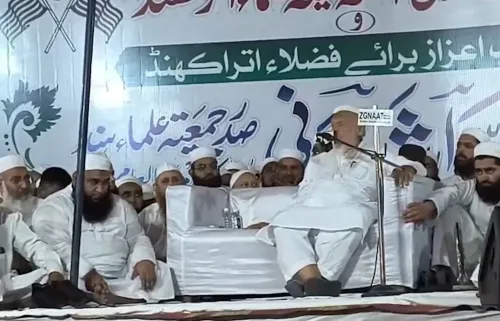
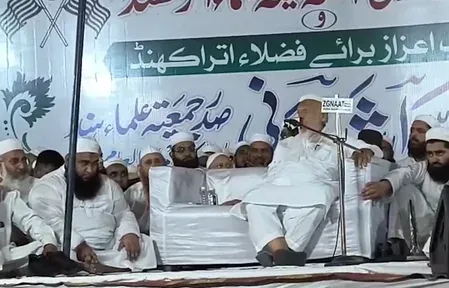
Muslim religious scholars across India on Wednesday pushed back against Jamiat Ulema-e-Hind President Maulana Syed Arshad Madani's remarks invoking 'Jihad', though the clerics differed sharply on the grounds for their opposition. The controversy erupted after Madani addressed the Uttarakhand state executive meeting of the Jamiat.
What Arshad Madani Said
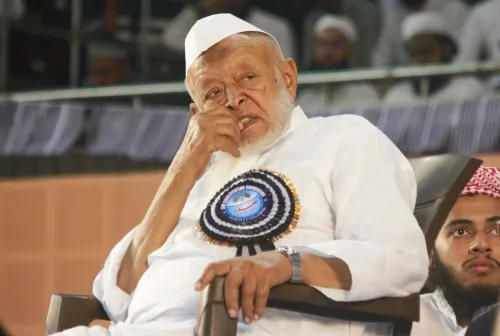
Addressing the gathering, Maulana Syed Arshad Madani drew a historical parallel to 1803, when India was under colonial rule. 'In 1803, when our country was under slavery, the message of jihad was given for the country's independence. To free the country, that is, to remove the chains of slavery from the neck, it is every Muslim's duty to do jihad. This is a teaching that has come from madrasas, and whoever does not know this is ignorant,' he said.
Sharp Criticism from Muslim Leaders
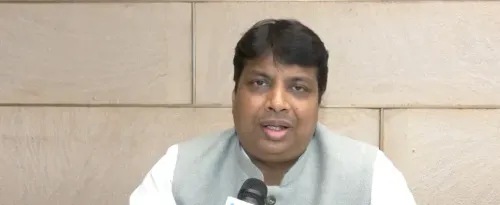
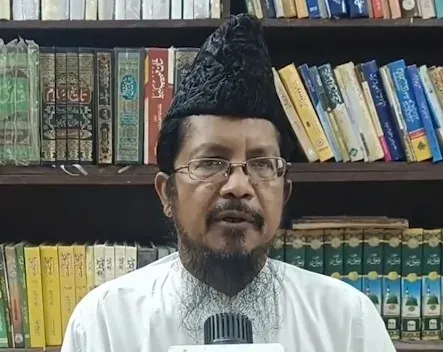
Bharatiya Samaj Sevak Sangathan (BSSS) President and Chief Mufti Maulana Chaudhary Ifraheem Husain called the statement 'completely contrary to Islam.' He said that Islam places the highest value on 'Taqwa' — piety and mindfulness of God — and that Madani's remarks, along with those of the All India Muslim Personal Law Board (AIMPLB), were 'political statements made under the influence of political figures.'
Husain further charged that such individuals 'have no connection to real issues or the concerns of the downtrodden and marginalised communities,' and that they 'function against the Quran and pronounce verdicts against Islam and Shariat.' He said it would be 'completely wrong to give importance' to Madani's words or those of the AIMPLB.
Calls for Clarification and Theological Context
All India Muslim Jamaat President Maulana Shahabuddin Razvi Bareilvi took a different line, arguing that Madani had failed to specify the conditions under which 'Jihad' applies — and whether it is even warranted in India. 'He should have clarified this,' Bareilvi said, adding that the revered Islamic scholar Ala Hazrat had written that Jihad is not required in India because it is 'a peace-loving country which allows everyone to practise and propagate the religion of their choice, including Islam.'
Maulana Syed Saif Abbas Naqvi stressed that Jihad carries strict theological preconditions that are not met in the present day. 'The requirement for jihad is that it can only be permitted by a sinless prophet or a sinless Imam. No sinless prophet exists today,' he said. Referring to Islamic tradition, Naqvi added that the sinless Imam is in 'parda-e-kaib' (occultation), and therefore 'we do not have the authority or permission to instruct anyone to engage in or call for jihad.'
Broader Significance
The episode reflects a recurring fault line within Indian Muslim religious leadership over the boundaries of theological speech and its political resonance. Notably, the dissent came not from outside the community but from senior clerics within it — underscoring that Madani's framing is far from a consensus position. This comes amid a broader national conversation about the role of religious institutions in shaping community discourse. How the Jamiat Ulema-e-Hind responds to the internal criticism will be closely watched in the weeks ahead.
Point of View
But deploying it at a state executive meeting — without contextual guardrails — was a political act, and his critics are right to call it one. The AIMPLB's repeated conflation of religious authority with political positioning has long eroded its credibility on substantive community issues. Until institutions like the Jamiat separate theological discourse from factional politics, such controversies will keep recurring — and keep drowning out the genuine concerns of India's Muslim communities.
NationPress
24 Jun 2026
Frequently Asked Questions
What did Maulana Arshad Madani say about Jihad?
Maulana Syed Arshad Madani, President of Jamiat Ulema-e-Hind, said at a Uttarakhand state executive meeting that it is 'every Muslim's duty to do jihad' to free the country from slavery, drawing a parallel to 1803 when India was under colonial rule. He also said that this teaching comes from madrasas and that those unaware of it are 'ignorant.'
Why did Muslim clerics oppose Arshad Madani's remark?
Senior clerics opposed the remark on different grounds — some called it politically motivated and contrary to Islamic values, while others argued Madani failed to specify the conditions under which Jihad is permissible. Maulana Syed Saif Abbas Naqvi said the theological prerequisites for Jihad, namely a sinless prophet or Imam, do not exist today.
Is Jihad considered applicable in India according to these scholars?
Several clerics argued it is not. Maulana Shahabuddin Razvi Bareilvi cited the revered scholar Ala Hazrat, who wrote that Jihad is not required in India because it is a peace-loving country that allows all religions to be practised and propagated freely.
Who is Maulana Syed Arshad Madani?
Maulana Syed Arshad Madani is the President of Jamiat Ulema-e-Hind, one of India's oldest and most prominent Islamic organisations. He is a senior religious scholar and a significant voice in Indian Muslim community affairs.
What is the All India Muslim Personal Law Board's role in this controversy?
The AIMPLB was not directly involved in the Uttarakhand meeting, but BSSS chief Maulana Chaudhary Ifraheem Husain grouped it with Madani, accusing both of making political statements under the influence of political figures rather than addressing genuine community concerns.