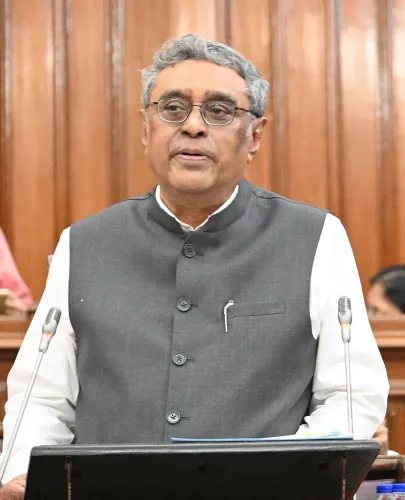
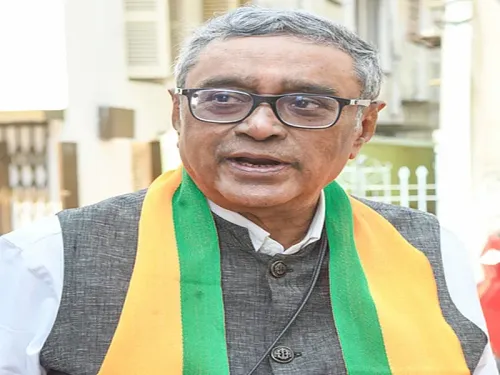
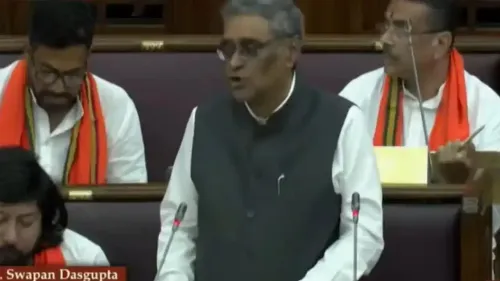
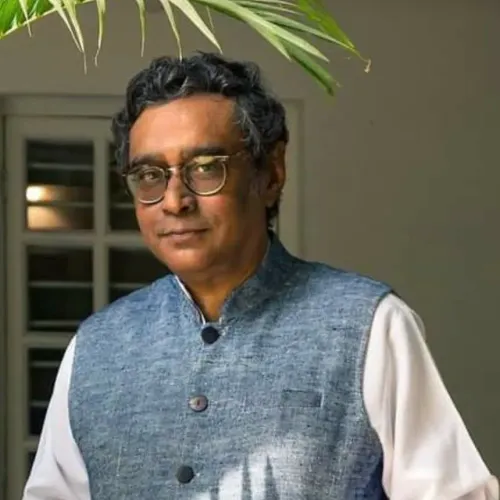
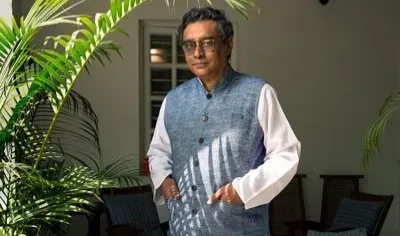
West Bengal Finance Minister Dasgupta: BJP inherited ₹8 lakh crore debt, vows aggressive market economy shift

Synopsis
West Bengal's first BJP Finance Minister has put a number on the TMC's legacy — ₹8 lakh crore in debt — and a direction on the response: an 'aggressively market economy.' From 24x7 shops to scrapping a 1976 land ceiling law and unlocking long-ignored Central schemes, Dasgupta's debut Budget is as much a political reset as a fiscal document.
Key Takeaways
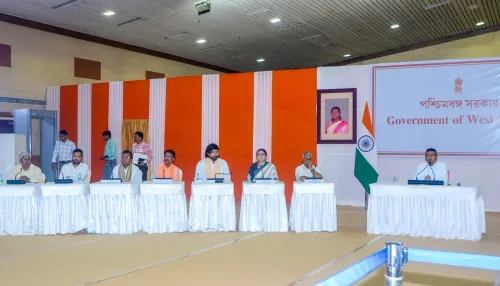
West Bengal Finance Minister Swapan Dasgupta presented the state's first BJP Budget on 24 June 2026 .
The BJP government inherited a debt of ₹8 lakh crore , attributed to the previous TMC regime.
The government plans to review the Urban Land (Ceiling and Regulation) Act, 1976 to free up industrial land.
Shops and merchant establishments will be allowed to operate 24x7 to boost revenue and employment.
A freight corridor from Ludhiana to Dankuni , stalled by the previous government, is set to be revived.
ISKCON will implement the midday meal scheme; the egg exclusion controversy is described as manageable by Dasgupta.
West Bengal Finance Minister Swapan Dasgupta on Wednesday, 24 June said the Bharatiya Janata Party (BJP) government inherited an 'abnormal state' saddled with a ₹8 lakh crore debt from the previous All India Trinamool Congress (TMC) regime, and is now working to transform West Bengal into an 'aggressively market economy.' Speaking after the presentation of the state Budget 2026-27 — the BJP's first in the state — Dasgupta outlined a sweeping reform agenda spanning debt management, industrial revival, infrastructure, and governance.
The Debt Burden and Revenue Strategy
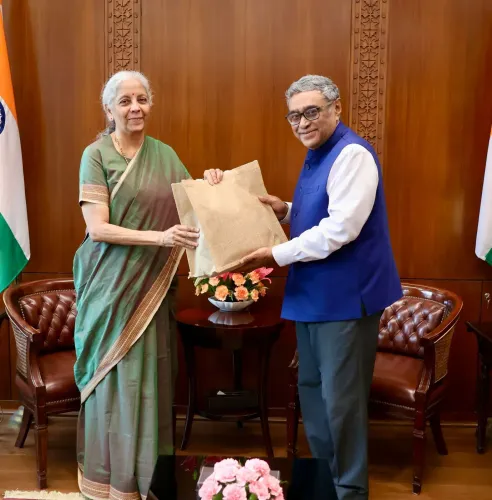
Dasgupta acknowledged the scale of the fiscal challenge, describing the inherited debt as 'hideously large.' He said the government is pursuing two parallel strategies to address it. The first involves unlocking Central government schemes that West Bengal had, according to him, largely bypassed for the past decade or more. He credited Union Finance Minister Nirmala Sitharaman with flagging several such schemes that even state officials were reportedly unaware of, calling it a 'big bonanza.'
The second lever is increased compliance. Chief Minister Suvendu Adhikari, he noted, had highlighted an 'exponential growth' in revenue from sand and stone quarries in Birbhum district — a sector he described as having been subject to systematic evasion, with royalties going largely unpaid. The government is deploying detection technologies to plug these leakages, though Dasgupta conceded it 'will take some time.'
Industrial Revival: Reversing the Singur Syndrome
Dasgupta pointed to the fallout from the Singur land acquisition controversy as a watershed moment that eroded investor confidence in the state. He said the new government is working to reverse that perception, describing it as a 'business-friendly government' racing against time after what he called '50 lost years.'
A new industrial policy is being fast-tracked. The government has also announced a review of the Urban Land (Ceiling and Regulation) Act, 1976, which Dasgupta called 'an archaic relic of the old socialist days' that restricts land availability for projects. He said industrial land currently being used for commercial construction such as shopping malls should be redirected toward manufacturing.
Notably, Dasgupta said multiple companies have reached out privately — to both himself and the Chief Minister — expressing interest in investing. However, he indicated the government would consolidate its groundwork before hosting any formal investor summit, adding that the Bengal Global Business Summit 'had turned into a joke' and is 'not a priority' at this stage.
Infrastructure: Freight Corridor and Ports
On infrastructure, Dasgupta said the government is committed to completing the freight corridor from Ludhiana to Dankuni — a project he said the previous administration had stalled by withholding permission. Port development, he acknowledged, is a longer-term undertaking requiring significant investment.
Key Policy Moves: 24x7 Shops, Liquor Regulation, Midday Meals
Among the Budget's headline measures, the government has announced that shops and merchant establishments will be permitted to operate on a 24x7 basis — a move Dasgupta said will boost both revenue and employment, and make 'Kolkata a very different city.'
On liquor, he said the sector had become a 'social problem,' with outlets in residential areas and open-air drinking, and that the government aims to reduce over-dependence on liquor revenue.
Regarding the controversy over ISKCON implementing the midday meal scheme — with a menu that excludes eggs — Dasgupta said the issue is 'sensitive' but manageable, noting that ISKCON could adjust its menu to suit local tastes. He clarified that existing 'Maa kitchens' continue to serve eggs and fish, and that the government is 'not promoting vegetarianism.'
The Road Ahead
Dasgupta framed the Budget as a 'political intervention to restore confidence' — both among residents and outside investors. He said the government is 'taking risks and becoming audacious,' and acknowledged the weight of public expectation: 'Everyone is looking at us; we can't fail.' West Bengal's economic trajectory in the coming months will be the first real test of whether the BJP's reform rhetoric translates into measurable outcomes.
Point of View
Calling the Bengal Global Business Summit 'a joke,' and admitting the state 'lost 50 years' is a high-risk political framing that sets an equally high accountability bar. The pivot to Central scheme absorption and compliance enforcement is sensible but incremental; neither addresses the structural labour market and land acquisition issues that have kept Bengal's industrial share stagnant for decades. The 24x7 retail move is a genuine signal to investors, but the decision to defer a formal investor summit — while companies are reportedly already reaching out privately — risks letting momentum dissipate before a credible pipeline is announced.
NationPress
24 Jun 2026
Frequently Asked Questions
What is the West Bengal Budget 2026-27 about?
The West Bengal Budget 2026-27 is the first budget presented by the BJP government in the state, focused on debt management, industrial revival, and market-oriented reforms. Finance Minister Swapan Dasgupta has framed it as a 'political intervention' to restore investor and public confidence after what he described as years of misgovernance under the TMC.
How much debt did West Bengal inherit from the TMC government?
According to Finance Minister Swapan Dasgupta, the BJP government inherited a debt of ₹8 lakh crore from the previous Trinamool Congress administration. He described it as a 'hideously large' burden that the government is addressing through Central scheme absorption and improved revenue compliance.
What is the controversy over ISKCON and the midday meal scheme in West Bengal?
The BJP government has assigned ISKCON the task of implementing the midday meal scheme in West Bengal, but ISKCON's vegetarian menu excludes eggs, sparking criticism. Dasgupta said ISKCON can adjust its menu to suit Bengali tastes and clarified that existing Maa kitchens continue to serve eggs and fish.
What are West Bengal's plans for industrial and economic revival?
The government plans to introduce a new industrial policy, review the Urban Land (Ceiling and Regulation) Act of 1976 to improve land availability, allow shops to operate 24x7, and complete the Ludhiana-to-Dankuni freight corridor. Dasgupta said multiple companies have privately expressed interest in investing in the state.
Why is West Bengal reviewing the Urban Land Ceiling Act of 1976?
Finance Minister Dasgupta called the Urban Land (Ceiling and Regulation) Act, 1976 an 'archaic relic of the old socialist days' that limits land available for industrial development. The review aims to redirect land currently used for commercial projects like shopping malls toward manufacturing and industry.