Nadda backs fast-track courts for paper leaks, targets Rahul Gandhi
Synopsis
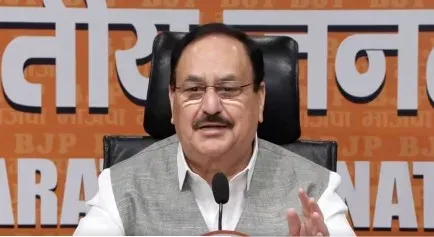
BJP president and Union Minister J. P. Nadda on 23 July 2026 defended PM Modi's commitment to fast-track courts for paper-leak cases and accused opposition leader Rahul Gandhi of avoiding parliamentary debate while misleading the public on the streets.
Key Takeaways
Union Health Minister and BJP president J.
Nadda posted on 23 July 2026 backing the government's stance on examination paper leaks.
PM Modi has committed to constituting fast-track courts and taking the strictest action against those guilty of paper leaks.
The Public Examinations (Prevention of Unfair Means) Act, 2024 is the central legislative framework criminalising paper leaks and related malpractices.
Nadda accused Rahul Gandhi and the opposition of avoiding meaningful debate inside Parliament on the paper-leak issue.
The government framed its judicial and legislative measures as proof of its 'sensitivity and commitment' toward youth aspirants .
Fast-track courts for pending paper-leak cases and possible further amendments to examination law remain key developments to watch.
Union Health Minister and BJP national president J. P. Nadda on Thursday, 23 July 2026, defended the Modi government's response to examination paper leaks, asserting that the constitution of fast-track courts and the resolve to take the strictest action against the guilty are proof of the government's sensitivity toward the country's youth.
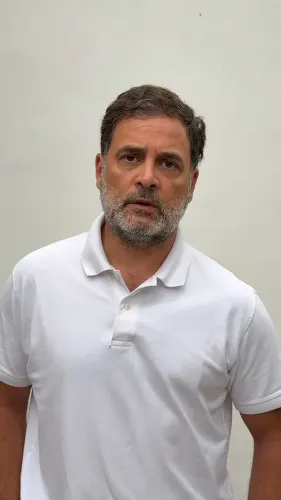
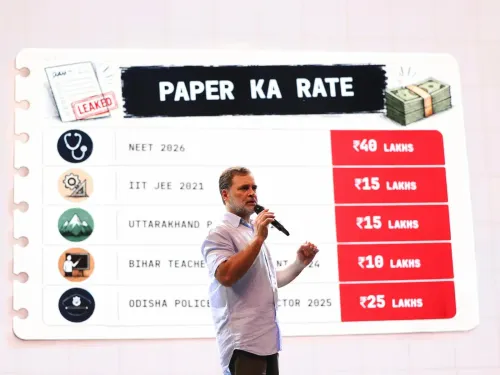
In a post on X, Nadda wrote — translated from Hindi — that 'peper leak jaisi gambhir chunauti se nipaTne ke liye' (to deal with the serious challenge of paper leaks), Prime Minister Narendra Modi has committed to fast-track courts and the harshest possible action against offenders. He directly attacked Leader of the Opposition Rahul Gandhi and the broader opposition, accusing them of avoiding meaningful debate on the issue inside Parliament while attempting to mislead the public on the streets.
Context
The post comes amid sustained political pressure on the central government over high-profile leaks in competitive examinations that determine access to higher education and government employment. Nadda framed the government's legislative and judicial measures as evidence of genuine commitment to youth welfare, contrasting them with what he described as the opposition's 'irresponsible and anti-democratic conduct.'
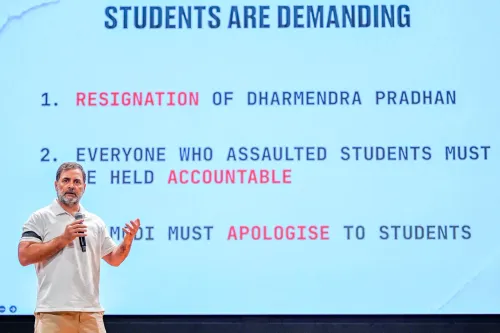
His statement specifically singles out Rahul Gandhi, accusing the Congress leader of sidestepping substantive parliamentary discussion in favour of street protests — a charge Congress has historically levelled in reverse at the ruling party on multiple governance issues.
Policy Backdrop
Parliament enacted the Public Examinations (Prevention of Unfair Means) Act, 2024 following a series of leaks in national-level examinations including NEET, imposing stringent criminal penalties, central oversight, and provisions for swift prosecution. The law was widely seen as the government's legislative answer to widespread public anger among student aspirants and their families.
The proposal for fast-track courts to handle pending paper-leak cases represents the next judicial layer of that response — aimed at ensuring time-bound trials and deterrence. Operational details and timelines for these courts, as referenced in Nadda's post, are subject to formal government notification.
Stakeholders and Impact
The primary stakeholders are millions of student aspirants across India who sit for competitive examinations for central government jobs, medical admissions, and engineering seats. Any credible mechanism to prevent leaks and punish perpetrators directly affects their faith in merit-based selection systems.
The political stakes are equally significant. Examination integrity has emerged as a persistent electoral and governance issue, with student protests in several states amplifying pressure on both the central government and state administrations to act decisively.
What's Next
The rollout of designated fast-track courts for paper-leak cases will be closely watched, as will any further legislative amendments that may be tabled in the ongoing or upcoming session of Parliament. The opposition is expected to continue pressing the government for accountability on pending cases, keeping the issue alive in both parliamentary proceedings and public discourse.
Point of View
The BJP seeks to shift the narrative from policy failure to opposition irresponsibility. The invocation of fast-track courts signals that the government wants to demonstrate judicial seriousness, not just legislative intent. This pattern of pairing a governance announcement with an opposition attack has become a signature BJP communication strategy in the run-up to state election cycles.
NationPress
23 Jul 2026
Frequently Asked Questions
What did JP Nadda say about paper leaks?
J. P. Nadda stated on 23 July 2026 that PM Modi's government has committed to constituting fast-track courts and taking the strictest action against those responsible for examination paper leaks, calling it proof of the government's sensitivity toward youth.
What is the Public Examinations Prevention of Unfair Means Act 2024?
It is a central law enacted by Parliament in 2024 that criminalises paper leaks, impersonation, and other malpractices in public recruitment and entrance examinations, imposing stringent penalties and central oversight.
What are fast-track courts for paper leaks?
Fast-track courts are special judicial bodies constituted for time-bound trials of serious offences; in the context of paper leaks, they are intended to ensure swift prosecution and deterrence against organised cheating networks.
Why did Nadda criticise Rahul Gandhi over paper leaks?
Nadda accused Rahul Gandhi and the opposition of avoiding meaningful discussion on the paper-leak issue inside Parliament while conducting street protests, which he described as irresponsible and contrary to democratic values.
Which exams were affected by paper leaks in India?
High-profile paper leaks have affected national-level examinations including NEET, which determines medical college admissions, as well as several central government recruitment tests, triggering widespread student protests and legislative action.