Nadda marks 6 years of PM SVANidhi, credits Modi's vision
Synopsis
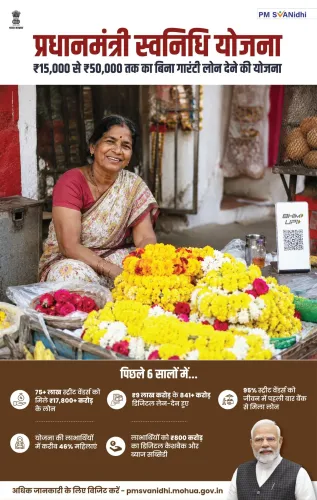
Union Health Minister J. P. Nadda on 1 June 2026 marked the sixth anniversary of PM SVANidhi, stating that over 75 lakh street vendors have benefited and more than ₹17,800 crore disbursed through 112 lakh loans, crediting PM Modi's vision for the urban informal sector.
Key Takeaways
PM SVANidhi completed six years on 1 June 2026 , having been launched on 1 June 2020 as part of the Atmanirbhar Bharat pandemic relief package.
Nadda stated that more than 75 lakh street vendors have received a new economic identity through the scheme.
According to Nadda's post, 112 lakh loans worth over ₹17,800 crore have been disbursed under the programme to date.
The scheme provides collateral-free working capital loans to urban street vendors, with initial amounts of up to ₹10,000 per beneficiary.
The Ministry of Housing and Urban Affairs is the nodal ministry overseeing implementation across states and urban local bodies.
The scheme is framed within the broader Atmanirbhar Bharat agenda, linking vendor formalisation to digital payments and social security access.
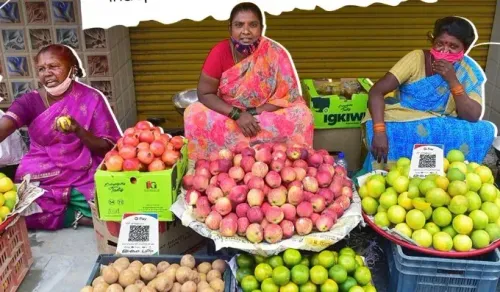
Union Health Minister and BJP national president J. P. Nadda on Monday, 1 June 2026 marked the sixth anniversary of the PM SVANidhi scheme, crediting Prime Minister Narendra Modi's 'visionary leadership' for empowering lakhs of street vendors across India through collateral-free micro-credit.
Context
In his post, Nadda wrote that the scheme has been a symbol of empowerment and self-reliance for 'lakhon bhai-behnon' (lakhs of brothers and sisters) who earn their livelihood from roadside stalls and carts. He stated that over the past six years, more than 75 lakh street vendors have received a new identity through the programme and that 112 lakh loans worth more than ₹17,800 crore have been disbursed. These figures are cited from the minister's post and have not been independently verified.
Nadda concluded by expressing gratitude to Prime Minister Modi for the initiative and extending best wishes to all beneficiaries, framing street vendors as living proof of the Atmanirbhar Bharat resolve.
Policy backdrop
The Pradhan Mantri Street Vendor's AtmaNirbhar Nidhi (PM SVANidhi) was launched on 1 June 2020 as part of the Atmanirbhar Bharat economic relief package announced during the COVID-19 pandemic. The scheme was designed to restore the livelihoods of urban street vendors who had lost income due to pandemic-related lockdowns and restrictions.
The nodal ministry for implementation is the Ministry of Housing and Urban Affairs, which has worked with state governments, urban local bodies, and banking institutions to register vendors, disburse working capital loans, and link beneficiaries to digital payment systems and social security schemes. Initial loan amounts were set at up to ₹10,000, with subsequent credit tranches available to timely repayers.
Stakeholders and impact
Street vendors — a large and historically under-served segment of India's urban informal economy — form the primary beneficiary group. The scheme's design addresses their near-total exclusion from formal credit channels, which had forced many into dependence on informal moneylenders at high interest rates.
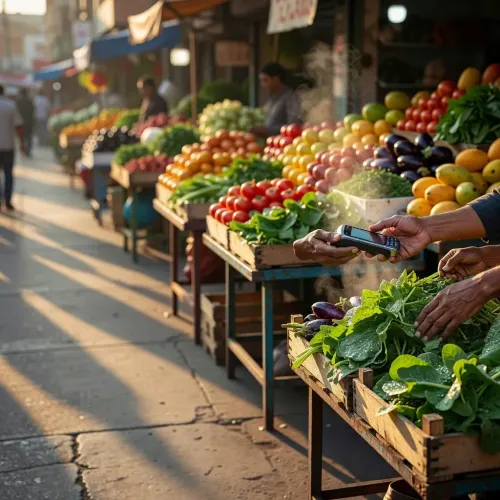
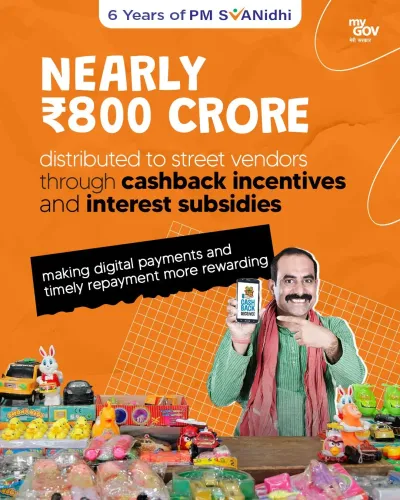
Beyond credit access, the programme has been positioned as a tool for formalisation: vendor registration, digital transaction incentives, and linkages to welfare schemes have been integral components. The broader Atmanirbhar Bharat framework situates this outreach within a larger government effort to extend formal economic identity to workers in the unorganised sector.
What's next
With the scheme completing six years, attention will turn to its continuity, any revision of loan ceilings, and the sustainability of repayment rates among beneficiaries. Integration with state-level urban street vending policies and the potential expansion of credit limits remain key areas to watch. The anniversary messaging from senior party figures like Nadda also signals the government's intent to highlight welfare delivery as a political and policy achievement ahead of future electoral cycles.
Point of View
Deploying concrete numbers — however unverified — to anchor the BJP's claim that Atmanirbhar Bharat has produced measurable ground-level outcomes rather than remaining an aspirational slogan. The choice of a senior party president and cabinet minister to amplify a scheme that sits under a different ministry signals coordinated messaging across the party apparatus. PM SVANidhi has been one of the more visible post-pandemic credit interventions because its beneficiaries are visible in everyday urban life, making it politically legible to a broad electorate. The six-year milestone framing is consistent with a pattern of converting scheme anniversaries into soft-launch moments for the next phase of outreach or credit expansion.
NationPress
22 Sept 2026
Frequently Asked Questions
What is the PM SVANidhi scheme?
PM SVANidhi, or Pradhan Mantri Street Vendor's AtmaNirbhar Nidhi, is a central government micro-credit scheme launched on 1 June 2020 to provide collateral-free working capital loans of up to ₹10,000 to urban street vendors whose livelihoods were disrupted by the COVID-19 pandemic.
How many vendors have benefited from PM SVANidhi?
According to Union Minister J. P. Nadda's post marking the scheme's sixth anniversary, more than 75 lakh street vendors have received a new identity and economic support through the programme, though these figures have not been independently verified.
How much money has been disbursed under PM SVANidhi?
Nadda stated that 112 lakh loans worth more than ₹17,800 crore have been disbursed under PM SVANidhi over its six years of operation. These figures are drawn from the minister's post and are yet to be confirmed by official published data.
Which ministry runs the PM SVANidhi scheme?
The Ministry of Housing and Urban Affairs is the nodal central ministry responsible for implementing PM SVANidhi, working alongside state governments, urban local bodies, and scheduled commercial banks and microfinance institutions.
Is PM SVANidhi still active in 2026?
Based on the anniversary messaging by senior government and party figures including J. P. Nadda on 1 June 2026 , the scheme remains active. Any formal extension of its term or revision of loan limits would be announced by the Ministry of Housing and Urban Affairs.