Nadda Highlights Ayushman Bharat, Digital Health Records and TB Drive
Synopsis
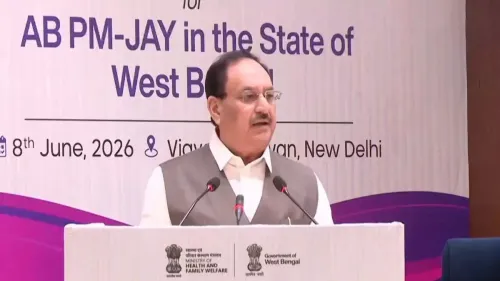
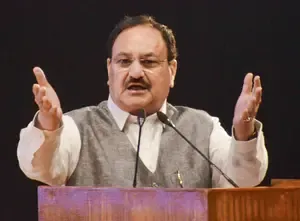
Union Health Minister J. P. Nadda on 17 July 2026 highlighted Ayushman Bharat as the world's largest health coverage scheme, announced digital storage of beneficiary health records, and reaffirmed the government's drive to make India tuberculosis-free under PM Modi's leadership.
Key Takeaways
Nadda posted on 17 July 2026 reaffirming the government's health agenda under PM Narendra Modi .
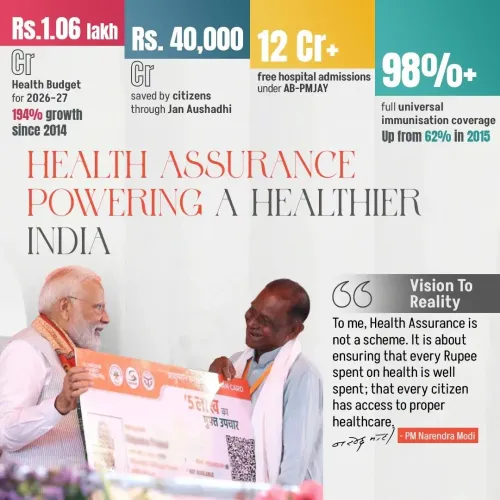
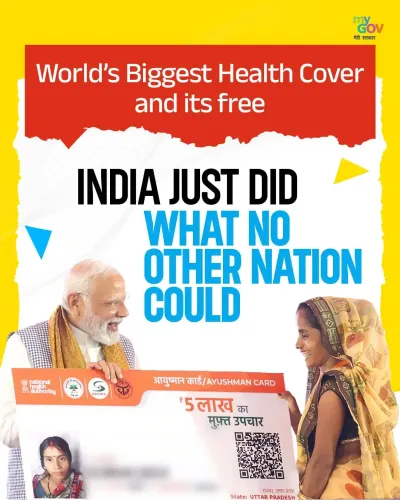
Ayushman Bharat PM-JAY , launched in 2018 , provides up to Rs 5 lakh annual health coverage to over 50 crore citizens and is described as the world's largest government-funded health assurance scheme.
Beneficiary health records will now be stored through a digital ward mechanism, building on the Ayushman Bharat Digital Mission rolled out nationally since 2021 .
The government is actively pursuing its target of a TB-free India , a goal set by PM Modi at the End TB Summit in 2018 , five years ahead of the global SDG deadline.
The National TB Elimination Programme operates through the Nikshay portal for case tracking, treatment support, and nutritional assistance to patients.
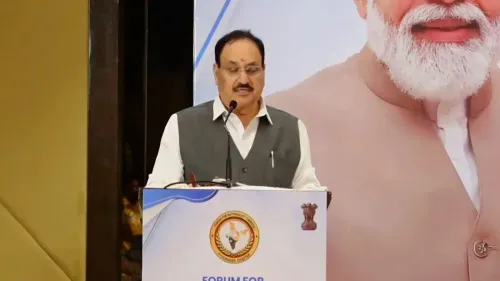
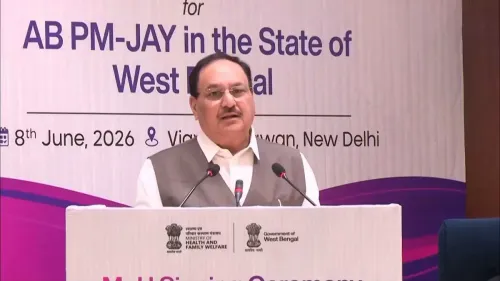
Union Health Minister J. P. Nadda on Friday, 17 July 2026 reaffirmed the central government's commitment to expanding health coverage, digitising beneficiary health records, and accelerating India's tuberculosis elimination mission, in a post on X crediting the initiatives to the leadership of Prime Minister Narendra Modi.
In the post, written in Hindi, Nadda stated: 'Pradhan Mantri Shri Narendra Modi ji ke netritva mein duniya ke sabse bade health coverage ke roop mein Ayushman Bharat jan-jan ke beech lokpriya hai.' — 'Under the leadership of Prime Minister Shri Narendra Modi, Ayushman Bharat, as the world's largest health coverage, is popular among the people.' He added that beneficiaries' health records will now be stored through a digital ward mechanism, and that the government is actively working to make India tuberculosis-free.
Context
Ayushman Bharat Pradhan Mantri Jan Arogya Yojana (PM-JAY) was launched in 2018 as the world's largest government-funded health assurance scheme, providing annual coverage of up to Rs 5 lakh to more than 50 crore economically vulnerable citizens. The scheme has since become a centrepiece of the ruling government's social welfare narrative, frequently cited as a benchmark for public health delivery at scale.
Nadda's reference to health records being 'stored through a digital ward' points to the broader architecture of the Ayushman Bharat Digital Mission (ABDM), which was approved in 2020 and rolled out nationally from 2021. ABDM aims to create unique digital health IDs for citizens and build a federated infrastructure for storing and accessing electronic health records across facilities.
Policy Backdrop
The National TB Elimination Programme has been a high-visibility commitment since Prime Minister Modi announced a target of a TB-free India by 2025 at the End TB Summit in 2018 — five years ahead of the global target set under the United Nations Sustainable Development Goals. The programme operates through the Nikshay portal, which tracks case notifications, treatment adherence, and nutritional support to patients.
Nadda's post brings together three distinct policy strands — health insurance coverage, digital health infrastructure, and communicable disease elimination — reflecting the integrated approach the central government has pursued since the late 2010s. Combining financial protection with data infrastructure and vertical disease-control programmes has been a recurring theme in the Ministry of Health's communications.
Stakeholders and Impact
The primary beneficiaries of these initiatives are the 50-crore-plus citizens enrolled under PM-JAY, TB patients receiving support through the Nikshay ecosystem, and state health departments tasked with ground-level implementation. Digitising health records at the beneficiary level is expected to reduce duplication, improve continuity of care, and enable better data-driven planning at both central and state levels.
State governments play a critical role in the scheme's reach, as PM-JAY operates on a 60:40 cost-sharing model between the Centre and states (with special provisions for northeastern and hill states). The pace of digital health record integration varies across states, making uniform rollout a continuing administrative challenge.
What's Next
Attention will now focus on the rollout timelines for the digital health record mechanism referenced by the Minister, and on how it integrates with the existing ABDM infrastructure at the state level. On the TB front, periodic updates from the Nikshay portal on case notification rates and treatment completion figures will indicate how close the programme is to its elimination benchmark.
With the government continuing to project Ayushman Bharat as a flagship welfare achievement ahead of electoral cycles, further policy announcements expanding beneficiary categories or deepening digital integration are likely to follow.
Point of View
Digital infrastructure, and disease elimination — into a single narrative anchored to PM Modi's leadership. The timing suggests an effort to consolidate the health ministry's messaging around achievable milestones as the TB elimination deadline draws scrutiny. By foregrounding the digital ward mechanism, the minister signals that the next phase of Ayushman Bharat is less about enrolment numbers and more about data depth and care continuity. The convergence of these strands also positions the BJP's health record as a long-arc governance story rather than a point-in-time scheme launch.
NationPress
17 Jul 2026
Frequently Asked Questions
What is Ayushman Bharat and who is eligible?
Ayushman Bharat PM-JAY is the world's largest government-funded health assurance scheme, launched in 2018, providing up to Rs 5 lakh annual hospitalisation coverage to over 50 crore economically vulnerable Indians identified through socio-economic census data.
What is the digital ward mechanism mentioned by JP Nadda?
The digital ward mechanism refers to the digital storage of beneficiary health records under the Ayushman Bharat Digital Mission framework, which creates unique health IDs and electronic health records to improve continuity of care across facilities.
What is India's TB elimination target and has it been met?
Prime Minister Narendra Modi set a target of a TB-free India by 2025 at the End TB Summit in 2018, five years ahead of the global SDG goal; the National TB Elimination Programme continues to work towards this through the Nikshay portal for case tracking and treatment support.
What is the Ayushman Bharat Digital Mission?
The Ayushman Bharat Digital Mission, approved in 2020 and rolled out nationally from 2021, is a national digital health infrastructure initiative that assigns unique health IDs to citizens and enables electronic storage and access of health records across hospitals and clinics.
What did JP Nadda say about health coverage on 17 July 2026?
On 17 July 2026, Union Health Minister JP Nadda stated that Ayushman Bharat is popular as the world's largest health coverage scheme, that beneficiary health records will be digitally stored through a digital ward mechanism, and that the government is actively working to make India tuberculosis-free.