Nadda highlights post-2014 health infra expansion, new AIIMS
Synopsis
Union Health Minister J. P. Nadda cited PM Modi's health infrastructure record on 17 July 2026, pointing to 15 new AIIMS approvals, hundreds of new medical colleges, and the Ayushman Bharat Health Infrastructure Mission's network of critical care blocks and public health labs since 2014.
Key Takeaways
15 new AIIMS have been approved since 2014 , with several now operational across India's regions.
Hundreds of new medical colleges have been established, expanding medical education and doctor supply.
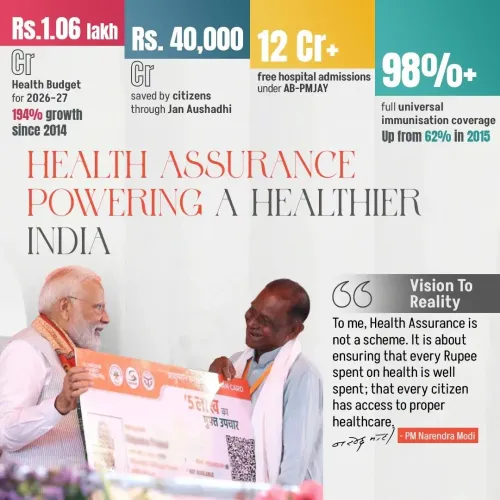
The Ayushman Bharat Health Infrastructure Mission is building critical care blocks, integrated public health labs, and public health units nationwide.
Village-level primary healthcare development is a stated focus alongside tertiary care expansion.
Union Health Minister J.
Nadda attributed the infrastructure push to PM Narendra Modi's vision in a post on 17 July 2026 .
Parliamentary scrutiny of fund utilisation and operational status of new facilities is expected in the next budget session.
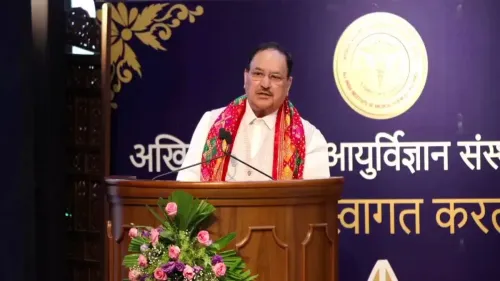
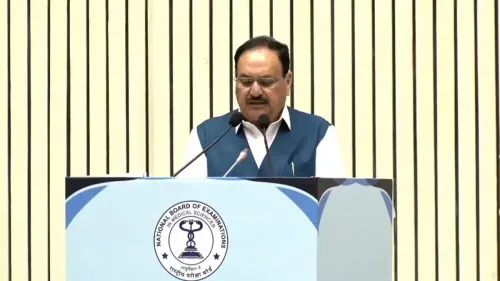
Union Health Minister J. P. Nadda on Friday, 17 July 2026, took to X to outline the expansion of India's healthcare infrastructure since 2014, attributing the build-out to the vision of Prime Minister Narendra Modi. The post cited the approval of 15 new AIIMS, the establishment of hundreds of new medical colleges, and the rollout of the Ayushman Bharat Health Infrastructure Mission as markers of a decade-long transformation in public health capacity.
Context
Nadda's post, written in Hindi, quotes Prime Minister Modi's framing of the health sector push: 'बीते वर्षों में भारत ने अपने हेल्थ केयर इंफ्रास्ट्रक्चर का तेजी से विस्तार किया है' ('In recent years, India has rapidly expanded its healthcare infrastructure'). The statement underscores the government's effort to present a coherent, accelerated build-out narrative ahead of what observers expect to be a budget-cycle review of health spending.
The post specifically notes that new AIIMS campuses are now operational across different parts of the country, and that primary healthcare facilities are being developed at the village level — a signal that the expansion is intended to cover both tertiary and grassroots care.
Policy Backdrop
The policy lineage behind these claims stretches back to the National Health Policy 2017, which set targets for increasing government health expenditure and scaling up medical education. The Ayushman Bharat Pradhan Mantri Jan Arogya Yojana, launched in 2018, added a health insurance layer to the infrastructure drive.
The Ayushman Bharat Health Infrastructure Mission — highlighted prominently in Nadda's post — was announced to build a network of critical care blocks, integrated public health laboratories, and public health units across states. This mission is positioned as a structural complement to the insurance-side of Ayushman Bharat, targeting gaps in physical capacity rather than financial coverage alone.
Hundreds of new medical colleges have also been approved since 2014, significantly expanding the pipeline of trained medical professionals — a metric the government has used to argue that both supply and access are improving simultaneously.
Stakeholders and Impact
Rural populations stand to benefit most directly from the village-level primary healthcare push and the expansion of critical care infrastructure in smaller districts. Medical students gain from the increase in college seats, while state health departments are the primary implementing partners for missions such as the Health Infrastructure Mission.
The creation of integrated public health labs and critical care blocks is aimed at reducing the burden on large urban hospitals, which have historically absorbed patients from regions without adequate local facilities. The government's framing positions this as a systemic correction rather than a piecemeal addition.
What's Next
Parliamentary scrutiny of fund utilisation and the actual operational status of new AIIMS campuses and critical care blocks is expected in the coming budget session. Health ministry reports on how many of the sanctioned facilities are fully functional — versus those still under construction or partially operational — will be a key measure of whether the expansion has translated into on-ground capacity.
The government's ability to demonstrate outcomes, not just approvals, will shape the political and policy conversation around public health investment as India heads deeper into its next electoral cycle.
Point of View
Timed to reinforce the party's governance credentials ahead of a budget session likely to face questions on health spending outcomes. By attributing the push explicitly to PM Modi, the post serves a dual function: policy communication and political signalling within the party's top leadership. The emphasis on village-level primary care alongside tertiary AIIMS expansion suggests an effort to pre-empt criticism that the government's health focus has been skewed toward flagship institutions. Whether the approvals-to-operations gap on new AIIMS and critical care blocks becomes a political liability will depend on how aggressively the opposition pursues ground-level data.
NationPress
17 Jul 2026
Frequently Asked Questions
How many new AIIMS have been approved in India after 2014?
The government has stated that 15 new AIIMS were approved after 2014 , with several now operational across different regions of the country, though the exact number fully functional varies by official report.
What is the Ayushman Bharat Health Infrastructure Mission?
The Ayushman Bharat Health Infrastructure Mission is a central government scheme designed to build critical care blocks, integrated public health laboratories, and public health units across India, strengthening the health system at every level from district hospitals to village primary care.
What did JP Nadda say about India's healthcare expansion?
J. P. Nadda posted on 17 July 2026 that India has rapidly expanded its healthcare infrastructure since 2014 , citing 15 new AIIMS approvals, hundreds of new medical colleges, village-level primary care development, and the Ayushman Bharat Health Infrastructure Mission.
How many new medical colleges have been opened in India since 2014?
The government's position, as stated in Nadda's post, is that hundreds of new medical colleges have been established across India since 2014 , significantly expanding medical education capacity and the supply of trained doctors.
What are critical care blocks under Ayushman Bharat Health Infrastructure Mission?
Critical care blocks under the Ayushman Bharat Health Infrastructure Mission are dedicated hospital units being set up at the district level to provide intensive and emergency care, reducing patient dependence on large urban tertiary hospitals.