Nadda: Institutional Deliveries Rose from 78% to 90.6% Since 2014

Synopsis
Union Health Minister J. P. Nadda says India's institutional delivery rate has risen from 78 per cent in 2014 to 90.6 per cent in 2023–24, citing ASHA worker incentives and NHM support as the driving force behind the decade-long improvement in maternal health outcomes.
Key Takeaways
India's institutional delivery rate rose from 78% in 2014 to 90.6% in 2023–24 , according to Union Health Minister J.
ASHA workers receive performance-linked cash incentives under the National Health Mission to bring pregnant women to health facilities for childbirth.
The incentive architecture is rooted in Janani Suraksha Yojana (JSY) , a conditional cash transfer scheme launched in 2005 under the National Rural Health Mission.
Higher institutional delivery rates are a key proxy for skilled birth attendance and are linked to reducing the maternal mortality ratio in line with SDG-3 targets.
A residual 9.4 per cent of deliveries still occur outside health institutions, concentrated in remote and hard-to-reach areas.
The next NFHS round and state-level MMR reports will be the critical test of whether this trajectory is holding.
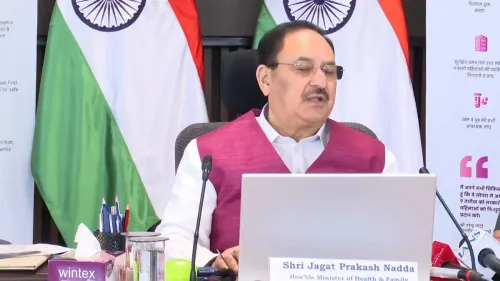
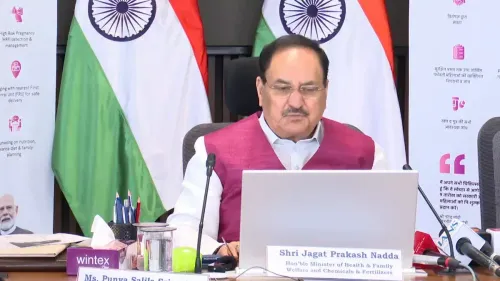
A single number tells the story of a decade-long public health push: Union Health Minister J. P. Nadda on Wednesday, 21 October 2026, cited government data showing that institutional deliveries in India climbed from 78 per cent in 2014 to 90.6 per cent in 2023–24 — a jump he attributes directly to incentive-driven outreach through ASHA workers and sustained facility support under the National Health Mission (NHM).
Posting in Hindi, Nadda wrote: 'हमने माताओं के संस्थागत प्रसव को बढ़ावा देने के लिए अनेक सुविधाएँ प्रदान की हैं' — 'We have provided many facilities to promote institutional deliveries for mothers.' He highlighted that ASHA workers receive incentive payments specifically to ensure pregnant women reach health institutions for childbirth, calling the rise in the institutional delivery rate a direct result of this design.What ASHA workers actually do — and why the incentive works
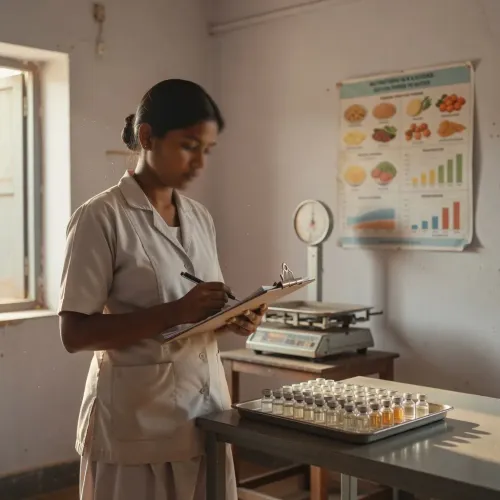
Accredited Social Health Activists (ASHAs) are community health volunteers deployed at the village level under the NHM. Their role in maternal health is hyperlocal: they identify pregnant women, counsel families, arrange transport, and physically accompany women to government health facilities. Performance-linked cash incentives — in place since 2005–06 — mean every institutional delivery an ASHA facilitates translates into direct income for her, aligning her economic interest with the public health goal.
The architecture traces back to Janani Suraksha Yojana (JSY), a conditional cash transfer scheme launched in 2005 under the National Rural Health Mission to incentivise institutional births among families below the poverty line. JSY funnels cash not just to ASHA workers but also to the mothers themselves, attacking the cost barrier and the knowledge barrier simultaneously. Over two decades, that twin incentive structure has become the backbone of India's maternal health delivery system.
12.6 percentage points in a decade — what the numbers mean
Moving an institutional delivery rate from 78 per cent to 90.6 per cent in roughly a decade is not a statistical footnote. Roughly one in eight births that previously happened outside a health facility — at home, often without a skilled attendant — has shifted into an institution where emergency obstetric care is available. At India's birth scale, that fraction represents millions of deliveries annually.
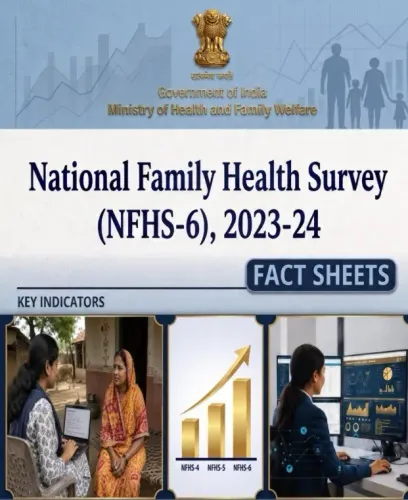
The improvement also tracks against Sustainable Development Goal 3, which targets a global maternal mortality ratio below 70 per 100,000 live births by 2030. Institutional delivery is one of the most reliable proxies for skilled birth attendance — the single variable most strongly associated with preventing maternal deaths. Higher institutional delivery rates, sustained over years, are expected to push India's maternal mortality ratio further down from the gains already recorded in successive National Family Health Survey (NFHS) rounds.
The unfinished 9.4 per cent
The headline figure also carries its own quiet urgency: 9.4 per cent of deliveries still happen outside health institutions. In a country of India's size, that residual gap represents a concentrated burden in the hardest-to-reach geographies — remote tribal districts, areas with poor road connectivity, and communities where cultural or logistical barriers persist. The next NFHS round and forthcoming state-level maternal mortality updates will reveal whether the pace of improvement is holding, and whether the gap is closing fastest where it matters most.
The numbers are moving in the right direction. But for every percentage point still outstanding, an ASHA worker somewhere is the difference between a safe delivery and a preventable tragedy.
Point of View
The framing positions the current government as the decisive accelerator of a trend that JSY began two decades ago. The ASHA incentive model is not new, but the political communication strategy of attaching a sharp before-and-after number to it is increasingly central to how the Health Ministry argues its case. The real analytical question is whether the remaining 9.4 per cent represents a structural ceiling — communities that incentive-only approaches cannot reach — or a gap that deepened facility investment and targeted outreach can still close before 2030's SDG deadline.
NationPress
21 Oct 2026
Frequently Asked Questions
What is India's current institutional delivery rate?
According to Union Health Minister J. P. Nadda, India's institutional delivery rate stood at 90.6 per cent in 2023–24 , up from 78 per cent in 2014.
What is the role of ASHA workers in institutional deliveries?
ASHA (Accredited Social Health Activist) workers are village-level community health volunteers under the National Health Mission who identify pregnant women, counsel families, and accompany mothers to government health facilities for delivery. They receive performance-linked cash incentives for each institutional delivery they facilitate.
What is Janani Suraksha Yojana and how does it promote institutional deliveries?
Janani Suraksha Yojana (JSY) is a conditional cash transfer scheme launched in 2005 under the National Rural Health Mission. It provides direct cash incentives to both mothers from below-poverty-line families and ASHA workers to encourage births in government health institutions, reducing the financial and logistical barriers to institutional delivery.
Why does institutional delivery matter for maternal health?
Institutional delivery ensures that a skilled birth attendant is present and emergency obstetric care is immediately available if complications arise. It is one of the strongest predictors of reducing maternal mortality and is a core target under the United Nations' Sustainable Development Goal 3 (SDG-3) .
What percentage of deliveries in India still happen outside health facilities?
Based on J. P. Nadda's figures, approximately 9.4 per cent of deliveries in India still take place outside health institutions, representing the most geographically or socially difficult-to-reach populations.