NFHS-6: Institutional deliveries hit 90.6%, stunting drops to 29.3% in 2023-24
Synopsis
India's most comprehensive household health survey in years shows stunting among under-five children has fallen from 35.5% to 29.3%, institutional deliveries crossed 90%, and first-hour breastfeeding jumped 10 percentage points. The NFHS-6 data, covering 6.79 lakh households across 715 districts, gives health planners the sharpest district-level picture yet of where the gains are real — and where gaps remain.
Key Takeaways
NFHS-6 was released on 29 May 2025 , covering 6.79 lakh households across 715 districts in 2023-24 .
Institutional deliveries rose from 88.6 to 90.6 per cent ; skilled birth attendance from 89.4 to 91.3 per cent .
Stunting among children under five declined from 35.5 to 29.3 per cent .
First-hour breastfeeding increased by nearly 10 percentage points , from 41.8 to 50.1 per cent .
Mothers on IFA supplements for 100+ days rose from 44.1 to 54.9 per cent .
Hygienic menstrual protection use among women aged 15-24 increased from 77.6 to 79.2 per cent .
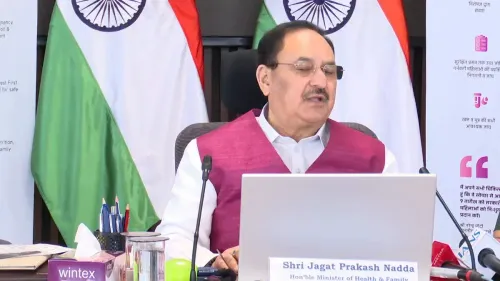
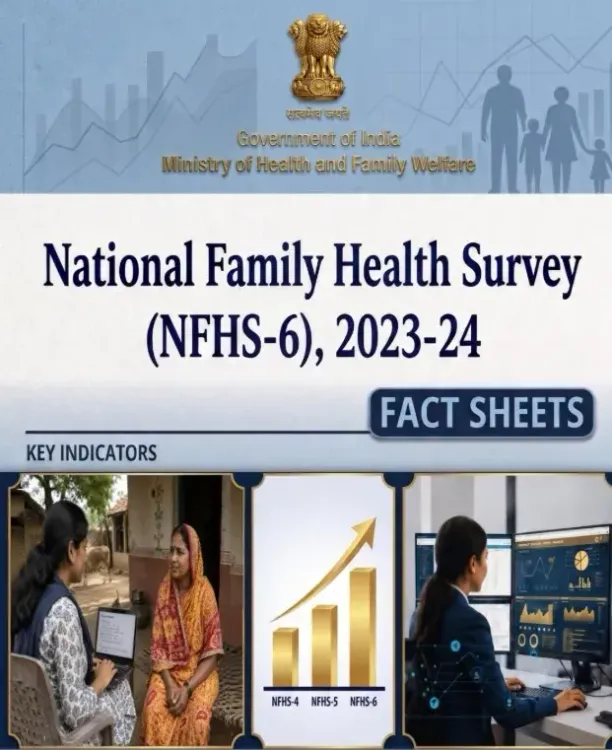
The Ministry of Health and Family Welfare (MoHFW) on 29 May 2025 released the findings of the National Family Health Survey (NFHS)-6, conducted during 2023-24, showing measurable gains in maternal care, child nutrition, and public health infrastructure across India. The survey, carried out with the International Institute for Population Sciences (IIPS), Mumbai as the nodal agency, covered nearly 6.79 lakh households across 715 districts, making it one of the most comprehensive health assessments in the country.
Maternal Healthcare: Key Gains
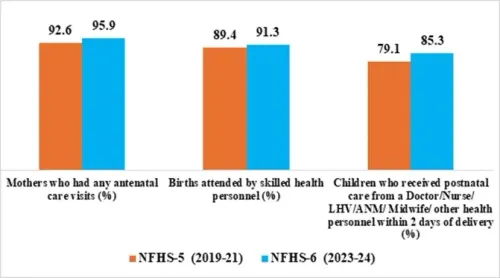
Antenatal care (ANC) coverage reached 95.9 per cent of pregnant women, while first-trimester ANC registration rose from 70 per cent to 76.2 per cent between NFHS-5 (2019-21) and NFHS-6 (2023-24). Mothers completing at least four ANC visits increased from 58.5 to 65.2 per cent, signalling stronger continuity of care.
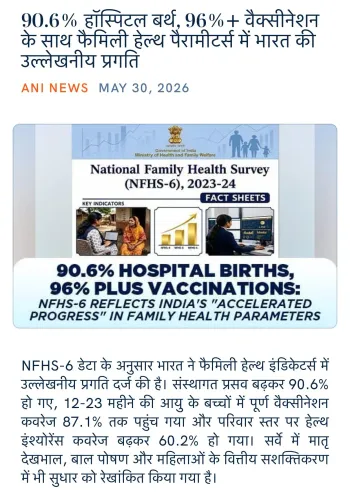
Institutional deliveries climbed from 88.6 to 90.6 per cent, edging India closer to universal coverage. Births attended by skilled health personnel rose from 89.4 to 91.3 per cent, and postnatal care for newborns within two days of delivery improved from 79.1 to 85.3 per cent, according to the official statement.
Maternal nutrition also improved: mothers consuming iron folic acid (IFA) supplements for 100 days or more during pregnancy rose from 44.1 to 54.9 per cent, while those completing 180 days or more of supplementation increased from 26 to 37.8 per cent.
Child Nutrition: Stunting Falls Sharply
Stunting — low height for age among children under five — declined substantially from 35.5 to 29.3 per cent, one of the most significant improvements recorded in the survey. Officials described this as strong evidence of long-term nutritional transition in India.
Early breastfeeding practices also improved: the share of children under three years breastfed within one hour of birth rose by nearly 10 percentage points, from 41.8 to 50.1 per cent. Additionally, 95.6 per cent of children aged under six months were found to be breastfed during the survey period.
Programmes Driving the Change
The MoHFW attributed the improvements to focused implementation of flagship schemes including Janani Suraksha Yojana (JSY), Janani Shishu Suraksha Karyakram (JSSK), Pradhan Mantri Surakshit Matritva Abhiyan (PMSMA/e-PMSMA), Surakshit Matritva Aashwasan (SUMAN), Facility Based New-born Care, Home-Based Newborn Care, and Pradhan Mantri Matru Vandana Yojana (PMMVY 2.0).
'These programmes have enhanced antenatal and postnatal care coverage, ensured quality care during pregnancy and childbirth, and promoted safe motherhood and child health practices,' the ministry statement said.
Menstrual Hygiene: Steady Progress
The survey also recorded a rise in hygienic menstrual protection use among women aged 15-24 years, from 77.6 to 79.2 per cent. The improvement was supported by the Menstrual Hygiene Scheme (MHS) under the Rashtriya Kishor Swasthya Karyakram (RKSK) and affordable sanitary products available through the Pradhan Mantri Bhartiya Janaushadhi Pariyojana.
With NFHS-6 now public, health planners are expected to use the district-level data to recalibrate programme targets and resource allocation ahead of the next planning cycle.
Point of View
But quality of care within those institutions remains poorly captured by survey data. The real policy test is whether district-level disaggregation reveals the persistent pockets — typically in eastern and central India — where gains have been slowest. Aggregate national averages can mask deep subnational inequality, and that is precisely where the next planning cycle must focus.
NationPress
19 Sept 2026
Frequently Asked Questions
What is the NFHS-6 and when was it conducted?
The National Family Health Survey (NFHS)-6 is a large-scale, multi-round survey conducted by the Ministry of Health and Family Welfare (MoHFW) with IIPS, Mumbai as the nodal agency. It was conducted during 2023-24 and covered nearly 6.79 lakh households across 715 districts in India.
How much has stunting among children improved in NFHS-6?
Stunting among children under five years declined from 35.5 per cent in NFHS-5 (2019-21) to 29.3 per cent in NFHS-6 (2023-24), a reduction of over 6 percentage points. Officials described this as strong evidence of long-term nutritional improvement in India.
What are the key improvements in maternal healthcare recorded in NFHS-6?
Institutional deliveries rose from 88.6 to 90.6 per cent, antenatal care coverage reached 95.9 per cent, and postnatal care for newborns within two days improved from 79.1 to 85.3 per cent. Mothers completing four or more ANC visits also increased from 58.5 to 65.2 per cent.
Which government schemes are credited for the health improvements in NFHS-6?
The MoHFW credited schemes including Janani Suraksha Yojana (JSY), Janani Shishu Suraksha Karyakram (JSSK), Pradhan Mantri Surakshit Matritva Abhiyan (PMSMA), Surakshit Matritva Aashwasan (SUMAN), and Pradhan Mantri Matru Vandana Yojana (PMMVY 2.0) for driving gains in maternal and child health indicators.
How does NFHS-6 compare with NFHS-5 on breastfeeding?
The share of children under three years breastfed within one hour of birth rose from 41.8 per cent in NFHS-5 to 50.1 per cent in NFHS-6, an increase of nearly 10 percentage points. Additionally, 95.6 per cent of children under six months were found to be breastfed during the NFHS-6 survey period.