JP Nadda launches Ayushman Sarathi WhatsApp Chatbot and Drug Registry
Synopsis
India's public health delivery just got a WhatsApp address. The Ayushman Sarathi chatbot lets PM-JAY beneficiaries check eligibility, apply for cards, and file grievances without leaving WhatsApp — while a new Drug Registry and Unified Health Interface aim to standardise medicine data and break down platform silos across the country's digital health ecosystem.
Key Takeaways
Union Health Minister JP Nadda launched the Ayushman Sarathi–PM-JAY WhatsApp Chatbot on 29 June in New Delhi .
The chatbot allows PM-JAY beneficiaries to check eligibility, apply for cards, complete eKYC , and register grievances directly on WhatsApp .
A unified Drug Registry was launched under ABDM , developed with CDSCO and NRCeS, Pune , using SNOMED CT standards.
The Unified Health Interface (UHI) enables patients and providers on different digital platforms to connect using common technical standards.
All three initiatives operate on ABDM building blocks, including ABHA identifiers, HPR , HFR , and the Health Information Exchange .
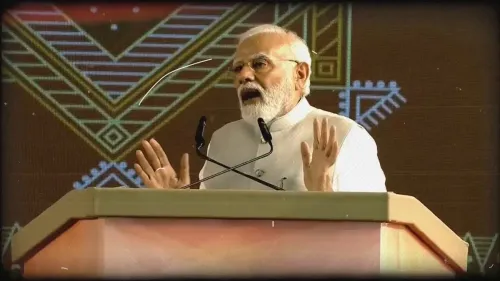
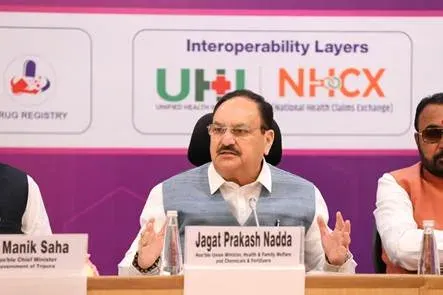
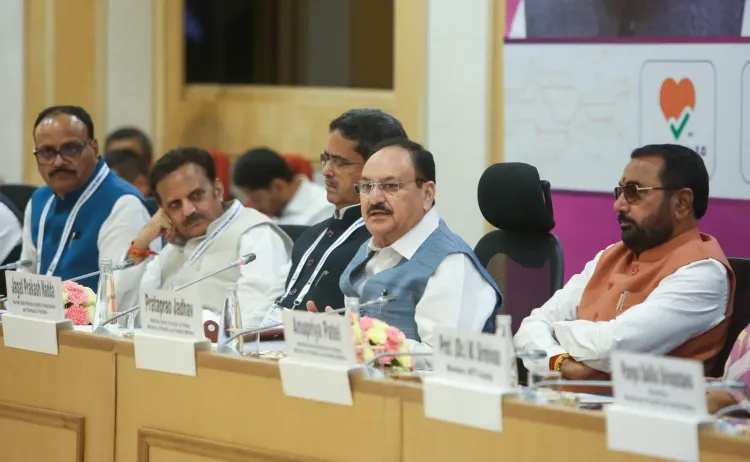
Union Health Minister JP Nadda on Monday, 29 June unveiled a series of digital health initiatives in New Delhi, including the Ayushman Sarathi–PM-JAY WhatsApp Chatbot and a unified Drug Registry, aimed at improving service delivery and beneficiary access under the government's flagship health schemes.
What Ayushman Sarathi Does
The Ayushman Sarathi chatbot enables PM-JAY beneficiaries to access essential health scheme services directly through WhatsApp, without visiting government offices or calling helpline centres. Built on secure API-based integrations with PM-JAY systems, the platform delivers real-time information round the clock.
Services available through the chatbot include eligibility checks under PM-JAY, applying for and downloading the Ayushman Card, completing or redoing eKYC, linking Aadhaar, locking or unlocking the PM-JAY card, and accessing the Ayushman Vaya Vandana Card for citizens aged 70 years and above, among others.
According to an official statement, 'The chatbot serves as an important digital interface between PM-JAY beneficiaries and the National Health Authority, promoting efficient service delivery and improved beneficiary satisfaction. The platform also supports data-driven governance by enabling feedback collection, grievance management, and continuous improvement in healthcare service delivery.'
The Unified Drug Registry
Nadda also launched the Drug Registry, a standardised digital platform designed to serve as a single source of truth for medicine-related data across India's healthcare systems. Conceptualised under the Ayushman Bharat Digital Mission (ABDM), it enables consistent identification, storage, exchange, and use of drug information.
The registry was developed in collaboration with the Central Drugs Standard Control Organization (CDSCO) and the National Resource Centre for EHR Standards (NRCeS), based in Pune. It leverages international standards such as SNOMED CT to ensure interoperability and semantic consistency across platforms.
Unified Health Interface: Bridging Digital Health Platforms
The Health Minister also launched the Unified Health Interface (UHI), described as an open, interoperable network for digital health services and the service layer of ABDM. Unlike the current ecosystem — where both patient and provider must be on the same platform to interact — UHI allows citizens and healthcare providers to connect across different digital applications using common technical standards.
When a citizen uses a UHI-enabled app to search for a health service, the request is routed through a Gateway to registered service providers. The entire journey — from discovery and booking to fulfillment — is facilitated through a shared protocol, regardless of the platform used.
The network uses core ABDM building blocks: ABHA as the patient identifier, the Healthcare Professionals Registry (HPR) and Health Facility Registry (HFR) for provider verification, and the Health Information Exchange for consent-based data sharing.
Broader Significance
Taken together, the three launches mark a significant push to digitise India's public health infrastructure — reducing friction for citizens accessing government health entitlements while standardising drug and provider data across a fragmented ecosystem. The initiatives are expected to deepen the reach of PM-JAY, which covers hundreds of millions of low-income beneficiaries, by meeting them on a platform — WhatsApp — that already has near-universal penetration in India.
Point of View
And meeting them there removes a real barrier. But the harder test is backend reliability: API-based real-time delivery sounds seamless until PM-JAY's own databases have gaps or mismatches, which have historically caused card-denial problems at hospitals. The Drug Registry and UHI are structurally more important in the long run — a single source of truth for medicines and a platform-agnostic health network could genuinely reduce fragmentation. The question is adoption speed among private providers, who have little regulatory compulsion to plug into ABDM systems.
NationPress
28 Sept 2026
Frequently Asked Questions
What is the Ayushman Sarathi WhatsApp Chatbot?
Ayushman Sarathi is a WhatsApp-based chatbot launched by the Union Health Ministry on 29 June to give PM-JAY beneficiaries instant access to scheme services — including eligibility checks, card applications, eKYC, and grievance registration — without visiting offices or calling helplines. It is built on API-based integrations with PM-JAY systems for real-time service delivery.
What services can PM-JAY beneficiaries access through Ayushman Sarathi?
Beneficiaries can check PM-JAY eligibility, apply for and download the Ayushman Card, redo eKYC, link Aadhaar, lock or unlock their PM-JAY card, and access the Ayushman Vaya Vandana Card for citizens aged 70 and above, among other services.
What is the Drug Registry launched by JP Nadda?
The Drug Registry is a unified digital platform under the Ayushman Bharat Digital Mission (ABDM) that serves as a single source of truth for medicine data across India's healthcare systems. Developed with CDSCO and NRCeS Pune, it uses SNOMED CT standards to ensure interoperability.
What is the Unified Health Interface (UHI)?
The UHI is an open, interoperable network — the service layer of ABDM — that allows patients and healthcare providers on different digital platforms to connect using common technical standards. It routes health service requests through a central Gateway to registered providers, covering discovery, booking, and fulfillment.
Who developed these digital health platforms?
The Ayushman Sarathi chatbot was developed by the National Health Authority. The Drug Registry was built in collaboration with CDSCO and NRCeS, Pune. All three initiatives — including the UHI — are conceptualised under the Ayushman Bharat Digital Mission.