Bhupender Yadav Facilitates MoUs for Urban Road Greening in NCR
Synopsis
In a significant move to combat air pollution, Union Minister Bhupender Yadav oversees the signing of MoUs between NCR states and institutes to implement greening and paving strategies for urban roads, crucial for enhancing air quality.
Key Takeaways
MoUs Signed: Collaboration among NCR states and institutes for urban road greening.
Air Quality Focus: Initiative targets reduction of dust pollution and PM10 levels.
Framework Compliance: Adheres to CAQM guidelines for sustainable urban development.
Greening Strategies: Implementation of drought-resistant plant species in open areas.
Monitoring Commitment: Emphasis on digital oversight and timely execution of plans.
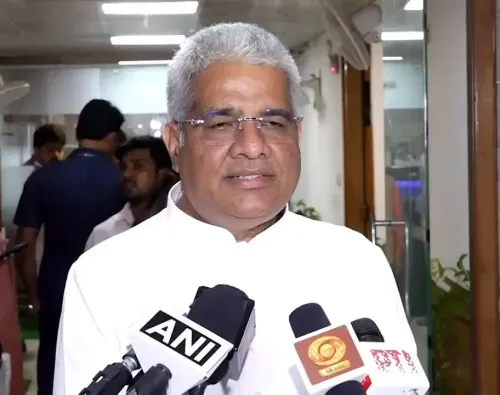
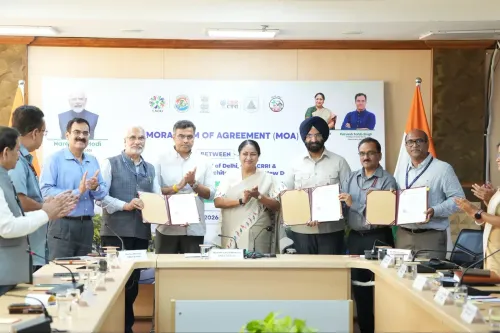
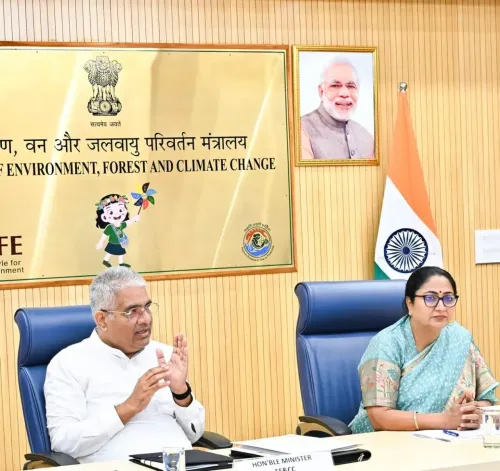
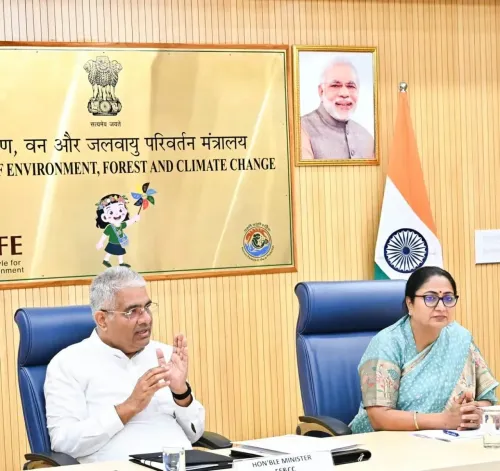
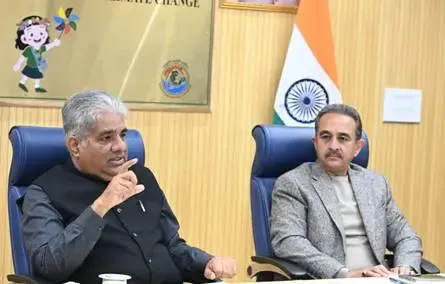
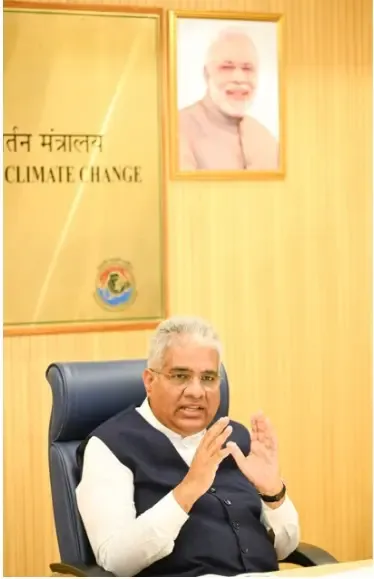
New Delhi, Feb 24 (NationPress) The Union Minister for Environment, Forest and Climate Change, Bhupender Yadav, chaired the signing of Memoranda of Understanding (MoUs) on Tuesday, aimed at uniting NCR states and specialized institutions for the paving and greening of urban roadways, as reported by an official.
Four MoUs were finalized between the Public Works Department (PWD)/Urban Development Departments from Delhi, Haryana, Uttar Pradesh, and Rajasthan, along with the CSIR-Central Road Research Institute (CSIR-CRRI) and the School of Planning and Architecture (SPA).
These agreements align with the established framework for urban road paving and greening, as outlined by the Commission for Air Quality Management (CAQM) in the National Capital Region and its surrounding areas, the official stated.
The aim of this framework is to enhance road cross-sections, optimize right-of-way (RoW) usage, implement greening initiatives, and establish road maintenance protocols throughout the NCR.
The necessity for such coordinated efforts has been highlighted during high-level review meetings aimed at developing structured action plans to mitigate dust emissions from roads and open spaces, according to the statement.
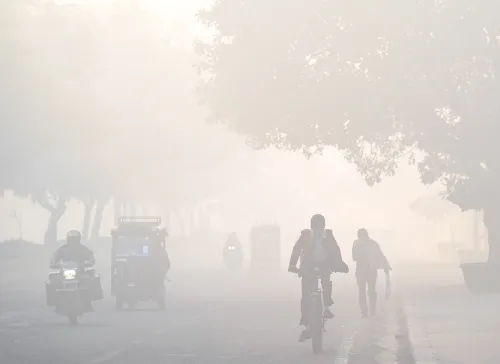
Yadav remarked that air pollution continues to be a significant hurdle in the Delhi-NCR region, noting that the annual action plans of NCR states, along with their municipal corporations, have been evaluated, revealing that Delhi alone has 448 action points.
Addressing the considerable impact of dust pollution, the Minister pointed out that dust constitutes a major source of PM10 pollution in the region.
He proposed the formation of a specialized task force to assess the social ramifications of this initiative and advocated for the scientific mapping of roads most impacted by traffic congestion and dust pollution.
Yadav emphasized the importance of greening by suggesting the planting of drought-resistant bushes in open spaces, with approximately 30 suitable species already identified by the Ministry of Environment, Forest and Climate Change (MoEFCC).
The Minister commended the collaborative efforts of CAQM, NCR state authorities, CSIR-CRRI, and SPA in promoting long-term strategies to control dust pollution from roads.
He stressed the importance of timely execution and robust digital oversight.
Yadav urged CSIR-CRRI and SPA to incorporate greening elements into their road design plans, mentioning that these initiatives could be pursued under Corporate Social Responsibility (CSR) efforts within the NCR.
He concluded by stating that the greening guidelines previously issued by CAQM must be integrated into development strategies.
Point of View
Led by Bhupender Yadav, reflects a concerted effort to address air quality issues in the NCR through strategic collaborations. The signing of MoUs signifies a proactive approach to urban planning and environmental management, crucial for sustainable development.
NationPress
6 Oct 2026
Frequently Asked Questions
What are the objectives of the signed MoUs?
The MoUs aim to facilitate the paving and greening of urban roads, improving air quality and reducing dust pollution in the NCR.
Which states are involved in this initiative?
The states involved are Delhi, Haryana, Uttar Pradesh, and Rajasthan.
What role does the CAQM play in this initiative?
The CAQM provides the framework for urban road greening and paving, ensuring compliance with air quality management standards.
How will the greening initiative affect air quality?
By implementing greening measures, the initiative aims to reduce dust emissions, which are a significant contributor to PM10 pollution in the region.
Is there a plan for monitoring and evaluation?
Yes, the initiative includes a call for robust digital monitoring and the establishment of a task force to evaluate the social impact.