NDA leaders back High-Level Committee on Demographic Change, Congress urges caution
Synopsis
The Centre's new High-Level Committee on Demographic Change has drawn sharp political lines — NDA allies framing it as a national security imperative, Congress demanding evidence before action. With no mandate or timeline yet public, the committee's real test will be whether it produces verifiable data or becomes another platform for electoral signalling.
Key Takeaways
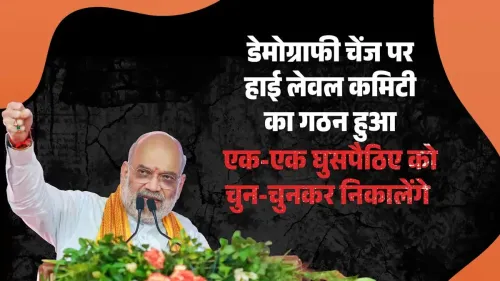
The Centre has formed a High-Level Committee on Demographic Change to address illegal infiltration and related population shifts.
Bihar BJP President Sanjay Saraogi alleged Bangladeshi infiltrators were settled in West Bengal under TMC rule.
JD-U Spokesperson Rajeev Ranjan Prasad called undocumented residents a national security and resource-equity concern in a country of 140 crore .
Congress MP Shashi Tharoor welcomed the committee but cautioned against proceeding without 'adequate facts and figures'.
Congress MP Husain Dalwai challenged the BJP to stop infiltrators through action, not statements, and disputed claims linking religion to birth rates.
Congress MP Rakesh Rathore alleged the move was designed to divert attention from more pressing issues.
National Democratic Alliance (NDA) leaders on Wednesday, 27 May welcomed the Centre's decision to constitute a High-Level Committee on Demographic Change, describing illegal infiltration as a pressing national security concern. The Indian National Congress, while not opposing the move outright, urged the government to ground its work in verifiable data before acting on claims of 'unnatural demographic shifts'.
NDA Leaders on the Committee
Bihar BJP President Sanjay Saraogi called unnatural demographic change a matter of 'national concern', arguing that illegal migrants had been settled in parts of West Bengal during the rule of the All India Trinamool Congress (TMC). 'In areas where opposition governments have ruled, such as in West Bengal under the Trinamool Congress, the demographics of several districts have changed, with Bangladeshi infiltrators being settled during their rule,' Saraogi said. He added that it is the Bharatiya Janata Party's (BJP) stated policy to 'identify the infiltrators and drive them out.'
Saraogi also cited figures from Kishanganj district in Bihar, claiming its population growth rate was outpacing other districts and attributing this — reportedly — to infiltrators including Rohingyas, though he did not cite a specific source for the data.
JD-U and BJP Voices
Janata Dal (United) National Spokesperson Rajeev Ranjan Prasad framed the issue as one of resource equity and national security, arguing that undocumented residents drain a country of 140 crore people of their fair share of public goods. 'It must be ensured that only Indian citizens reside here; others will have to leave India,' Prasad said.
BJP leader Mukhtar Abbas Naqvi called for efforts to 'bring a balance in the country's population', flagging what he described as an 'unstable population' situation.
Congress Pushes Back
Congress MP Shashi Tharoor offered a measured response — welcoming the committee's formation in principle but cautioning the government against proceeding without 'adequate facts and figures' on unnatural population shifts.
Congress leader and MP Husain Dalwai challenged the BJP to act rather than issue statements, pointing out that the party currently holds power at the Centre. 'The BJP is in power right now in the country, so they should stop the infiltrators. What's the point of only passing statements?' he said. Dalwai also pushed back against the narrative that Muslims have more children, arguing that access to education and healthcare — not religion — determines family planning choices.
Congress MP Rakesh Rathore was more pointed, alleging that 'such efforts are being made by the BJP-led Centre to divert people's attention from real issues.'
Context and What Comes Next
The High-Level Committee's formation comes amid heightened political attention to cross-border migration, particularly following tensions along India's eastern borders. This is not the first time demographic concerns have featured in national political discourse — similar debates surfaced during the National Register of Citizens (NRC) exercise in Assam. The committee's mandate, composition, and timeline have not yet been made public. Its findings and recommendations are expected to shape future policy on citizenship verification and border management.
Point of View
Membership list, or evidentiary baseline. NDA leaders have been quick to cite specific districts and communities, but the data underpinning those claims remains unverified and unattributed. Congress's dual response — welcoming the committee while questioning its factual foundations — reflects a party navigating a politically charged issue where being seen as soft on infiltration carries its own electoral cost. The deeper question is whether this committee will produce rigorous demographic analysis or function as a legitimising frame for decisions already made.
NationPress
11 Oct 2026
Frequently Asked Questions
What is the High-Level Committee on Demographic Change?
It is a body constituted by the Centre to examine and address challenges posed by what the government describes as 'unnatural demographic change', including illegal infiltration. Its full mandate, composition, and timeline have not yet been made public.
Why have NDA leaders welcomed the committee?
NDA leaders, including BJP and JD-U representatives, argue that illegal infiltration — particularly from Bangladesh — poses a national security risk and strains public resources. They contend the committee is a necessary step toward identifying and removing undocumented residents.
What is Congress's position on the committee?
Congress has offered a split response. MP Shashi Tharoor welcomed the committee in principle but cautioned the government against acting without verified data. MP Rakesh Rathore alleged the move was meant to distract from more pressing national issues.
What did BJP's Sanjay Saraogi say about West Bengal and Bihar?
Saraogi alleged that Bangladeshi infiltrators were settled in West Bengal's districts during TMC rule, and separately claimed that population growth in Bihar's Kishanganj district — which he attributed to infiltrators including Rohingyas — was outpacing other districts, though he did not cite a specific data source.
How does this committee relate to past demographic and citizenship exercises?
India has previously undertaken citizenship verification through the National Register of Citizens (NRC) process in Assam, which itself generated significant controversy. The new committee appears to extend that political focus on cross-border migration to a national level, though its legal and operational framework remains undefined.