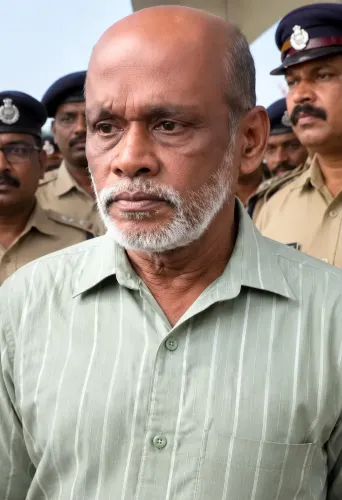
Nenmara double murder: Kerala court sentences Chenthamara to death
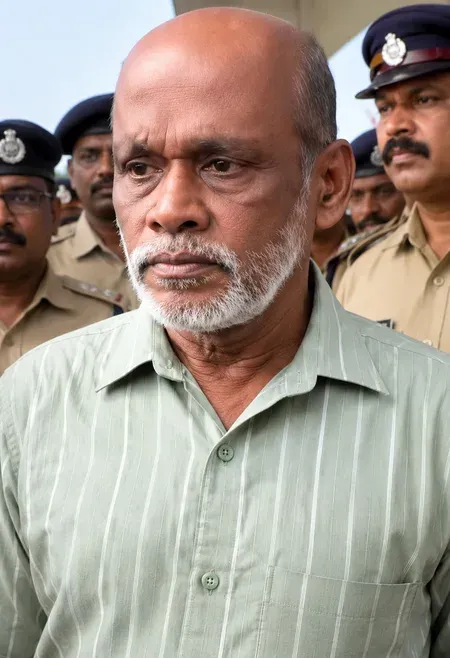
Synopsis
A Kerala court sentenced Chenthamara to death on 20 July 2025 for the Nenmara double murder — a vendetta killing that began in 2019 and culminated in the murders of Sudhakaran and his 75-year-old mother while the accused was out on bail. The convict's own declaration that he would kill again if released was central to the court's rarest-of-rare finding.
Key Takeaways
The Palakkad Additional Sessions Court sentenced Chenthamara to death on 20 July 2025 for the Nenmara double murder .
The convict murdered Sudhakaran and his 75-year-old mother Lakshmi at Pothundi, Palakkad on 27 January 2025 — while out on bail.
The court cited Chenthamara's own statements — including 'I am not Gandhi' and a threat to kill again if released — as evidence of irredeemability.
Psychological evaluations confirmed no mental illness ; the court rejected both the provocation defence and reformation claims.
The court ordered ₹20 lakh compensation for Sudhakaran's daughter , to be recovered from the convict's property.
The murders were rooted in a vendetta dating to 2019 , when Chenthamara killed neighbour Sajitha , blaming her for his marriage breakdown.
The Palakkad Additional Sessions Court in Kerala on Monday, 20 July 2025, sentenced Chenthamara to death for the Nenmara double murder, ruling that the convict posed a continuing threat to society and showed no credible prospect of reformation. The verdict closes the trial in one of Kerala's most gruesome revenge killings in recent memory.
What the Court Ruled
The court, after hearing detailed arguments from both the prosecution and the defence, held that the case fell squarely within the rarest of rare category — the threshold required under Indian law for capital punishment. The prosecution had pressed for the maximum sentence, citing the extreme brutality of the crime and the conduct of the accused.
Crucially, the court cited Chenthamara's own statements as evidence of irredeemability. In recorded remarks, the convict had declared: 'I am not Gandhi' — adding that if released, he would kill again. He further stated, 'I will not go looking for trouble. But if someone comes at me, I will not spare them.' The court found these declarations to be a clear and present danger to society.
Why the Court Rejected Reformation Claims
Although a court-directed counselling report indicated that the accused had subsequently spoken in a different tone, the court found no convincing evidence of genuine remorse or reformation. Psychological and psychiatric evaluations had clearly established that Chenthamara did not suffer from any mental illness, ruling out any plea of mental incapacity.
The court also rejected the accused's contention that the murders were committed in response to provocation, observing categorically that there had been no provocation from the victims. While Chenthamara reportedly expressed regret before the defence counsel over the plight of the daughter of one of the victims, Sudhakaran, the court held that this did not amount to repentance for the killings themselves.
The District Probation Officer's report further concluded that the convict was likely to reoffend. The court also noted that the murders were committed while Chenthamara was out on bail — a fact it described as demonstrating complete disregard for the law.
Compensation Ordered for Victim's Family
Monday's judgment directed that ₹20 lakh be paid to the daughter of Sudhakaran, to be realised from the sale of the convict's property. The court held that Sudhakaran's children continued to face a threat from the accused, further reinforcing the decision to impose capital punishment.
Background: A Vendetta That Began in 2019
Chenthamara was convicted for the murders of Sudhakaran and his 75-year-old mother, Lakshmi, at Pothundi in Palakkad district on 27 January 2025. The killings were the culmination of a long-running vendetta that originated in 2019, when Chenthamara hacked to death his neighbour Sajitha, whom he blamed for the breakdown of his marriage.
A key witness, Pushpa, who had been forced to flee her home in Palakkad to Tamil Nadu out of fear of the accused, expressed relief at the verdict, saying she could now consider returning home. The death sentence, if upheld on appeal, would mark the culmination of a case that has shaken the Palakkad district for over six years.
Point of View
A relatively rare evidentiary basis for a rarest-of-rare finding. The fact that the murders occurred while Chenthamara was on bail for a prior killing raises uncomfortable questions about how bail conditions are monitored in cases with a clear history of violence. The ₹20 lakh compensation order, while welcome, also highlights the absence of a robust state victim-compensation framework — the family's relief should not depend on whether the convict has saleable property.
NationPress
21 Jul 2026
Frequently Asked Questions
Who is Chenthamara and what was he convicted for?
Chenthamara is a Kerala man convicted for the murders of Sudhakaran and his 75-year-old mother Lakshmi at Pothundi in Palakkad district on 27 January 2025. The killings were part of a vendetta that began in 2019, when he had previously killed his neighbour Sajitha.
Why did the Palakkad court award the death penalty in this case?
The court ruled the case fell within the 'rarest of rare' category, citing the brutality of the crime, the convict's own threats to kill again if released, the absence of genuine remorse, and the fact that the murders were committed while Chenthamara was out on bail. The District Probation Officer also assessed him as likely to reoffend.
What compensation was ordered for the victim's family?
The court directed that ₹20 lakh be paid to the daughter of victim Sudhakaran, to be realised from the sale of Chenthamara's property.
What is the background of the Nenmara double murder case?
The case stems from a vendetta that began in 2019, when Chenthamara killed his neighbour Sajitha, blaming her for the breakdown of his marriage. After being released on bail, he murdered Sudhakaran and Sudhakaran's mother Lakshmi on 27 January 2025 at Pothundi in Palakkad district.
What happens next after the death sentence is pronounced?
Under Indian law, a Sessions Court death sentence must be confirmed by the High Court before it can be carried out. The case will now proceed to the Kerala High Court for mandatory confirmation, and the convict also has the right to appeal.