NFR saves 255 elephants from train collisions in 9 months with AI, 'Plan Bee'
Synopsis
Northeast Frontier Railway saved 255 elephants from train collisions in just nine months — deploying AI acoustic sensors, amplified bee sounds and underpass construction across some of India's most sensitive wildlife corridors. With Lumding Division alone accounting for 122 rescues, the scale of the operation underscores how routine rail traffic through the Northeast has become one of the biggest threats to wild elephant populations.
Key Takeaways
NFR prevented 255 elephant–train collisions from January to September 2026 across four divisions.
Lumding Division recorded the highest saves at 122 , followed by Alipurduar at 106 , Tinsukia at 15 , and Rangiya at 14 .
An AI-based Intrusion Detection System using Distributed Acoustic Sensing (DAS) provides real-time alerts on elephant movement near tracks.
The 'Plan Bee' system — amplified honeybee sounds — is deployed at vulnerable locations to deter herds from approaching tracks.
Wildlife underpasses are under construction at identified locations to create safer crossing routes for elephants.
NFR is conducting sensitisation drives to stop food waste being discarded near tracks, which can attract wild animals.
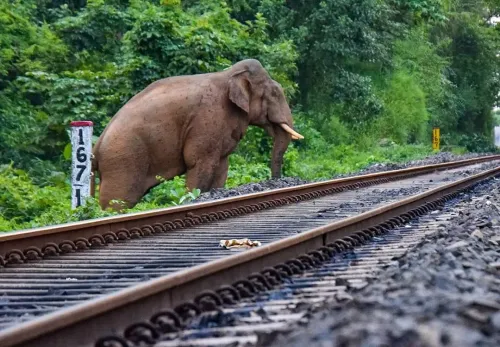
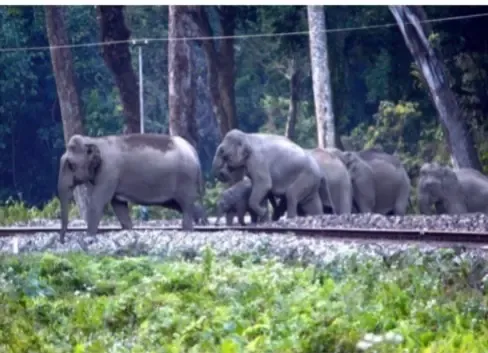
The Northeast Frontier Railway (NFR) has prevented 255 elephants from being struck by trains between January and September 2026, railway officials announced on Sunday, 4 October 2026. The figure reflects a sustained multi-technology intervention strategy that combines artificial intelligence, acoustic deterrents, and round-the-clock coordination with state forest departments across the Northeast.
Division-wise Breakdown
According to NFR Chief Public Relations Officer Kapinjal Kishore Sharma, the 255 rescues were distributed across four divisions: 106 elephants were saved in Alipurduar Division in West Bengal, 122 in Lumding Division, 14 in Rangiya Division, and 15 in Tinsukia Division — the latter three spanning Assam. Lumding recorded the highest single-division count, reflecting the density of elephant movement corridors in that stretch.
Technology at the Frontline
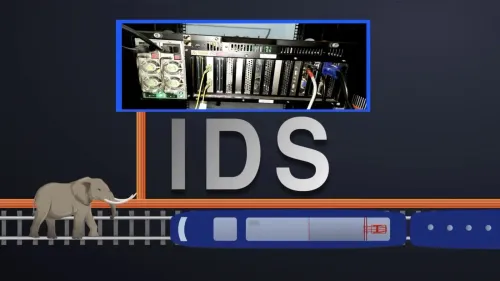
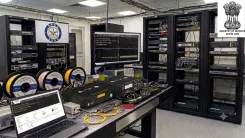
Central to NFR's approach is an AI-based Intrusion Detection System (IDS) powered by Distributed Acoustic Sensing (DAS) technology, which delivers real-time alerts whenever large animals approach the tracks. Complementing this is the 'Plan Bee' system — amplified honeybee sounds installed at vulnerable locations — which exploits elephants' natural aversion to bee colonies to steer herds away from the rail corridor.
NFR has also enforced night-time and temporary speed restrictions in zones with recorded elephant sightings, deployed enhanced patrolling teams, installed cautionary signage, and cleared trackside vegetation to improve visibility. The construction of underpasses at identified locations is underway to provide safer wildlife movement routes that keep herds physically separated from active tracks.
Human Behaviour as a Safety Factor
Sharma highlighted a less-discussed risk factor: food waste discarded near railway tracks by passengers and pantry car staff. NFR is conducting regular sensitisation drives targeting train crews, railway staff, pantry car personnel and passengers to curb this practice, as discarded food can attract elephants and other animals to the trackside — a pattern that has been linked to fatal encounters in the past.
All incidents involving contact between trains and elephants are, according to Sharma, investigated under prescribed safety procedures and treated with the highest level of seriousness.
NFR's Operational Footprint
The NFR, headquartered at Maligaon near Guwahati, operates rail services across the Northeastern states and additionally covers seven districts of West Bengal and five districts of north Bihar. Its tracks run through some of India's most ecologically sensitive elephant corridors, making wildlife safety an enduring operational challenge. This comes amid broader national concern over elephant mortality on rail lines, with wildlife groups having repeatedly flagged the Northeast as a high-risk zone for such collisions.
NFR says it will continue to expand technology-based monitoring and deepen coordination with wildlife authorities as it seeks to balance safe train operations with conservation obligations across the region.
Point of View
But it also implies that 255 separate elephant encounters with active rail lines occurred in under nine months — a sobering indicator of how severely railway expansion has fragmented wildlife corridors in the Northeast. The 'Plan Bee' and DAS systems are genuinely innovative, yet they are remedial fixes layered over a deeper structural problem: tracks that bisect elephant habitat with no permanent barrier. Until wildlife corridor mapping is embedded in new rail infrastructure planning — rather than retrofitted after construction — NFR's commendable interventions will keep treating symptoms rather than causes.
NationPress
5 Oct 2026
Frequently Asked Questions
How many elephants did NFR save from train collisions in 2026?
Northeast Frontier Railway saved 255 elephants from train collisions between January and September 2026. The rescues spanned four divisions — Alipurduar, Lumding, Rangiya and Tinsukia — across West Bengal and Assam.
What is the 'Plan Bee' system used by NFR?
'Plan Bee' is a deterrent system that plays amplified honeybee sounds near railway tracks at locations where elephant movement is frequent. Elephants have a natural aversion to bees, and the acoustic system is designed to steer herds away from the rail corridor before a train approaches.
How does NFR's AI-based Intrusion Detection System work?
NFR's Intrusion Detection System uses Distributed Acoustic Sensing (DAS) technology embedded along the tracks to detect vibrations and sounds consistent with large animal movement. It generates real-time alerts for railway personnel, allowing crews to slow trains or halt operations in the affected zone.
Which division recorded the most elephant saves?
Lumding Division in Assam recorded the highest number of elephant saves at 122, followed by Alipurduar Division in West Bengal with 106. Tinsukia Division saved 15 and Rangiya Division saved 14.
Why does food waste near railway tracks matter for elephant safety?
Discarded food from passengers, pantry cars and railway staff near tracks can attract elephants and other wildlife to the corridor, increasing collision risk. NFR is running sensitisation campaigns across all train categories to reduce this behaviour as part of its broader wildlife safety strategy.