NFR boosts monsoon preparedness 2026 for safe train services in Northeast

Synopsis
Northeast Frontier Railway has activated its most detailed monsoon readiness plan yet for 2026, deploying stationary watchmen, stocking tens of thousands of cubic metres of boulders across five divisions, and keeping 'Emergency on Wheels' trains on standby — all to prevent the annual disruption that cuts off rail links across the Northeast.
Key Takeaways
Northeast Frontier Railway (NFR) announced monsoon preparedness measures on 28 April 2025 for the June–September 2026 season.
Stationary watchmen deployed at vulnerable locations; water-level gauges installed at critical hill-section points.
Lumping Division has stocked 10,000–12,000 cubic metres of boulders and over 40,000 cement bags ; Alipurduar Division holds over 20,000 cubic metres of boulders.
Rapid Response Teams constituted across all divisions to handle landslides, track washouts, and waterlogging.
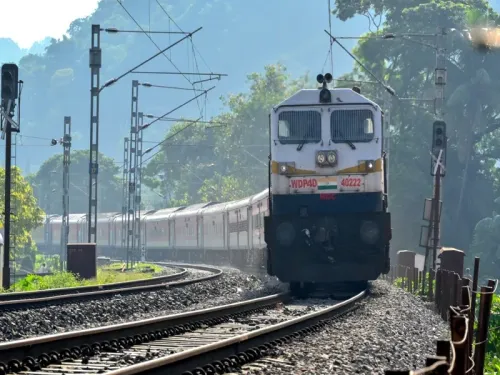
Northeast Frontier Railway (NFR) has rolled out a comprehensive set of monsoon preparedness measures ahead of the June–September 2026 rainy season, aiming to ensure uninterrupted and safe train operations across one of India's most weather-vulnerable rail networks, officials announced on Tuesday, 28 April 2025.
Why the Northeast Needs Special Monsoon Readiness
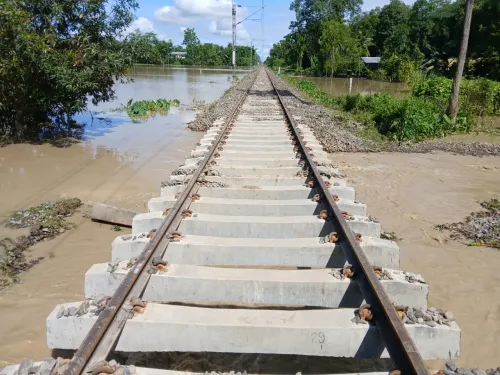
The NFR zone spans terrain highly susceptible to heavy rainfall, landslides, and flooding, which routinely disrupt rail connectivity across Northeastern states every monsoon season. Infrastructure damage — from embankment washouts to track submergence — has historically caused extended disruptions to both passenger and freight services in the region. This year's preparedness drive is designed to minimise that impact through early deployment and real-time monitoring.
Key Deployments and Infrastructure Reinforcements
According to Kapinjal Kishore Sharma, Chief Public Relations Officer of Northeast Frontier Railway, stationary watchmen have been strategically positioned at vulnerable locations to continuously monitor track conditions and raise immediate alerts when danger is detected. Washout-prone and flood-sensitive stretches have been reinforced through embankment strengthening, improved drainage systems, and clearing of natural water flow channels. Water-level measuring gauges have also been installed at critical points, particularly in hill sections, to enable real-time monitoring of rising water levels.
Emergency Response Infrastructure
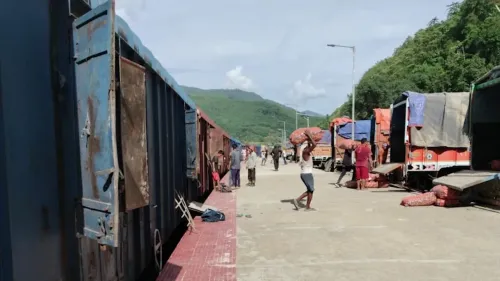
NFR has pre-positioned relief materials — including boulders, sandbags, and wire mesh — at key locations along the network.
Point of View
Elevated track sections, and flood-resilient embankment design. Until capital expenditure matches the scale of the climate risk, each monsoon season will see the same disruptions — and the same press releases.
NationPress
16 Sept 2026
Frequently Asked Questions
What monsoon preparedness measures has Northeast Frontier Railway announced for 2026?
NFR has deployed stationary watchmen at vulnerable track locations, installed water-level gauges in hill sections, pre-positioned relief materials, and constituted Rapid Response Teams across all five divisions. 'Emergency on Wheels' trains are also kept on standby with technical staff and tools.
Which NFR divisions have stocked the most monsoon materials?
Alipurduar Division leads with over 20,000 cubic metres of boulders, followed by Lumding Division with 10,000–12,000 cubic metres of boulders and over 40,000 cement bags. Rangiya, Tinsukia, and Katihar divisions have also stocked significant quantities of boulders, sand, and cement.
Why is the Northeast particularly vulnerable to monsoon disruptions on railways?
The region experiences heavy rainfall, frequent landslides, and flooding that erode embankments and wash out tracks. Rail is a critical connectivity link across Northeastern states, making disruptions especially impactful for passengers and freight movement.
How is NFR coordinating with weather agencies during the monsoon?
NFR is working closely with the India Meteorological Department (IMD) to receive real-time weather alerts and forecasts. Railway control rooms operate 24x7 and use this data to make proactive decisions on train movements and field deployments.
What are 'Emergency on Wheels' trains used by NFR?
'Emergency on Wheels' trains are specially equipped response units kept on standby with technical staff and essential tools. They are deployed rapidly to sites of track damage, landslides, or flooding to restore normal operations with minimal delay.