12 peace accords, 10,000 surrenders: Northeast's decade of transformation
Synopsis
Twelve peace accords, over 10,000 surrenders, and a 97% drop in civilian deaths — Assam CM Himanta Biswa Sarma's data-backed post on the Northeast's security turnaround makes the case that a region once synonymous with insurgency has undergone a structural shift, not just a temporary lull. The numbers, part of the Centre's #12YearsOfRisingNorthEast campaign, are striking — and worth scrutinising.
Key Takeaways
Assam CM Himanta Biswa Sarma posted on X on 20 June highlighting the Northeast's decade-long transformation.
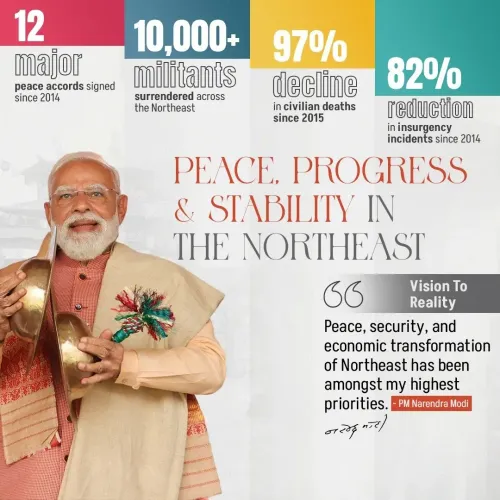
12 major peace accords have been signed in the Northeast since 2014 , according to campaign figures.
More than 10,000 militants have reportedly surrendered across the region over the same period.
Insurgency-linked civilian deaths have fallen by 97% since 2015 ; insurgency incidents down 82% since 2014 .
The data was shared as part of the Centre's #12YearsOfRisingNorthEast campaign under PM Narendra Modi .
Assam is described by Sarma as the 'biggest beneficiary' of the region's improved security climate.
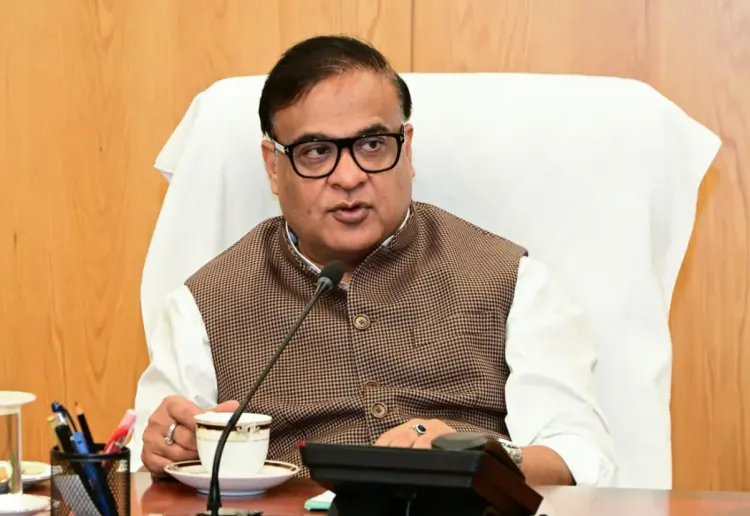
Assam Chief Minister Himanta Biswa Sarma on Saturday, 20 June underscored the sweeping security and development shift across the Northeast over the past decade, citing 12 major peace accords, more than 10,000 militant surrenders, and a 97% decline in civilian deaths linked to insurgency since 2015. The remarks came as part of the Centre's campaign marking 12 years of development in the Northeast under Prime Minister Narendra Modi, tagged #12YearsOfRisingNorthEast.
What the Numbers Show
According to campaign figures shared by Sarma, the Northeast has recorded a 97% drop in insurgency-related civilian deaths since 2015 and an 82% reduction in insurgency incidents since 2014. More than 10,000 militants have reportedly surrendered across the region during this period, reflecting, according to the campaign, the cumulative impact of peace initiatives and rehabilitation programmes run jointly by the Centre and state governments.
The 12 peace accords signed since 2014 are described in the campaign material as central to resolving long-standing ethnic and separatist conflicts that had kept the region in a state of chronic instability for decades.
Sarma's Post and the Campaign Context
Sarma shared the data via a post on social media platform X, framing Assam as the primary beneficiary of the improved security climate. 'Over the years, the Northeast's development narrative has shifted steadily from insurgency and instability towards infrastructure, connectivity and economic growth, and Assam has been the biggest beneficiary of the prevailing peaceful atmosphere,' he wrote.
The campaign, driven by the Centre, positions the Northeast's transformation as a flagship achievement of the Modi government's third term, with Prime Minister Modi quoted in the material as stating that 'peace, security and economic transformation of the region have remained among his highest priorities.'
Infrastructure and Investment Push
Beyond the security metrics, the Centre has channelled significant investment into the Northeast across roads, railways, airports, waterways, digital connectivity, and border infrastructure over the past decade. The Assam government has consistently maintained that the improved security environment has been instrumental in attracting private investment, boosting tourism, and accelerating large-scale infrastructure projects.
This comes amid a broader national push to position the Northeast as a key driver of India's growth story — a strategic reframing that has accompanied the peace dividend from the accords.
Historical Context
For much of the 1990s and 2000s, the Northeast was defined by active insurgencies across multiple states — from Assam and Manipur to Nagaland and Mizoram — with militant outfits demanding autonomy or independence. The shift toward negotiated settlements gained momentum post-2014, with the Centre adopting a sustained dialogue-first approach alongside security operations. The current campaign frames this as a structural, not merely cyclical, change.
Whether the peace holds and translates into lasting economic gains for ordinary residents across the region remains the defining question going forward.
Point of View
Not independently verified data — a distinction mainstream coverage tends to gloss over. A 97% decline in civilian deaths is a genuinely significant metric if it holds up to scrutiny, but the Northeast's peace process has historically been uneven: accords have been signed before, only for grievances to resurface. The deeper question is whether the economic dividend — jobs, incomes, reduced outmigration — has reached ordinary residents or remains concentrated in infrastructure contracts and state-level optics. Peace without prosperity has a short shelf life in the region.
NationPress
19 Sept 2026
Frequently Asked Questions
How many peace accords have been signed in Northeast India since 2014?
According to campaign figures shared by Assam CM Himanta Biswa Sarma, 12 major peace accords have been signed in the Northeast since 2014. The Centre attributes these accords as central to the region's significant reduction in insurgency and improvement in security conditions.
How many militants have surrendered in the Northeast over the past decade?
More than 10,000 militants have reportedly surrendered across the Northeast since 2014, according to figures cited in the Centre's #12YearsOfRisingNorthEast campaign. The surrenders are attributed to sustained peace initiatives and rehabilitation programmes by both the Centre and state governments.
By how much have insurgency-related deaths declined in Northeast India?
Civilian deaths linked to insurgency have fallen by 97% since 2015, while insurgency-related incidents have dropped by 82% since 2014, according to campaign data highlighted by Assam CM Sarma. These figures are from government campaign material and have not been independently verified.
What is the #12YearsOfRisingNorthEast campaign?
It is a campaign launched by the Centre to mark 12 years of development in the Northeast under Prime Minister Narendra Modi's leadership. The campaign highlights security, infrastructure, and economic progress in the region since 2014, with state governments including Assam actively amplifying it.
Why does Assam CM Sarma describe Assam as the biggest beneficiary of Northeast peace?
Sarma argues that the improved security environment has enabled Assam to attract greater investment, boost tourism, and accelerate infrastructure projects. He contends that the shift from insurgency to stability has created the conditions for accelerated socio-economic development across the state.