New Zealand-India FTA and Modi visit signal strategic shift away from China
Synopsis
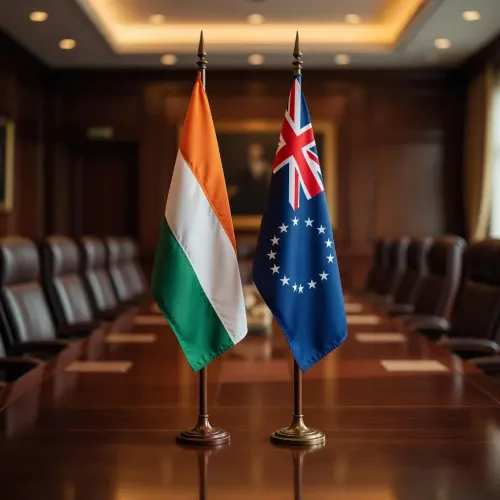
New Zealand is making its most explicit move yet to reduce dependence on China — signing an FTA with India and elevating bilateral ties to a 'strategic partnership' after PM Modi's 11 July visit. The deal targets 95 percent tariff elimination and pairs trade diversification with new counterterrorism and maritime defence frameworks, signalling Wellington's sharpest Indo-Pacific realignment in a generation.
Key Takeaways
New Zealand and India signed an FTA eliminating or reducing tariffs on 95 percent of exports, including kiwifruit, meat, wool, and coal.
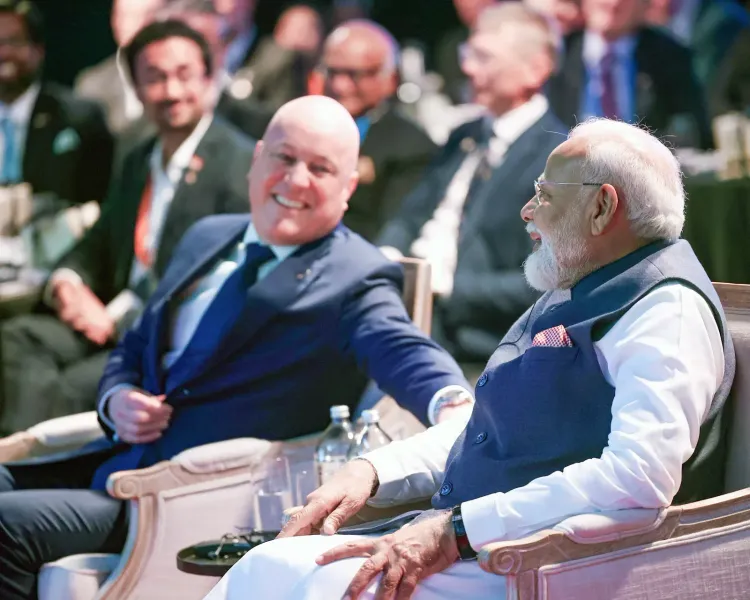
PM Narendra Modi visited New Zealand on 11 July , the first such visit by an Indian prime minister in decades.
Bilateral ties were formally upgraded to a 'strategic partnership' , with a new joint counterterrorism working group established.
The 'Roadmap to 2030' extends the March 2025 Defence Cooperation Arrangement and adds cybersecurity and maritime defence pillars.
India has overtaken Japan as the world's fourth largest economy , with growth projected above 6 percent .
The shift is partly driven by New Zealand's concern over over-reliance on China and Beijing's potential to leverage trade ties for political ends.
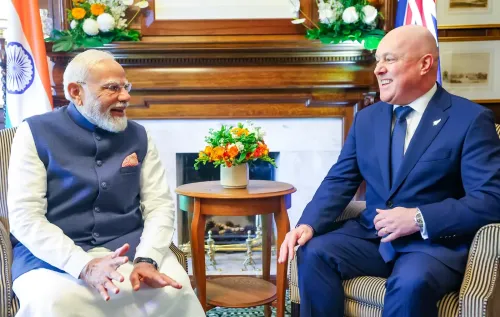
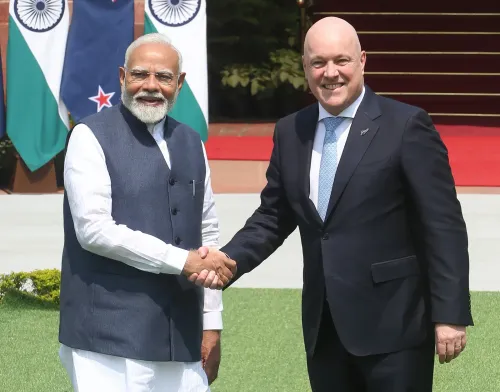
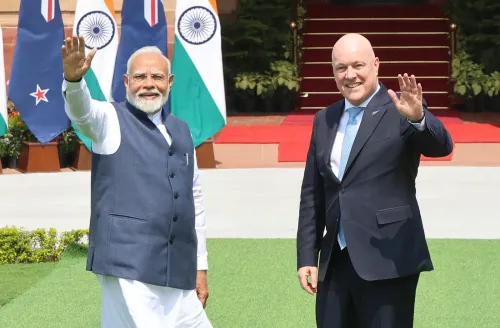
New Zealand is recalibrating its foreign policy priorities, pivoting toward a deeper partnership with India as it seeks to reduce its long-standing economic dependence on China, according to an analysis in The Diplomat. The shift is underscored by the signing of a free trade agreement (FTA) between the two nations and the landmark visit of Prime Minister Narendra Modi on 11 July — the first by an Indian prime minister to New Zealand in decades.
What the FTA Covers
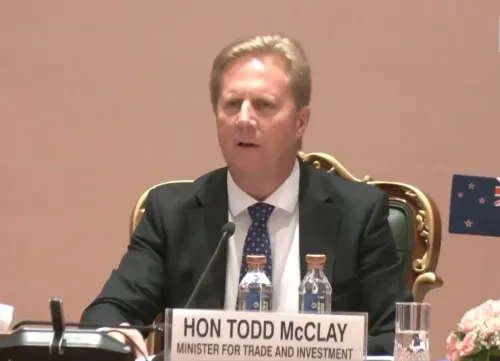
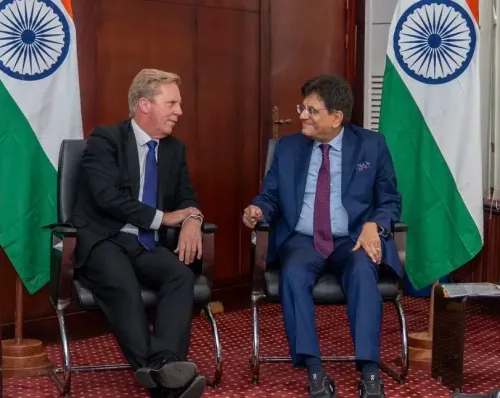
New Zealand Trade Minister Todd McClay stated that the new agreement would eliminate or reduce tariffs on 95 percent of exports, including kiwifruit, apples, meat, wool, coal, and forestry products. The deal opens access to India's rapidly expanding middle class, a market Wellington has historically underutilised.
The Indian government described the FTA as a forward-looking partnership that promises to unlock additional economic opportunities for its labour-intensive sectors, particularly textiles and leather. The New Zealand government echoed that framing, saying the agreement creates new and expanded business opportunities for its exporters.
India's Growing Economic Weight
The timing of the agreement reflects India's rising global stature. India has overtaken Japan as the world's fourth largest economy, and its economy is projected to grow at over 6 percent in the coming years. According to the Diplomat analysis, New Zealand businesses have had limited traction on the subcontinent to date, and the FTA is a deliberate effort to change that dynamic.
Notably, the agreement also serves as a supply-chain diversification play. New Zealand has grown increasingly aware of the vulnerabilities tied to over-reliance on a single trading partner — and the risk that China could leverage its economic and political relationship to extract concessions, the analysis observes.
Strategic Partnership and Security Ties
Beyond trade, the Modi visit produced a significant diplomatic upgrade: the New Zealand–India relationship was formally elevated to a 'strategic partnership.' The new framework includes the establishment of a joint working group on counterterrorism, aimed at strengthening cooperation in combating violent extremism.
Other pillars of the partnership include enhanced cybersecurity cooperation, institutionalised intelligence exchanges, and deeper maritime defence ties. A 'Roadmap to 2030' was also announced, extending the March 2025 Defence Cooperation Arrangement that had established regular bilateral defence engagement and dialogue between the two countries.
Wellington's Strategic Recalculation
New Zealand's traditional emphasis on free trade and economic diplomacy is giving way to a more security-conscious posture, driven by intensifying strategic competition in the Indo-Pacific and China's growing attempts to gain regional influence, the Diplomat analysis notes.
Prime Minister Christopher Luxon articulated this shift directly: 'We live in the Indo-Pacific region, it is a big focus for us where our national interests actually sit… our national interests are both security and economic and those two issues are increasingly interdependent.'
This comes amid a broader pattern of Pacific nations reassessing their China exposure — a trend that has accelerated since China's signing of a security agreement with the Solomon Islands in 2022. New Zealand's pivot toward India, one of the Indo-Pacific's anchor democracies, signals that Wellington is now aligning its trade and security calculus more explicitly with like-minded partners.
Point of View
However welcome, arrives late. The real test is execution: New Zealand businesses have had limited presence in India not for want of interest but because of structural barriers the FTA alone cannot resolve. Meanwhile, the 'strategic partnership' label carries weight only if the joint counterterrorism and maritime defence frameworks are resourced and activated — not left as diplomatic boilerplate. Luxon's framing of security and economics as 'increasingly interdependent' is the right instinct, but New Zealand will need to demonstrate it can sustain that posture even when China applies economic pressure, as it has done before.
NationPress
16 Oct 2026
Frequently Asked Questions
What does the New Zealand-India FTA cover?
The FTA eliminates or reduces tariffs on 95 percent of New Zealand's exports to India, including kiwifruit, apples, meat, wool, coal, and forestry products. It also opens new opportunities for Indian labour-intensive sectors such as textiles and leather, and gives New Zealand businesses broader access to India's growing middle class.
What is the New Zealand-India 'strategic partnership'?
The strategic partnership, announced during PM Modi's 11 July visit, upgrades the bilateral relationship beyond trade. It includes a joint counterterrorism working group, enhanced cybersecurity cooperation, institutionalised intelligence exchanges, and deeper maritime defence ties, all anchored by a 'Roadmap to 2030.'
Why is New Zealand shifting away from China?
New Zealand has grown increasingly concerned about the economic and political vulnerabilities of over-reliance on China as a trading partner. There is a recognition that China could leverage its economic relationship to achieve political objectives, according to The Diplomat analysis. Growing Chinese militarisation and influence-seeking in the Pacific have accelerated Wellington's reassessment.
How significant is India as an economy for New Zealand?
India has overtaken Japan as the world's fourth largest economy and is projected to grow at over 6 percent in the coming years. Despite this, New Zealand businesses have had limited presence in India to date, making the FTA a significant opportunity to tap a market that has been largely underutilised.
What is the Roadmap to 2030 between New Zealand and India?
The Roadmap to 2030 is a bilateral framework announced during PM Modi's July 2025 visit that extends the March 2025 Defence Cooperation Arrangement. It sets out priorities including counterterrorism cooperation, cybersecurity, intelligence sharing, and maritime defence engagement through 2030.