Jal Shakti Minister Paatil Hails Centre-West Bengal JJM MoU
Synopsis
Union Jal Shakti Minister C. R. Paatil announced on 20 June 2026 that PM Modi shared details of a fresh Centre-West Bengal MoU under Jal Jeevan Mission on Paschim Banga Diwas, aiming to deliver clean tap water to every rural household in the state. National coverage has crossed 16 crore rural connections.
Key Takeaways
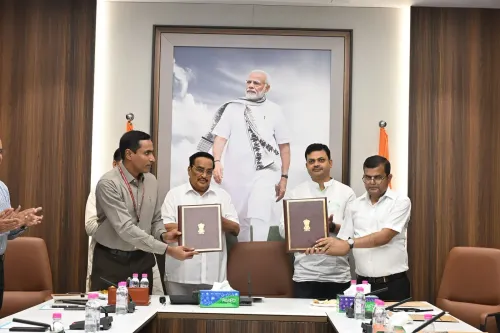
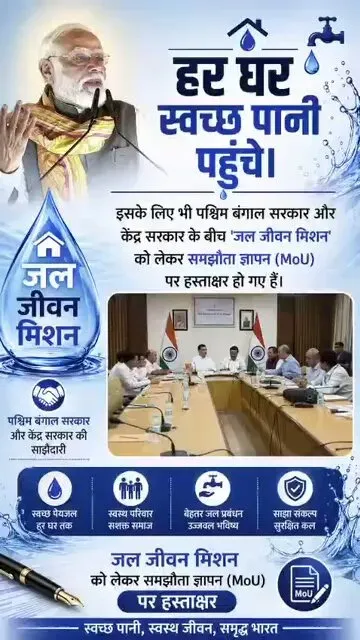
A new MoU between the Union Ministry of Jal Shakti and the West Bengal government was signed under Jal Jeevan Mission to provide tap water to all rural households in the state.
PM Narendra Modi announced the agreement on the occasion of Paschim Banga Diwas .
Nationally, over 16 crore rural households have received tap water connections under the mission since its 2019 launch.
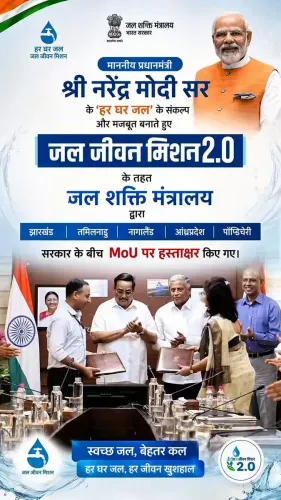
The Jal Shakti Ministry is concluding similar MoUs with multiple states to ensure universal rural tap-water coverage.
The initiative is framed as a driver of women's empowerment , improved public health, and rural quality of life under the Viksit Bharat agenda.
Operational details of the West Bengal MoU — timelines, funds, and district targets — are yet to be made public.
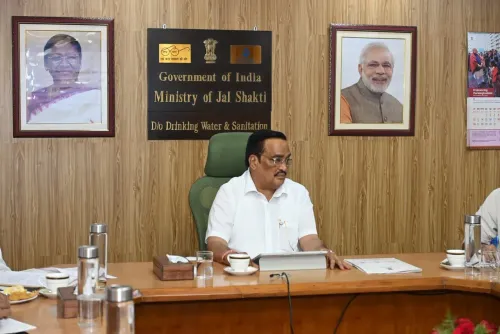
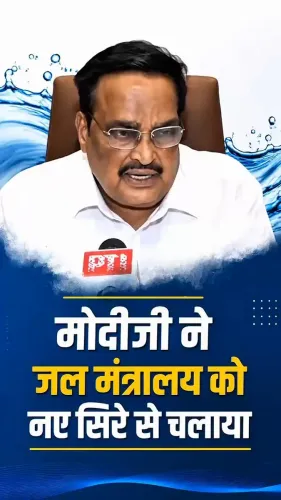
Union Jal Shakti Minister C. R. Paatil on Saturday, 20 June 2026 highlighted a landmark Memorandum of Understanding signed between the Union Ministry of Jal Shakti and the West Bengal government under the Jal Jeevan Mission, aimed at delivering clean tap water to every rural household in the state. The minister noted that Prime Minister Narendra Modi shared the details of this agreement with the nation on the occasion of Paschim Banga Diwas.
Context
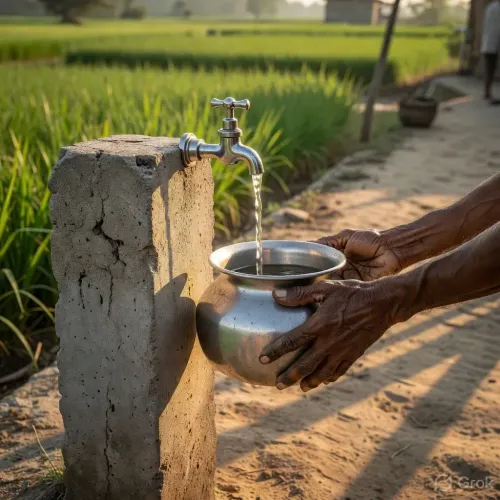
Paatil's post, written in Hindi, announced: 'aaj desh ke yashasvi pradhanmantri shri Narendra Modi ji ne Paschim Banga Diwas ke avsar par... nal se shuddh jal pahunchane hetu... samjhauta (MoU) ki jaankari desh ko di' — ('Today, the country's distinguished Prime Minister Shri Narendra Modi shared with the nation the details of an important MoU concluded between the Jal Shakti Ministry and the West Bengal government under Jal Jeevan Mission, for delivering pure water through taps.'). The agreement is specifically designed to ensure clean and safe drinking water reaches every rural family in West Bengal through piped tap connections.
The announcement was timed to coincide with Paschim Banga Diwas, the annual state observance, lending the Centre's outreach to West Bengal — a state governed by an opposition party — additional political and symbolic weight. Prime Minister Modi used the occasion to also underscore what Paatil described as the central government's 'clear strategy, transparent working method, and public welfare orientation' as the foundation of a 'Viksit Bharat' (Developed India).
Policy Backdrop
The Jal Jeevan Mission was launched in August 2019 with the goal of providing functional household tap connections to all rural households across India. The mission marked a significant departure from earlier water-supply schemes by shifting focus from infrastructure creation to assured service delivery at the household level.
The ministry has been signing state-level MoUs to operationalise the mission across both BJP-governed and opposition-governed states, reflecting the programme's framing as a non-partisan public-health initiative. Paatil stated that his ministry is concluding such agreements with 'various states across the country' to ensure no rural family is left without clean drinking water. According to the minister's post, approximately 16 crore or more rural households have already received tap water connections nationally — a figure the ministry attributes to the mission's cumulative progress since 2019.
Stakeholders and Impact
The primary beneficiaries are rural households in West Bengal, a densely populated eastern state where access to safe piped water has historically been uneven across districts. The mission's proponents argue that tap-water access disproportionately benefits women and girls, who traditionally bear the burden of fetching water over long distances, freeing time for education, livelihood activities, and improved health outcomes.
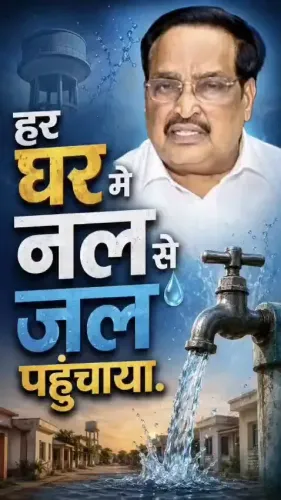
Paatil's post explicitly linked the initiative to women's empowerment, better public health, time savings, and an overall improvement in rural quality of life, framing it under the slogan 'Har Ghar Jal, Har Parivar Sashakt' — ('Tap Water in Every Home, Every Family Empowered'). Beyond households, health experts and rural development practitioners have long noted that access to clean drinking water reduces waterborne disease burden, with downstream benefits for local healthcare systems.
What's Next
Attention will now turn to the operational details of the West Bengal MoU — including fund-release timelines, district-level roll-out schedules, and physical progress benchmarks — which are yet to be made public. The next quarterly update of the Jal Jeevan Mission national dashboard is expected to reflect the state's updated targets and baseline coverage figures.
With the mission's national footprint now claimed at over 16 crore rural connections, the Centre's ability to demonstrate last-mile delivery in large, complex states like West Bengal will be closely watched as a test of the programme's implementation machinery ahead of its broader Viksit Bharat goals.
Point of View
Underscoring the BJP-led government's strategy of using flagship schemes as a bridge across the centre-state political divide. Jal Jeevan Mission has become one of the most visible planks of the Viksit Bharat narrative, and each new state-level MoU — particularly with non-BJP governments — allows the Centre to claim bipartisan delivery while keeping the programme's momentum in the public eye. The claim of over 16 crore rural connections, if verified, would represent one of the largest expansions of basic infrastructure in independent India's history. However, the gap between administrative connections and actual, sustained water supply remains a critical metric that stakeholders and oversight bodies will continue to scrutinise.
NationPress
19 Sept 2026
Frequently Asked Questions
What is the Jal Jeevan Mission MoU with West Bengal about?
The MoU is an agreement between the Union Ministry of Jal Shakti and the West Bengal government to deliver clean, safe drinking water through tap connections to every rural household in the state under the Jal Jeevan Mission framework.
When was the Centre-West Bengal Jal Jeevan Mission MoU announced?
The agreement was highlighted publicly on 20 June 2026 by Union Jal Shakti Minister C. R. Paatil, noting that PM Modi shared the details on the occasion of Paschim Banga Diwas.
How many rural households have received tap water under Jal Jeevan Mission so far?
According to Minister Paatil's post, over 16 crore rural households across India have received tap water connections under Jal Jeevan Mission as of June 2026. This figure is the ministry's latest stated claim.
What is Paschim Banga Diwas?
Paschim Banga Diwas is an annual observance marking West Bengal's identity and history. The Centre chose this occasion to announce the water-supply agreement with the state government.
What is Jal Jeevan Mission and when was it launched?
Jal Jeevan Mission is a central government scheme launched in August 2019 by PM Narendra Modi with the goal of providing functional household tap water connections to every rural family in India, with a focus on health, women's empowerment, and rural development.