Jal Shakti Minister Paatil Highlights Ayushman Yojana's Rs 5 Lakh Cover
Synopsis
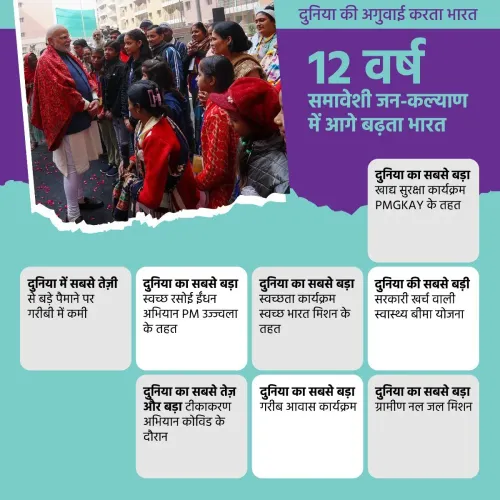
Union Jal Shakti Minister C. R. Paatil, as part of BJP's #12YearsOfSeva campaign, highlighted that every poor family receives up to Rs 5 lakh in free annual healthcare under the Pradhan Mantri Jan Arogya Yojana, framing the scheme as a tool for better health and financial security.
Key Takeaways
Paatil , Union Minister of Jal Shakti, posted on 13 June 2026 highlighting PM-JAY as a key welfare achievement.
Under Pradhan Mantri Jan Arogya Yojana , eligible poor families receive free hospitalisation cover of up to Rs 5 lakh per year .
The post is part of the BJP's #12YearsOfSeva campaign marking twelve years of the NDA government at the Centre.
Ayushman Bharat PM-JAY was launched in September 2018 and targets the bottom 40 percent of India's population.
The National Health Authority (NHA) under the Ministry of Health and Family Welfare implements the scheme at the national level.
Several states have introduced top-up coverage beyond the central Rs 5 lakh limit to broaden financial protection.
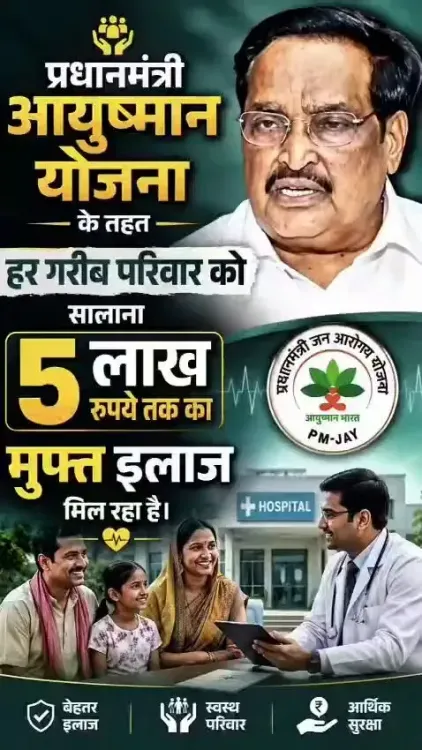
Union Jal Shakti Minister C. R. Paatil on Saturday, 13 June 2026, highlighted the Pradhan Mantri Jan Arogya Yojana (PM-JAY), underscoring that every poor family in the country is entitled to free medical treatment worth up to Rs 5 lakh per year under the scheme. The post, shared on the occasion of the ruling party's #12YearsOfSeva campaign, frames the health cover as a pillar of financial security for low-income households.
Context
Paatil's post, written in Hindi, states: 'Pradhan Mantri Ayushman Yojana ke tahat har garib parivaar ko saalana 5 lakh rupaye tak ka muft ilaaj mil raha hai' ('Under the Pradhan Mantri Ayushman Yojana, every poor family is receiving free treatment of up to Rs 5 lakh annually'). The message is accompanied by the tagline 'Better treatment, healthy family, financial security' — Behtar ilaaj, swasth parivaar, aarthik suraksha. The post is part of a coordinated BJP campaign marking twelve years of the NDA government at the Centre.
Although Paatil heads the Ministry of Jal Shakti, which oversees water supply and sanitation, BJP ministers across portfolios have been amplifying welfare milestones under the #12YearsOfSeva hashtag, reflecting a whole-of-government communications push around the anniversary.
Policy Backdrop
Ayushman Bharat Pradhan Mantri Jan Arogya Yojana was launched in September 2018 as the world's largest publicly funded health assurance scheme, designed to cover the bottom 40 percent of India's population — primarily households identified through socio-economic and caste census data. The scheme provides cashless, paperless hospitalisation for secondary and tertiary care at empanelled public and private hospitals.
The National Health Authority (NHA), an autonomous body under the Ministry of Health and Family Welfare, is the nodal agency for PM-JAY's implementation. Several states have introduced top-up coverage beyond the central Rs 5 lakh ceiling, and the scheme has been progressively integrated with other welfare databases to reduce exclusion errors. Successive administrations have treated publicly funded health insurance as a structural tool to curb catastrophic out-of-pocket health expenditure among low-income groups.
Stakeholders and Impact
The primary beneficiaries of PM-JAY are below-poverty-line (BPL) and low-income households across rural and urban India. The Rs 5 lakh annual cover is designed to shield families from the financial shock of serious illness, which has historically been one of the leading causes of household debt and distress asset sales in India.
Empanelled hospitals — both government and private — are stakeholders in the scheme's operational ecosystem, as claim volumes directly affect their revenue from publicly insured patients. Civil society groups and state health departments have consistently flagged the need for robust grievance redressal and timely claim settlement to sustain hospital participation.
What's Next
The #12YearsOfSeva campaign is expected to continue through the anniversary period, with ministers and party functionaries spotlighting flagship welfare programmes across sectors. For PM-JAY specifically, analysts and policymakers will watch the National Health Authority's periodic reports on claim volumes, hospital empanelment numbers, and state-level integration progress as indicators of on-ground delivery. Budget allocations and possible Finance Commission recommendations on scheme funding will also be closely tracked as the government looks to sustain and potentially expand coverage in coming years.
Point of View
And it keeps flagship social protection schemes in public discourse without requiring new policy announcements. The framing of 'financial security' alongside 'better treatment' signals a deliberate effort to connect healthcare access with economic dignity, a message calibrated for the scheme's core beneficiary base. Whether the campaign translates into measurable political dividends will depend on ground-level awareness of actual claim experiences among beneficiaries.
NationPress
27 Oct 2026
Frequently Asked Questions
What is Pradhan Mantri Jan Arogya Yojana and who is eligible?
Pradhan Mantri Jan Arogya Yojana (PM-JAY) is India's national health insurance scheme that provides up to Rs 5 lakh in free annual hospitalisation cover to poor and low-income families, primarily targeting the bottom 40 percent of the population identified through socio-economic data.
How much free treatment does Ayushman Bharat provide per family per year?
Under Ayushman Bharat PM-JAY, each eligible family receives cashless treatment worth up to Rs 5 lakh per year for secondary and tertiary hospitalisation at empanelled public and private hospitals.
When was Ayushman Bharat PM-JAY launched?
Ayushman Bharat Pradhan Mantri Jan Arogya Yojana was launched in September 2018 by the central government to expand health coverage and reduce catastrophic out-of-pocket medical expenditure among low-income households.
Who implements PM-JAY in India?
The National Health Authority (NHA), an autonomous body under the Ministry of Health and Family Welfare, is responsible for implementing PM-JAY at the national level, while state health agencies manage on-ground operations.
What is the BJP's #12YearsOfSeva campaign?
#12YearsOfSeva is a BJP communications campaign marking twelve years of the NDA government at the Centre, during which ministers and party leaders are highlighting flagship welfare and development schemes across sectors.