Paatil Thanks Press for Amplifying Jal Sanchay Jan Bhagidari Push
Synopsis
Union Jal Shakti Minister C. R. Paatil has thanked the print media for amplifying the 'Jal Sanchay Jan Bhagidari' campaign, underlining newspapers' role in building grassroots awareness on water conservation as the ministry continues its citizen-participation push during the 2026 monsoon season.
Key Takeaways
Union Jal Shakti Minister C.
Paatil thanked newspapers for highlighting water-conservation efforts on 3 June 2026 .
The post singled out the 'Jal Sanchay Jan Bhagidari' public-participation campaign as a key conservation initiative.
Paatil heads the Ministry of Jal Shakti , formed in 2019 by merging water resources and drinking water departments.
The messaging fits a wider arc that includes the Jal Shakti Abhiyan and Jal Jeevan Mission , both launched in 2019 .
The minister framed water security as a behavioural and participatory challenge requiring sustained media amplification.
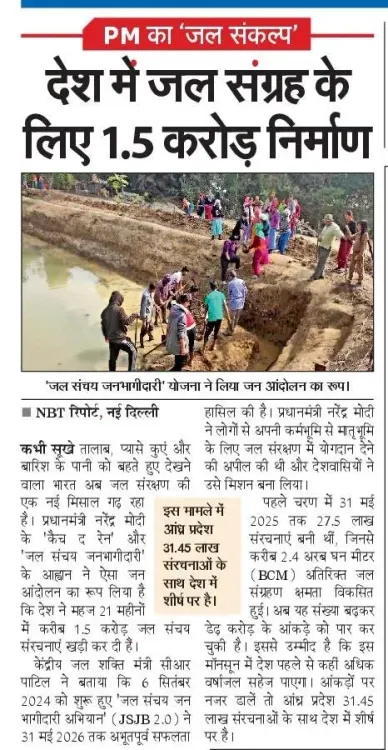
Union Jal Shakti Minister C. R. Paatil on Wednesday, 3 June 2026 publicly thanked print media for giving prominent space to the government's water-conservation messaging, singling out the 'Jal Sanchay Jan Bhagidari' campaign as a flagship community-participation effort. In a post on X, the minister underlined that newspapers play a decisive role in building grassroots awareness on water security.
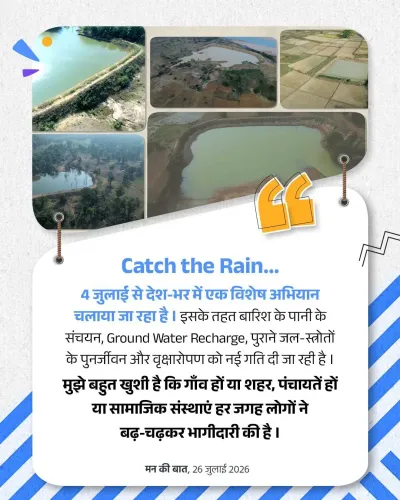
Writing in Hindi, Paatil said: 'The role of newspapers is extremely important in raising public awareness about water conservation and in carrying important campaigns like Jal Sanchay Jan Bhagidari (water harvesting through public participation) to society on a wide scale.' He added, 'I express my heartfelt gratitude for giving prominence to this subject.'
Context
The Ministry of Jal Shakti, which Paatil heads, was constituted in 2019 by merging the erstwhile water resources and drinking water departments to create a single nodal authority for national water policy. Since taking charge, Paatil — a senior BJP leader and former Gujarat BJP state president — has repeatedly framed water security as a behavioural challenge that requires citizen ownership, not just engineering interventions.
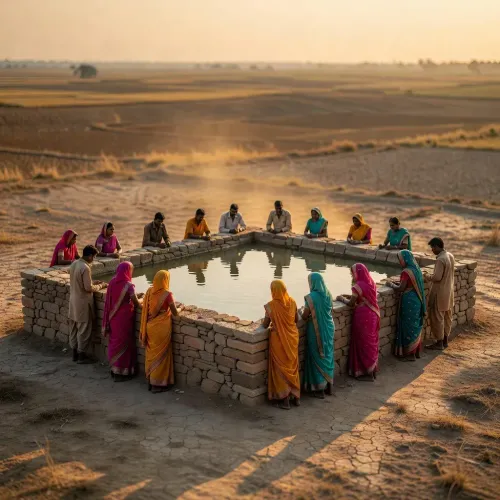
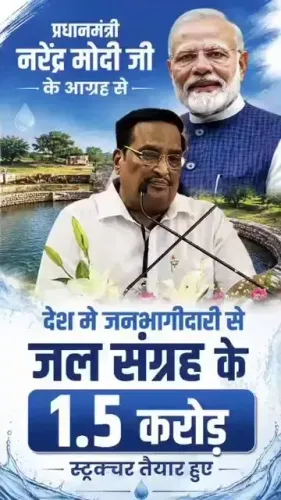
The 'Jal Sanchay Jan Bhagidari' initiative, literally 'water harvesting through public participation', is positioned as a community-led conservation drive that leans on village panchayats, local volunteers and awareness intermediaries to drive on-ground action.
Policy backdrop
Paatil's appreciation note fits into a longer arc of campaigns the ministry has run since its inception. The Jal Shakti Abhiyan, launched in 2019, was conceived as a time-bound, nationwide push for water conservation and source strengthening in water-stressed districts. The same year, the Jal Jeevan Mission was announced with the goal of providing functional household tap connections, with an explicit design principle of community ownership and continuous awareness building.
Successive iterations of these programmes have leaned heavily on media amplification — both print and broadcast — to nudge behaviour change around groundwater extraction, rainwater harvesting and reuse, particularly in states facing recurring scarcity.
Stakeholders and impact
The minister's outreach is aimed at a layered audience. For rural households and village panchayats at the receiving end of conservation messaging, prominent newspaper coverage typically translates into higher uptake of works such as check dams, recharge pits and traditional waterbody revival.
For the print media ecosystem, the public acknowledgement from a Cabinet minister signals that government communications managers see legacy newspapers — including regional-language editions — as a continuing force multiplier for public-service messaging, even in a digital-first information cycle.
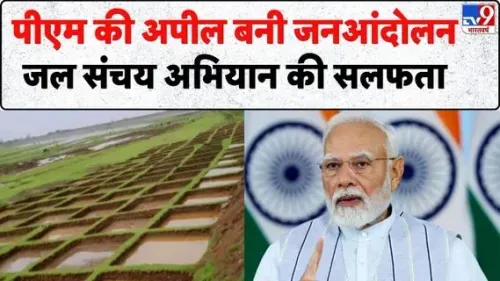
The thank-you note also carries a political register. By framing water conservation as a 'mass movement' built on jan bhagidari (people's participation), the ministry continues the post-2014 template of routing welfare and resource-management programmes through visible citizen mobilisation rather than purely top-down delivery.
What's next
Attention will now turn to the next phase progress reports of ongoing water campaigns and to any monsoon-season parliamentary discussion on public-service messaging norms in 2026. With the south-west monsoon setting in across large parts of the country in early June, the ministry's communications calendar typically intensifies around rainwater harvesting and aquifer recharge — the window in which campaigns like 'Jal Sanchay Jan Bhagidari' are designed to convert awareness into measurable on-ground works.
How effectively that conversion happens this season — and whether sustained media coverage translates into village-level execution — will shape the political dividend Paatil's ministry can claim from its participatory water agenda.
Point of View
Especially in Hindi-belt and regional markets where water stress is acute. It also extends the post-2014 template of branding resource-management programmes as citizen movements rather than bureaucratic deliveries. Coming at the start of the monsoon window, the timing maximises the conversion arc from awareness to on-ground harvesting works. The political test will be whether 'Jal Sanchay Jan Bhagidari' produces visible village-level outputs that the ministry can showcase in the next progress cycle.
NationPress
17 Oct 2026
Frequently Asked Questions
What is the Jal Sanchay Jan Bhagidari campaign?
It is a public-participation campaign promoted by the Union Ministry of Jal Shakti focused on community-led water harvesting and conservation awareness, leaning on village panchayats and local volunteers for on-ground action.
Who is C. R. Paatil?
C. R. Paatil is the Union Minister of Jal Shakti and a senior BJP leader who earlier served as the BJP's Gujarat state president before taking charge of the water portfolio at the Centre.
When was the Ministry of Jal Shakti formed?
The Ministry of Jal Shakti was formed in 2019 by merging the erstwhile Ministry of Water Resources, River Development and Ganga Rejuvenation with the Department of Drinking Water and Sanitation to create a single nodal authority for water policy.
What did C. R. Paatil say about newspapers?
Paatil said newspapers play an extremely important role in raising public awareness about water conservation and in carrying campaigns like 'Jal Sanchay Jan Bhagidari' to society at scale, and he thanked them for giving the subject prominence.
How is Jal Sanchay Jan Bhagidari different from Jal Jeevan Mission?
Jal Jeevan Mission, launched in 2019, focuses on providing functional household tap water connections, while 'Jal Sanchay Jan Bhagidari' is positioned as a community-driven water harvesting and conservation awareness effort rather than a piped-water delivery scheme.