Pakistan's Taiwan airspace U-turn lays bare Islamabad's diplomatic tightrope
Synopsis
Pakistan barred Taiwanese carriers from its airspace in what looked like a gesture toward Beijing's 'One China' policy — then reversed course within days. The whiplash has exposed not just Islamabad's impossible balancing act between China and the US, but a government where the Defence Minister and the Civil Aviation Authority appeared to be working at cross-purposes.
Key Takeaways
Pakistan barred China Airlines and EVA Air from its airspace from approximately 25 October , forcing reroutes through Russian airspace that raised flight times and fuel costs.
The Civil Aviation Authority restored access from 28 October , just days after the ban — even as Defence Minister Khwaja Asif publicly defended the original restriction.
Beijing itself reportedly allows Taiwanese carriers to transit Chinese airspace, undermining the symbolic logic of Islamabad's move.
Pakistan is simultaneously managing its 'all-weather' dependence on China (its largest creditor and CPEC investor) and its need for US backing at international financial institutions.
The episode has raised concerns about Pakistan's reliability as an aviation transit hub linking East Asia with Europe and the Middle East .
Analysts suggest the incident reflects either a hurried policy correction or a structural misalignment between civilian ministries, regulatory bodies, and security institutions within the Sharif government.
Pakistan's abrupt decision to bar Taiwanese commercial airlines from its airspace — followed within days by an equally swift reversal — has exposed the precarious diplomatic balancing act that Islamabad performs to retain support from contradictory power centres, even as its economy and administration remain under acute strain.
The Airspace Ban and Its Rapid Reversal
Multiple reports indicate that Taiwan's two major carriers, China Airlines and EVA Air, stopped using Pakistani airspace from approximately Sunday, 25 October, with Europe-bound flights rerouted through Russian airspace or alternative corridors. The diversions increased flight times and fuel costs, disrupting well-established Asia-Europe air routes.
Observers initially read the restriction as an attempt by Islamabad to reaffirm the 'One China' principle in solidarity with Beijing. Before the diplomatic dust could settle, however, Pakistan's Civil Aviation Authority reportedly issued permissions restoring access to both carriers from Wednesday, 28 October — a turnaround that raised immediate questions about internal policy coherence within the Shehbaz Sharif administration.
Contradictions Within the Sharif Government
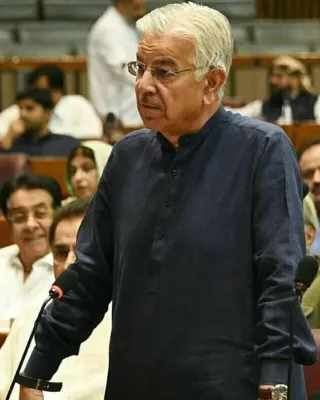
The episode has fuelled speculation about fractured decision-making at the top. Defence Minister Khwaja Asif publicly defended the original airspace restriction even as the Civil Aviation Authority moved simultaneously to restore access — a contradiction that has created a sharp impression of internal misalignment.
Pakistan's complex governance architecture, where civilian ministries, regulatory bodies, and security institutions exercise overlapping influence, makes such contradictions plausible, according to analysts. Whether this episode represents a hurried policy correction or a deeper clash of institutional interests, the optics have been damaging.
The China-US Fault Line
Pakistan and China maintain what both governments routinely describe as an 'all-weather strategic cooperative partnership'. Beijing is Islamabad's largest creditor, a leading arms supplier, and the principal investor behind the China-Pakistan Economic Corridor (CPEC). From that vantage point, restricting Taiwanese carriers may have appeared a logical extension of Pakistan's stated diplomatic position.
Yet the move immediately highlighted an awkward contradiction: Beijing itself reportedly allows Taiwanese commercial airlines to transit Chinese airspace, meaning Islamabad's restriction risked drawing international attention while delivering little tangible benefit to either country. The rapid reversal suggests authorities concluded that reputational costs outweighed any symbolic diplomatic gain.
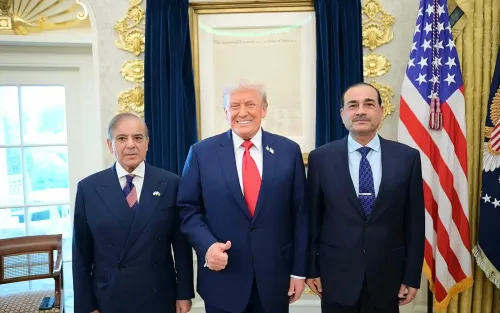
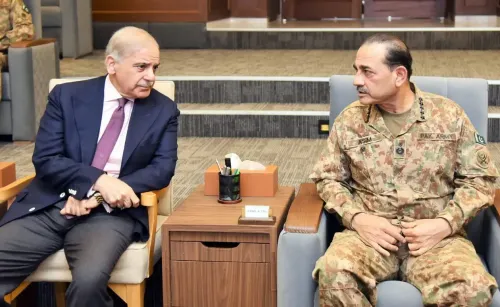
Simultaneously, Pakistan cannot afford to antagonise Washington. Army Chief Asim Munir has recently moved closer to the White House, as has Prime Minister Shehbaz Sharif — most notably after renominating President Donald Trump for the Nobel Peace Prize. The United States maintains extensive unofficial relations with Taiwan and remains its most important international security partner, providing military equipment and strategic backing under the Taiwan Relations Act.
The Broader Geopolitical Squeeze
The Taiwan airspace incident is one thread in a wider pattern of diplomatic strain. Pakistan is simultaneously navigating the fraught consequences of its strategic defence pact with Saudi Arabia and Turkey while managing tensions with neighbour Iran. Each relationship pulls Islamabad in a different direction.
Analysts note that a precedent of politically motivated airspace restrictions would raise concerns among international airlines about the predictability and neutrality of Pakistani airspace — a strategic and commercial asset for a country that serves as a critical transit hub linking East Asia with Europe and the Middle East.
Suvam Pal, an Indian journalist based in Taiwan and an aviation enthusiast, recalled flying over Pakistani airspace during an earlier Europe visit, noting the uncertainty that Islamabad's wavering now introduces. 'Pakistan, as a quasi-vassal state of the People's Republic of China, will never back Taiwan or support Taiwan's cause. Rather, they will forever support Communist China,' Pal said, pointing to publicly available rerouted flight paths showing China Airlines flying over Russia en route to Europe.
What This Signals Going Forward
The incident captures a recurring pattern for Pakistan: a country whose foreign policy choices are increasingly driven by short-term crisis management rather than strategic coherence. With its economy dependent on external lifelines — from the International Monetary Fund to Chinese credit lines — Islamabad has limited room to make symbolic gestures that alienate any major partner.
Whether the episode is ultimately remembered as a minor goof or a revealing stress-test of governance, it has reinforced a reality that Pakistan's partners and adversaries alike have noted: Islamabad is, as observers put it, frequently flying into diplomatically turbulent airspace — and not always with a clear flight plan.
Point of View
And on Washington for IMF goodwill, creates a trap where every symbolic gesture toward one partner risks offending the other. What makes this incident particularly revealing is that Beijing itself permits Taiwanese carriers — meaning Pakistan took on reputational risk without even delivering a clear benefit to its 'all-weather' partner. The public contradiction between the Defence Minister and the Civil Aviation Authority is a symptom of a governance model where security institutions, civilian ministries, and regulatory bodies operate with overlapping — and sometimes competing — mandates. Until that coordination deficit is addressed, such diplomatic stumbles will recur.
NationPress
29 Oct 2026
Frequently Asked Questions
Why did Pakistan ban Taiwanese airlines from its airspace?
Pakistan reportedly barred China Airlines and EVA Air from its airspace from around 25 October 2026, in what observers interpreted as a gesture reaffirming the 'One China' principle in support of Beijing. However, the move was swiftly reversed, with Pakistan's Civil Aviation Authority restoring access from 28 October, suggesting the decision may not have been fully thought through.
How were Taiwanese airlines affected by the Pakistan airspace ban?
China Airlines and EVA Air were forced to reroute Europe-bound flights through Russian airspace or alternative corridors, increasing flight times and fuel costs while disrupting established Asia-Europe routes. The disruption lasted only a few days before Pakistani authorities restored access.
Why did Pakistan reverse its decision so quickly?
Analysts suggest Pakistan concluded that the reputational costs of being seen as an unpredictable aviation transit hub outweighed any symbolic diplomatic gain. Notably, Beijing itself allows Taiwanese carriers to use Chinese airspace, which undermined the logic of Islamabad's original restriction.
What does the episode reveal about Pakistan's foreign policy?
The incident highlights Pakistan's precarious position between its 'all-weather' partner China and the United States, on whose goodwill it depends for support at international financial institutions. The public contradiction between Defence Minister Khwaja Asif defending the ban while the Civil Aviation Authority restored access also points to internal misalignment within the Sharif government.
How does this relate to US-Taiwan relations and Pakistan's ties with Washington?
The United States maintains extensive unofficial relations with Taiwan under the Taiwan Relations Act, providing military equipment and strategic backing. Pakistan has simultaneously been courting Washington — Army Chief Asim Munir and PM Shehbaz Sharif have both moved closer to the White House — making a move that antagonised a US partner particularly ill-timed.