CM Pema Khandu Calls Northeast Universities to Drive Innovation

Synopsis
Chief Minister Pema Khandu on August 11, 2026 called on universities across Northeast India to become problem-solving institutions anchored in innovation, research and entrepreneurship — framing higher education as the region's most powerful development tool.
Key Takeaways
CM Pema Khandu on August 11, 2026 urged Northeast universities to prioritise innovation, research, entrepreneurship and technology.
He framed universities as essential to addressing the Northeast's 'unique challenges' and building a 'future-ready' region.
The call aligns with the National Education Policy 2020 , which emphasised applied research and multidisciplinary learning in higher education.
Northeast India , comprising eight states bordering multiple countries, faces distinct challenges including geographic isolation and limited industrial infrastructure.
State-level follow-up on funding allocations and research centre mandates will determine whether the vision translates into structural change.
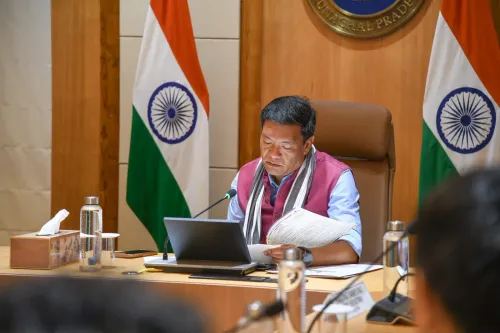
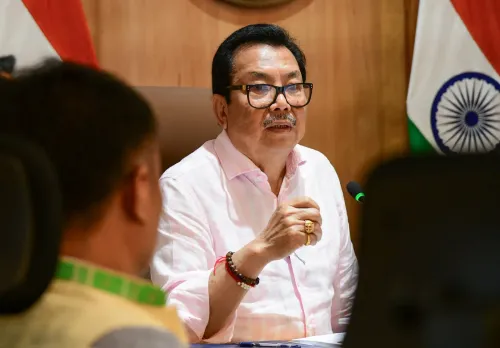
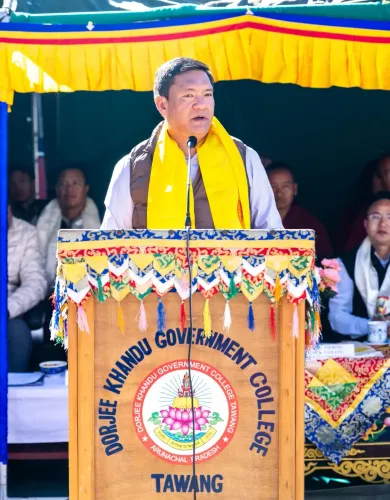
A challenge has been issued — not to students, but to the institutions meant to shape them. Chief Minister Pema Khandu of Arunachal Pradesh on Tuesday, August 11, 2026, urged universities across Northeast India to reinvent themselves as problem-solving engines, placing innovation, research, entrepreneurship and technology at the centre of their mission.
Speaking to the region's higher education ecosystem, Khandu pushed universities to move beyond conventional academic mandates and directly engage with the distinctive challenges the Northeast faces — from geographic isolation and connectivity gaps to ecological fragility and economic underdevelopment. The message was pointed: the region's universities must build a 'future-ready Northeast', not merely produce graduates.
Why the Northeast Needs a Different Kind of University
The eight states of Northeast India share borders with Bhutan, China, Myanmar and Bangladesh, making the region one of India's most strategically sensitive and geographically complex zones. Infrastructure deficits, limited industrial bases and a youth population hungry for opportunity have long defined the development conversation here. Generic academic curricula, critics have argued, do little to address these realities. Khandu's call maps directly onto the ambitions of the National Education Policy 2020, which tasked higher education institutions across India with emphasising innovation, applied research and multidisciplinary thinking. For the Northeast, that national framework carries extra urgency — the region's universities are often the only serious research infrastructure within hundreds of kilometres.A Pattern Across the Region's Leadership
Khandu's push is part of a broader trend among Northeast state leaders who have periodically spotlighted local universities as levers for applied development. The argument is consistent: institutions in the region are uniquely positioned to research local biodiversity, develop climate-resilient agriculture, incubate small enterprises and train a skilled workforce that stays — rather than migrates to metro cities. The real test, as always, will be in the follow-through. Calls for university reform without accompanying funding mandates, research centre allocations or industry-linkage frameworks tend to remain aspirational. Whether Arunachal Pradesh and its neighbouring states will back this vision with structural investment is the question that will determine whether this moment is a turning point or a talking point. The Northeast's universities have been handed a mandate. Now comes the harder work of building the institutions that can actually deliver it.Point of View
High-profile calls for institutional reform that test whether state governments will match rhetoric with resource allocation. The framing of universities as development infrastructure, rather than merely academic bodies, is consistent with the NEP 2020 philosophy, but implementation in the Northeast has historically lagged behind national ambitions. If Arunachal Pradesh or its neighbours announce concrete funding mechanisms or university-industry linkage programmes in the coming months, this moment will carry real policy weight. Without that follow-through, it risks becoming another aspirational statement in a region that has heard many.
NationPress
25 Sept 2026
Frequently Asked Questions
What did CM Pema Khandu say about Northeast universities?
CM Pema Khandu urged universities across Northeast India to become problem-solving institutions focused on innovation, research, entrepreneurship and technology to address the region's unique challenges.
Which policy supports Pema Khandu's call for university reform?
The National Education Policy 2020 aligns closely with Khandu's vision, as it called on higher education institutions to emphasise innovation, applied research and multidisciplinary approaches.
Why is higher education reform important for Northeast India?
Northeast India faces distinct challenges including geographic isolation, limited industrial infrastructure and ecological complexity — problems that locally embedded universities are well-placed to research and address.
What is the significance of Pema Khandu's statement on August 11, 2026?
It signals a push from Arunachal Pradesh's Chief Minister to reorient the region's universities from conventional academic roles toward active drivers of regional development and youth employment.
What should we watch for after Pema Khandu's university reform call?
Watch for state-level announcements on funding allocations, research centre mandates or university-industry linkage frameworks that would give the vision structural backing.