Piyush Goyal: India-New Zealand FTA Enters Force on Vijayadashami
Synopsis
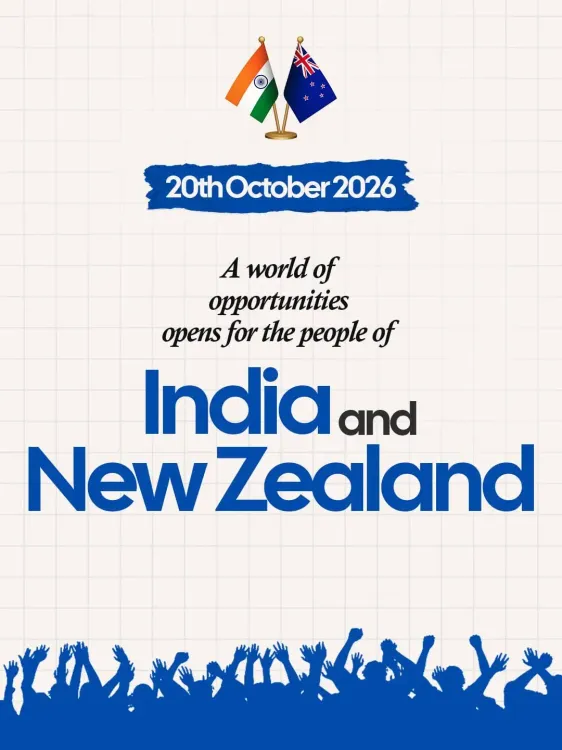
The India-New Zealand Free Trade Agreement enters force on Vijayadashami 2026, granting 100% duty-free access for all Indian exports, protecting dairy and sensitive sectors, opening professional mobility pathways, and anchoring a USD 20 billion New Zealand investment commitment into India.
Key Takeaways
The India-New Zealand FTA enters into force on 20 October 2026 (Vijayadashami) , roughly 19 months after negotiations launched in March 2025 .
100% of Indian exports to New Zealand will receive duty-free access under the agreement.
Sensitive sectors including dairy remain protected, preserving Indian farmers' interests.
New Zealand has committed to facilitate USD 20 billion in investment into India across manufacturing, infrastructure, services and innovation.
The FTA creates new professional mobility pathways for Indian workers and service providers in New Zealand.
The deal continues India's post-2022 FTA strategy that previously delivered agreements with Australia and the UAE .
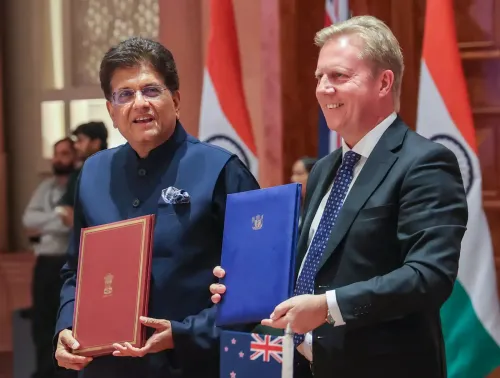
On the morning of Vijayadashami, 20 October 2026, a trade agreement years in the making crosses the finish line — the India-New Zealand Free Trade Agreement enters into force, delivering duty-free access for 100% of Indian exports to New Zealand and unlocking a fresh investment corridor worth a committed USD 20 billion. Union Commerce and Industry Minister Piyush Goyal announced the milestone on Monday, 19 October 2026, framing it as a 'Vijay' — a victory — for both nations.
From March Negotiations to a Vijayadashami Entry into Force
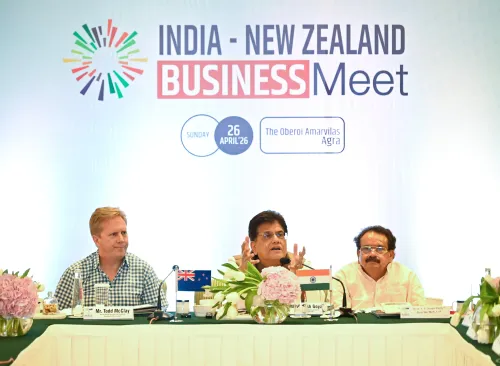
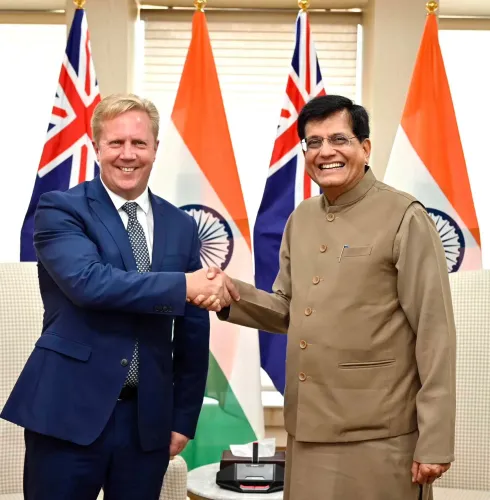
The timeline is striking in its speed. Formal negotiations were launched in March 2025, and the agreement reaches enforceability roughly nineteen months later — a pace that stands out in a world where trade talks routinely drag across decades. Minister Goyal credited the political will of Prime Minister Narendra Modi and New Zealand Prime Minister Chris Luxon, alongside the sustained technical work of New Zealand Trade Minister Todd McClay and both countries' negotiating teams, for compressing that timeline without sacrificing substance.
India's recent FTA playbook — deals with Australia and the UAE in 2022 — established the template: broad market access for Indian goods, services mobility for professionals, and a hard ring-fence around politically sensitive domestic sectors. The New Zealand agreement follows that architecture closely.
What Full Duty-Free Access Means for MSMEs, Farmers and Professionals
The headline number — 100% duty-free access for Indian exports — has its sharpest edge for exporters in labour-intensive sectors and agriculture. Indian farmers gain expanded market access for fruits, vegetables, spices and agricultural produce, accompanied by bilateral cooperation on productivity and income support. For the vast MSME ecosystem, the removal of tariff barriers into a high-income Oceania market creates a pathway that previously required routing through third-country agreements.
Professionals also feature explicitly: the FTA opens new mobility pathways for Indian workers and service providers in New Zealand. That clause matters to a young workforce where migration and global career opportunities rank high on the priority list.
Crucially, India's dairy sector — one of the most politically charged in any trade negotiation involving New Zealand, the world's largest dairy exporter — remains protected. Goyal's post was explicit: 'Sensitive sectors, including dairy, remain protected, keeping farmers' welfare at the heart of our approach.'
The USD 20 Billion Investment Commitment and What It Targets
New Zealand's commitment to facilitate USD 20 billion in investment into India is the agreement's second major headline. The sectors named — manufacturing, infrastructure, services and innovation — align precisely with India's current industrial-policy priorities: supply-chain diversification, infrastructure build-out, and technology-enabled services. For a government that has made attracting foreign capital into productive sectors a central economic theme, this clause functions as a multiplier on the FTA's trade provisions.
The investment figure is a facilitation commitment rather than a guaranteed outflow, and its realisation will depend on deal-by-deal execution. But the institutional signal — written into a treaty framework — raises the stakes for follow-through on both sides.
India's Expanding FTA Architecture Under Modi
The New Zealand deal is not an isolated event. It is the latest tile in a mosaic that includes agreements with Australia, the UAE, and ongoing negotiations with the United Kingdom, the European Union and others. The pattern is consistent: prioritise high-income or high-growth markets where Indian exports have untapped headroom, protect domestic agriculture and manufacturing where politically necessary, and use investment provisions to draw capital inward. Each concluded deal also strengthens India's negotiating hand in the next one — demonstrating to partners that New Delhi can deliver ratified, in-force agreements on reasonable timelines.
Minister Goyal's message to Indian exporters was direct: 'I encourage them to make full use of this agreement, build lasting partnerships and translate its potential into tangible gains for our people.' The machinery is in place. The next question is how quickly Indian MSMEs, farmers and service exporters move to use it.
A treaty signed is only as good as the trade it generates — the real scoreboard opens tomorrow.
Point of View
It could shift New Zealand from a peripheral trade partner to a meaningful capital source for India's infrastructure and manufacturing ambitions. Protecting dairy while delivering full export duty elimination is the political balancing act at the heart of every India FTA — its success here will be watched closely by partners in ongoing UK and EU negotiations.
NationPress
19 Oct 2026
Frequently Asked Questions
What is the India-New Zealand FTA?
The India-New Zealand Free Trade Agreement is a bilateral trade pact that grants 100% duty-free access for all Indian exports to New Zealand, opens professional mobility pathways for Indians, and secures a USD 20 billion New Zealand investment commitment into India, while keeping sensitive sectors such as dairy protected.
When does the India-New Zealand FTA come into force?
The agreement enters into force on 20 October 2026 , which coincides with the festival of Vijayadashami.
Will India's dairy sector be affected by the New Zealand FTA?
No. The FTA explicitly keeps dairy and other sensitive agricultural sectors protected, shielding Indian dairy farmers from competition with New Zealand's large dairy export industry.
How much will New Zealand invest in India under the FTA?
New Zealand has committed to facilitate USD 20 billion in investment into India, targeting manufacturing, infrastructure, services and innovation sectors.
How does the India-New Zealand FTA benefit Indian MSMEs and farmers?
Indian MSMEs gain tariff-free entry into a high-income market for their goods, while farmers receive expanded market access for fruits, vegetables and spices, alongside bilateral cooperation on productivity and income support.