Piyush Goyal: India-UK CETA Enters Force, 99% Exports Get Zero Duty

Synopsis
The India-UK Comprehensive Economic and Trade Agreement (CETA) entered into force on 15 July 2026, granting zero-duty access to nearly 99 per cent of India's exports. Commerce Minister Piyush Goyal announced the milestone, highlighting gains for textiles, IT services, MSMEs, and Indian professionals exempted from double social security contributions for up to five years.
Key Takeaways
The India-UK CETA and the Agreement on Social Security came into force on 15 July 2026 .
Zero-duty market access covers nearly 99 per cent of India's exports, representing almost 100 per cent of bilateral trade value.
Key beneficiary sectors include textiles, leather, gems and jewellery, engineering goods, marine products, chemicals, processed foods , and MSMEs .
The pact also opens market access in IT, professional, financial, education , and business services , and expands Indian talent mobility.
Indian professionals on temporary UK assignments are exempt from double social security contributions for up to 5 years .
Negotiations were formally launched in January 2022 , completing a roughly four-and-a-half-year negotiating process.
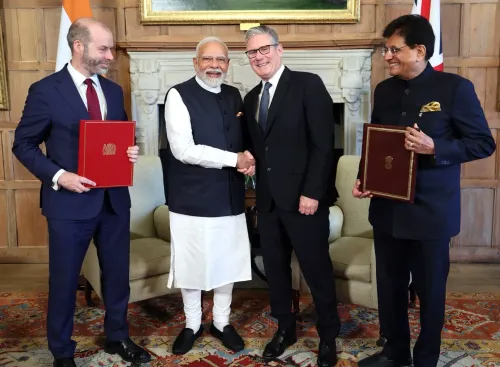
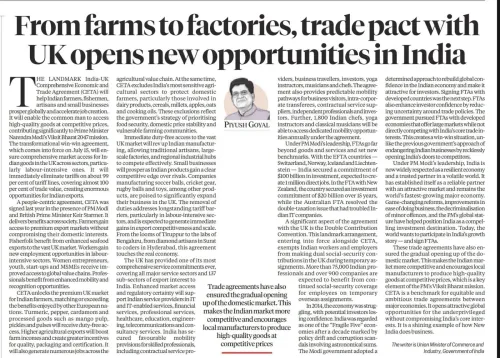
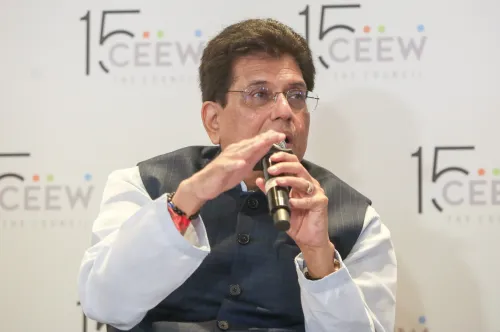
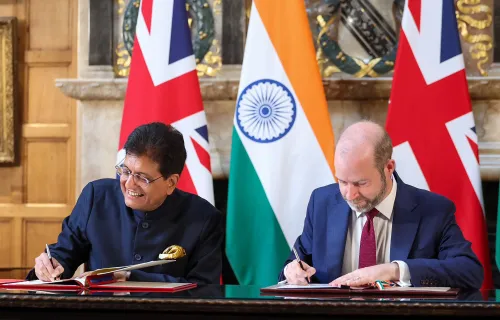
Union Commerce and Industry Minister Piyush Goyal on Wednesday, 15 July 2026 announced that the India-UK Comprehensive Economic and Trade Agreement (CETA) and the Agreement on Social Security have come into force, delivering zero-duty market access for nearly 99 per cent of India's exports and covering almost 100 per cent of bilateral trade value.
Context
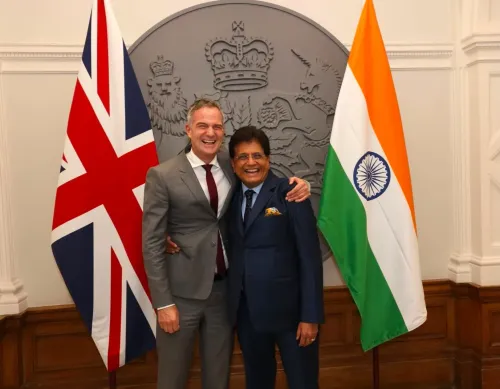
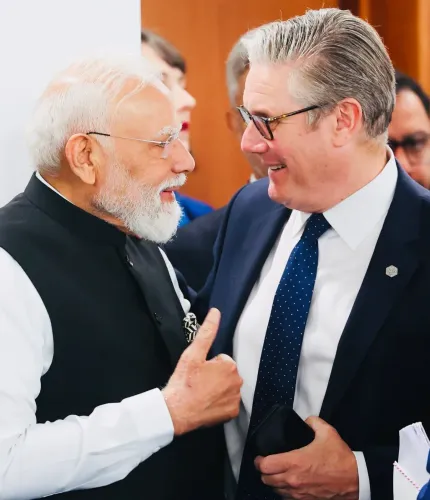
Minister Goyal described the development as 'a defining milestone in India-UK ties,' crediting the agreement's conclusion to the leadership of Prime Minister Narendra Modi and the negotiating commitment of his UK counterpart, Peter Kyle. The minister thanked both teams 'for their commitment in bringing this transformational agreement to fruition.'
Formal negotiations for the CETA were launched in January 2022, making the nearly four-and-a-half-year negotiating arc one of the longer bilateral trade processes India has undertaken in recent years. The agreement now joins a growing portfolio of Indian FTAs that includes pacts with the UAE (signed February 2022) and Australia (signed December 2022).
Policy Backdrop
India accelerated its bilateral FTA strategy after stepping back from the Regional Comprehensive Economic Partnership (RCEP) in 2019, seeking to secure zero-duty access for labour-intensive export sectors through targeted country-level deals. The UK, navigating its post-Brexit trade agenda, identified India — the world's fifth-largest economy — as a priority partner, particularly in services and technology.
The CETA follows the structural template of earlier Indian agreements by bundling tariff elimination with mobility and social security provisions. The accompanying Agreement on Social Security exempts Indian professionals on temporary assignments in the UK from double social security contributions for up to 5 years, a provision Goyal said would enhance 'the global competitiveness of our workforce.'
Stakeholders and Impact
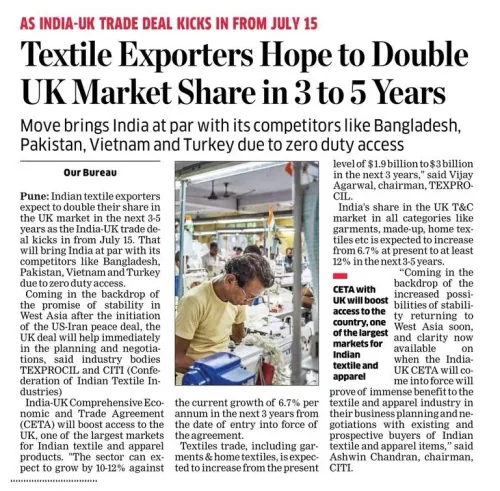
The agreement targets a broad cross-section of the Indian economy. On the goods side, sectors explicitly cited include textiles, leather, gems and jewellery, engineering goods, marine products, chemicals, and processed foods, alongside MSMEs, farmers, and manufacturers.
On the services side, the pact is expected to open new market access in IT, professional services, financial services, education, and business services, while expanding pathways for Indian talent mobility into the United Kingdom. MSME exporters, who have historically struggled with tariff barriers in developed markets, stand to benefit most immediately from the zero-duty provisions on the goods side.
What's Next
Attention will now shift to the publication of official notifications, rules of origin, and tariff schedules once the agreement is formally gazetted by both governments. Quarterly trade data from the Commerce Ministry on covered sectors will serve as the earliest measurable indicator of the agreement's on-the-ground impact.
If the zero-duty access translates into the export surge the government projects, the India-UK CETA could strengthen the political and economic case for accelerating stalled FTA negotiations with other major partners. For Indian professionals and service exporters, the social security exemption represents a concrete, near-term gain that complements the broader market-access architecture of the deal.
Point of View
And signals that India's post-RCEP FTA strategy is delivering tangible results. The bundling of goods tariff elimination with a social security exemption for Indian professionals is a deliberate design choice — it addresses two of the most persistent friction points Indian exporters and skilled workers face in developed markets simultaneously. For the BJP government, the deal also carries domestic political weight: it validates the 'Make in India' and MSME-first narrative ahead of a period when global trade headwinds are intensifying. The speed at which both sides moved from negotiation to entry into force, relative to India's historically cautious FTA posture, suggests a strategic convergence between New Delhi and London that extends well beyond trade into technology and geopolitical alignment.
NationPress
15 Jul 2026
Frequently Asked Questions
What is the India-UK CETA and when did it come into force?
The India-UK Comprehensive Economic and Trade Agreement (CETA) is a bilateral free trade pact that came into force on 15 July 2026. It grants zero-duty market access to nearly 99 per cent of India's exports to the United Kingdom, covering almost 100 per cent of bilateral trade value.
Which Indian sectors benefit most from the India-UK free trade agreement?
Textiles, leather, gems and jewellery, engineering goods, marine products, chemicals, and processed foods are among the key goods sectors. On the services side, IT, professional services, financial services, education, and business services stand to gain, along with MSMEs, farmers, and manufacturers.
What does the India-UK Agreement on Social Security mean for Indian professionals?
The Agreement on Social Security exempts Indian professionals on temporary assignments in the UK from paying social security contributions in both countries simultaneously for up to 5 years. This reduces the cost of deploying Indian talent abroad and improves the global competitiveness of Indian service firms.
How long did India-UK free trade agreement negotiations take?
Formal negotiations for the India-UK CETA were launched in January 2022. The agreement entered into force in July 2026, making the negotiating period approximately four and a half years.
How does the India-UK CETA compare to India's other recent trade deals?
The India-UK CETA follows a similar structure to India's agreements with the UAE (February 2022) and Australia (December 2022), combining tariff elimination on goods with services market access and mobility provisions. It is part of India's broader strategy of bilateral FTAs after stepping back from the RCEP regional deal in 2019.