PM Modi hails Cabinet decision to boost tech-driven Ease of Living in Delhi

Synopsis
Prime Minister Narendra Modi on 30 September 2026 welcomed a Union Cabinet decision to deploy technology for improving Ease of Living in Delhi, extending the decade-long Digital India push into India's complex dual-governance capital.
Key Takeaways
PM Modi publicly endorsed a Union Cabinet decision on 30 September 2026 focused on technology-led improvements in Delhi .
The decision is framed around boosting 'Ease of Living' — quality-of-life services for everyday residents, not just business facilitation.
The move builds on the Digital India programme (2015) and the Ease of Living Index (2018) introduced by the Ministry of Housing and Urban Affairs.
Delhi's unique dual governance structure — Lieutenant Governor plus elected assembly — makes central Cabinet interventions in city services particularly significant.
Exact technology platforms and rollout timelines are expected via follow-up notifications from the relevant ministries.
A Cabinet-level decision aimed at deploying technology to improve everyday life for Delhi's residents has drawn a public endorsement from Prime Minister Narendra Modi, who called it 'an important Cabinet decision' that will harness tech to boost 'Ease of Living' across the capital on Wednesday, 30 September 2026.
What the Cabinet greenlit for Delhi
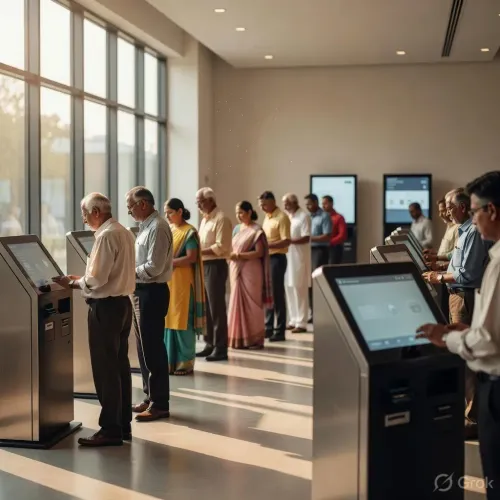
The Union Cabinet — India's apex executive body, chaired by the Prime Minister — approved a measure specifically targeting Delhi's urban service delivery. While the precise technology platforms and implementation timelines await formal notification from the concerned ministries, the decision fits squarely within the Centre's long-running push to digitise citizen-facing services. Cabinet decisions on Delhi have historically touched areas such as property tax systems, water-supply grievance portals and inter-agency data sharing — domains where central oversight intersects with the National Capital Territory's dual governance structure.
Digital India's decade-long runway into Delhi
The move draws on a policy lineage stretching back to the Digital India programme launched in 2015, which set the template for electronically delivered government services and digital public infrastructure. Three years later, the Ministry of Housing and Urban Affairs formalised the Ease of Living Index in 2018 to measure and benchmark urban quality of life using granular data — giving cities, including Delhi, a structured incentive to modernise services.
Successive cabinet cycles under the Modi government have layered Aadhaar-linked portals, unified grievance platforms and e-governance dashboards onto that foundation. Delhi, as the seat of the national government and home to over 30 million residents, presents both the highest-visibility test case and the most complex administrative challenge — with the Lieutenant Governor and the elected assembly sharing, and sometimes contesting, jurisdiction over municipal functions.
Why the 'Ease of Living' framing matters
The explicit invocation of 'Ease of Living' — rather than simply 'digital governance' — is deliberate. Where 'Ease of Doing Business' targets entrepreneurs and investors, 'Ease of Living' signals a wider constituency: commuters, tenants, utility consumers, patients. Bringing technology to bear on that constituency in Delhi means reducing friction at the points where citizens most frequently encounter the state — utility bills, building permits, public transport, and health and education services. That is the political and administrative promise this Cabinet decision is being asked to deliver on.
Point of View
Once notified, translate the broad promise into measurable friction-reduction for residents.
NationPress
30 Sept 2026
Frequently Asked Questions
What is the Cabinet decision on Delhi's Ease of Living announced in September 2026?
The Union Cabinet approved a decision to use technology for improving Ease of Living services in Delhi. The specific platforms and timelines are expected to be detailed in follow-up ministry notifications.
What is the Ease of Living Index and how does it relate to Delhi?
The Ease of Living Index was introduced in 2018 by the Ministry of Housing and Urban Affairs to measure and improve urban quality of life using data. Delhi, as the national capital, is among the major cities benchmarked under this framework.
How does Digital India connect to this Cabinet decision on Delhi?
The Digital India programme , launched in 2015 , laid the foundation for electronically delivered government services across India. This Cabinet decision extends that agenda specifically to Delhi's urban service delivery ecosystem.
Who governs Delhi — the Centre or the state government?
Delhi operates under a dual governance structure: a Lieutenant Governor appointed by the Centre and an elected state assembly. This means Cabinet decisions by the Union government can directly shape key aspects of the capital's administration.
What services could benefit from technology under this Delhi Cabinet decision?
Based on the broad pattern of similar central interventions, areas likely to benefit include property tax systems, water and utility grievance portals, building permits, public transport, and e-governance dashboards — though confirmed details await official notification.