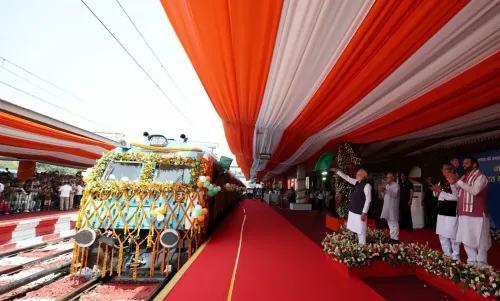
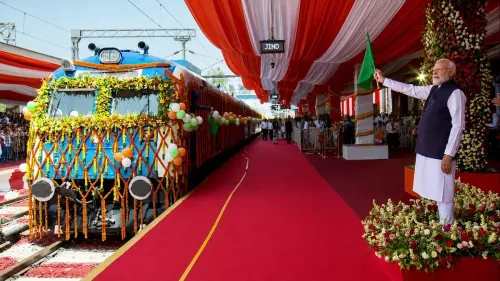
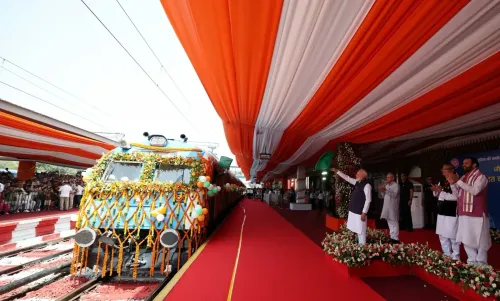
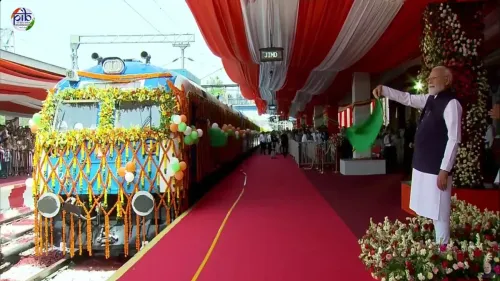
PM Modi hails India's first hydrogen train on Jind-Sonipat route
Synopsis
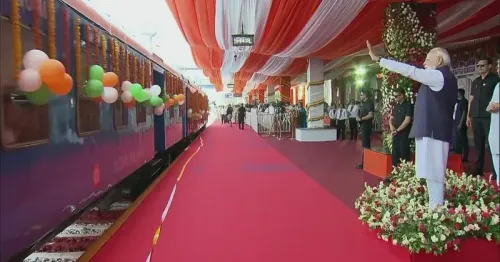
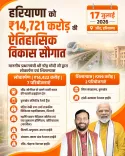
Prime Minister Narendra Modi on 17 July 2026 hailed the launch of India's first hydrogen train between Jind and Sonipat in Haryana as a defining step toward 21st-century technology, connecting the milestone to the National Green Hydrogen Mission and Indian Railways' net-zero 2030 goal.
Key Takeaways
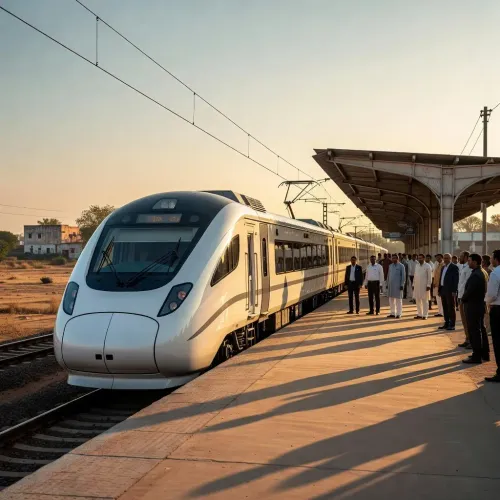
India's first hydrogen-powered train has been launched on the Jind–Sonipat corridor in Haryana .
Prime Minister Narendra Modi described the service as a 'big step' toward 21st-century technology on 17 July 2026 .
The launch is rooted in the National Green Hydrogen Mission , introduced in January 2023 .
Indian Railways has set a target of net-zero emissions by 2030 , with hydrogen trains forming a key pillar.
The pilot is expected to inform future route expansions and integration with state-level green hydrogen hubs in Haryana and Rajasthan .
The project aligns with the Atmanirbhar Bharat push for indigenous clean-technology capability.
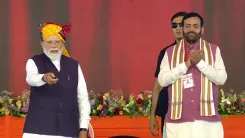
Prime Minister Narendra Modi on Friday, 17 July 2026, celebrated the launch of India's first hydrogen-powered train, describing the service between Jind and Sonipat in Haryana as a landmark step toward 21st-century technology. Modi said every Indian would feel immense pride upon learning of the train's capabilities.
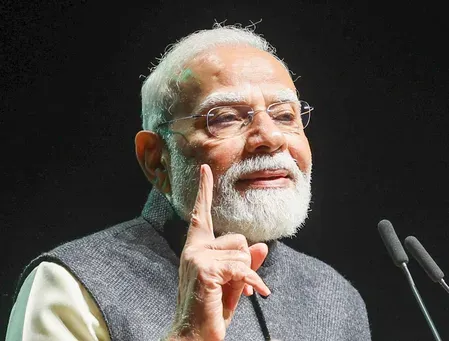
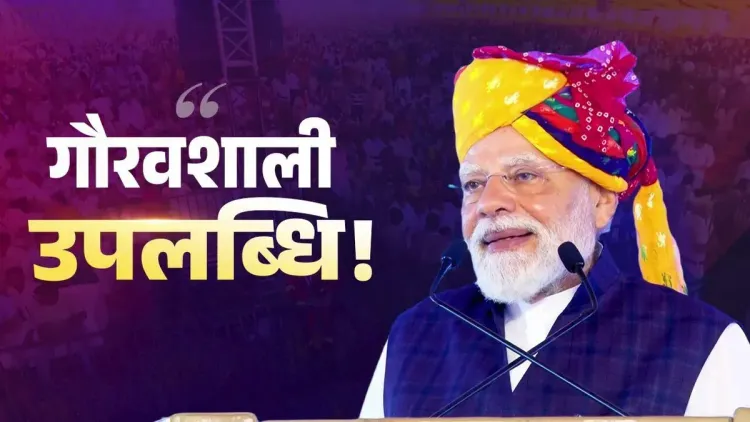
Posting in Hindi on X, the Prime Minister wrote: 'जींद से सोनीपत के बीच शुरू हुई देश की पहली हाइड्रोजन ट्रेन 21वीं सदी की टेक्नोलॉजी की दिशा में भारत का एक बड़ा कदम है।' ('The country's first hydrogen train, launched between Jind and Sonipat, is a big step for India in the direction of 21st-century technology.') He added that hearing about the train's capabilities would fill every Indian with great pride.
Context
Indian Railways has been pursuing hydrogen fuel-cell technology as part of a broader decarbonisation drive, with the Jind–Sonipat corridor in Haryana selected for the pilot service. The route connects two significant towns in the state, making it a visible and operationally meaningful testbed for the technology. The Prime Minister's public endorsement signals that the project has cleared a threshold the government considers worthy of national attention.
Policy Backdrop
The launch sits squarely within the National Green Hydrogen Mission, introduced in January 2023, which aims to position India as a global hub for green hydrogen production and application — including in transport. Indian Railways had signalled its intent to induct hydrogen trains as early as 2022–23, with pilot projects referenced under the 'Hydrogen for Heritage' initiative in successive Railway Budgets. The broader goal is for the rail network to achieve net-zero emissions by 2030, a commitment that aligns with India's updated Nationally Determined Contributions under the Paris Agreement.
The hydrogen train initiative also complements other flagship rail modernisation programmes — including the Vande Bharat express services and dedicated freight corridors — forming a layered strategy to reduce the carbon intensity of one of the world's largest rail networks. The Ministry of Railways serves as the nodal body overseeing this technology induction.
Stakeholders and Impact
The most immediate beneficiaries are commuters in Haryana, particularly along the Jind–Sonipat corridor, who stand to gain a cleaner mode of intercity travel. For the renewable energy industry, the launch represents a concrete domestic application of green hydrogen, potentially stimulating demand across the supply chain — from electrolysers to fuel cells. The development is also significant for India's Atmanirbhar Bharat ('self-reliant India') narrative, as the government has consistently framed clean-technology indigenisation as a strategic priority.
State-level green hydrogen ecosystems in Haryana and Rajasthan could see accelerated investment if the pilot demonstrates reliable performance, since an operational hydrogen rail corridor provides a ready offtake market for locally produced hydrogen fuel.
What's Next
Attention will now turn to the operational data the pilot generates — energy efficiency, maintenance cycles, and passenger throughput — which will inform decisions on expanding hydrogen train services to additional routes. Future Railway Budgets are expected to carry announcements on network-wide scaling, and integration with state-level green hydrogen production hubs will be a key variable. India's ability to manufacture fuel-cell components domestically will determine both the pace and cost-competitiveness of any expansion.
If the Jind–Sonipat service proves commercially and technically viable, it could mark the beginning of a phased rollout that reshapes the emissions profile of short-to-medium-distance rail travel across the country.
Point of View
Reinforcing the government's clean-technology credentials ahead of future electoral cycles. The choice of a Haryana corridor is politically notable given the state's recent electoral salience for the BJP. More substantively, the launch tests whether India can move hydrogen from mission-document to moving hardware — a transition that has eluded many larger economies. The pilot's real-world performance data will be the decisive factor in determining whether this is a genuine inflection point or a well-publicised proof-of-concept.
NationPress
17 Jul 2026
Frequently Asked Questions
Where is India's first hydrogen train running?
India's first hydrogen train is running between Jind and Sonipat , both cities located in the state of Haryana .
What is the National Green Hydrogen Mission?
The National Green Hydrogen Mission is a central government programme launched in January 2023 to scale up green hydrogen production and its use across sectors including transport, positioning India as a global hub for the fuel.
What is Indian Railways' emissions target?
Indian Railways has set a goal of achieving net-zero carbon emissions by 2030 , with hydrogen fuel-cell trains, solar energy, and electrification forming the core pillars of that strategy.
What is the 'Hydrogen for Heritage' initiative?
'Hydrogen for Heritage' is an initiative under which Indian Railways proposed piloting hydrogen trains on heritage and short-distance routes, referenced in Railway Budget documents from 2022–23 onward as part of the decarbonisation roadmap.
Will hydrogen trains expand to other routes in India?
Future expansion will depend on performance data from the Jind–Sonipat pilot. Announcements on additional routes are expected in upcoming Railway Budgets , with Haryana and Rajasthan identified as states with potential green hydrogen supply infrastructure.