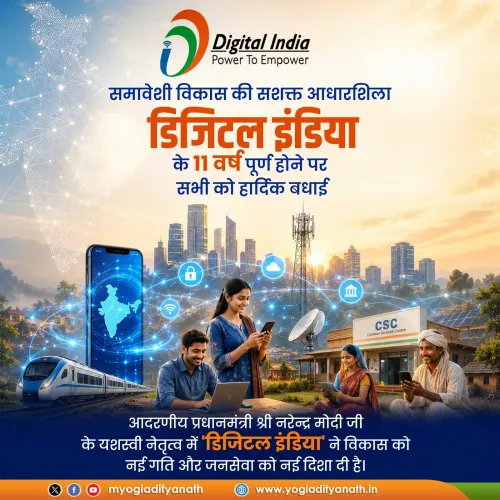
PM Modi marks 11 years of Digital India, hails tech-led growth
Synopsis
Prime Minister Narendra Modi on 1 July 2026 marked eleven years of the Digital India programme, saying it has given India a new global identity. He credited citizens' resolve to embrace innovation and quoted a Sanskrit verse on knowledge-driven progress.
Key Takeaways
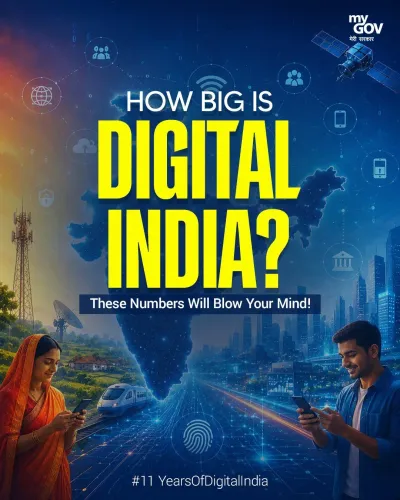
Digital India completed 11 years on 1 July 2026 , having been launched on 1 July 2015 .
PM Modi said the programme has given India a 'new identity across the world' through innovation and technology.
Key infrastructure built under the programme includes Aadhaar , UPI , and DigiLocker , which serve hundreds of millions of citizens.
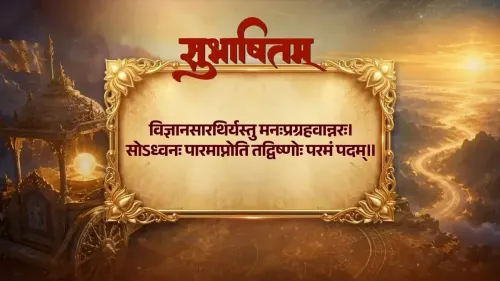
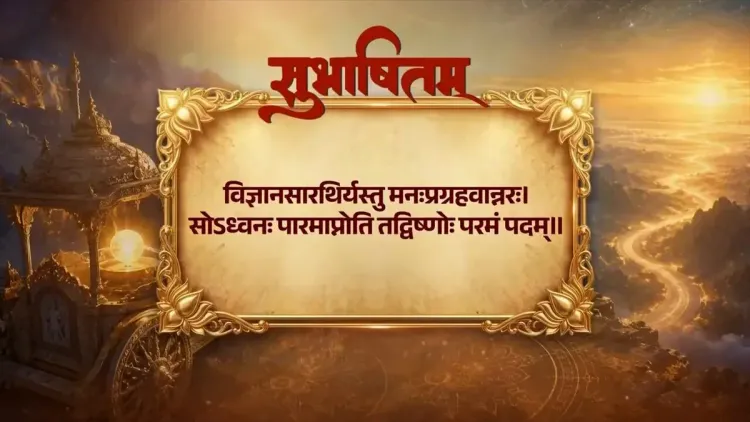
The Prime Minister quoted a Sanskrit verse linking knowledge to progress, framing digital growth within a civilisational context.
The IndiaAI Mission and 5G expansion are cited as the next phase of India's digital policy agenda.
UPI has attracted international interest as a model for real-time digital payments infrastructure.
Prime Minister Narendra Modi on Tuesday, 1 July 2026 marked the eleventh anniversary of the Digital India programme, crediting the initiative with giving India a new global identity and reflecting the nation's resolve to scale new heights through innovation and technology.
Posting in Hindi on X, Modi wrote: 'डिजिटल इंडिया के 11 वर्षों की सफलता से भारतवर्ष को दुनियाभर में एक नई पहचान मिली है' — 'The success of 11 years of Digital India has given India a new identity across the world.' He added that the achievement reveals the determination of citizens to carry the country to new heights by embracing innovation and technology. The Prime Minister also quoted a Sanskrit verse — 'विज्ञानसारथिर्यस्तु मनःप्रग्रहवान्नरः। सोऽध्वनः पारमाप्नोति तद्विष्णोः परमं' — invoking the image of one who harnesses knowledge as a charioteer of the mind, reaching the supreme destination.
Context
The Digital India programme was launched on 1 July 2015 by the Modi government with the stated aim of transforming India into a digitally empowered society and knowledge economy. The initiative set out three broad pillars: building robust digital infrastructure, delivering government services digitally, and expanding digital literacy to citizens across the country.
The anniversary post comes exactly eleven years after that launch, making it a milestone occasion for the government to take stock of the programme's trajectory and signal continued commitment to technology-driven governance.
Policy Backdrop
Since 2015, the government has built an extensive layer of digital public infrastructure that now underpins everyday life for hundreds of millions of Indians. Aadhaar, the biometric identity system, UPI (Unified Payments Interface), and DigiLocker — a secure document wallet — have collectively reshaped how citizens access services and conduct financial transactions.
UPI in particular has drawn global attention, with several countries exploring adoption of similar real-time payment rails. These platforms are now cited internationally as models of scalable digital public infrastructure, lending credibility to the Prime Minister's claim of a 'new global identity' for India in the technology space.
Stakeholders and Impact
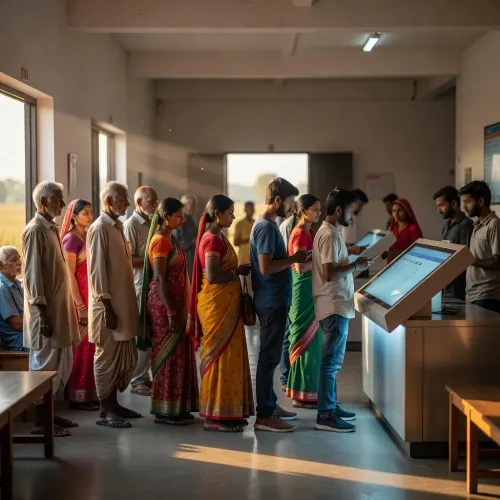
The primary beneficiaries of Digital India are Indian citizens — particularly those in rural and semi-urban areas who gained access to banking, government subsidies, and public services through digital channels for the first time. Technology innovators, start-ups, and fintech companies have also built significant businesses on top of the public digital infrastructure stack.
The programme has also positioned India as a significant voice in global conversations on digital governance and artificial intelligence. The government's ongoing IndiaAI Mission and continued 5G and data-centre expansion, announced in recent Union Budgets, are seen as the next phase of this arc.
What's Next
With Digital India entering its second decade, the government's stated priorities include scaling the IndiaAI Mission and expanding next-generation connectivity infrastructure. Policymakers and industry observers will watch whether the anniversary prompts fresh announcements on data governance, semiconductor manufacturing, or expanded digital literacy targets.
The Prime Minister's invocation of a Sanskrit verse alongside the technology milestone signals an intent to frame India's digital journey not merely as modernisation, but as an expression of civilisational resolve — a framing that is likely to shape political communication around technology policy in the months ahead.
Point of View
Anchoring a modern programme in classical Indian thought and broadening its appeal beyond urban, tech-savvy audiences. As the IndiaAI Mission and next-generation connectivity investments gather pace, the government is clearly positioning Digital India's first decade as the foundation for a more ambitious second act. The framing of digital progress as an expression of 'national resolve' also serves to make the programme's ownership feel collective rather than purely governmental.
NationPress
1 Jul 2026
Frequently Asked Questions
When was Digital India launched?
Digital India was launched on 1 July 2015 by the Modi government with the goal of building digital infrastructure, delivering e-services, and promoting digital literacy across India.
What did PM Modi say on Digital India's 11th anniversary?
PM Modi said that the success of 11 years of Digital India has given India a new identity worldwide, and that it reflects citizens' determination to embrace innovation and take the country to new heights.
What are the main achievements of Digital India?
Key achievements include the widespread adoption of Aadhaar (biometric identity), UPI (real-time digital payments), and DigiLocker (digital document storage), which together have transformed service delivery and financial inclusion for hundreds of millions of Indians.
What is the IndiaAI Mission?
The IndiaAI Mission is a government initiative announced in recent Union Budgets to accelerate artificial intelligence research, infrastructure, and adoption in India, and is seen as the next major phase of the Digital India agenda.
Why did PM Modi quote a Sanskrit verse in his Digital India post?
PM Modi quoted the Sanskrit verse 'विज्ञानसारथिर्यस्तु मनःप्रग्रहवान्नरः' — meaning one who makes knowledge the charioteer of the mind reaches the highest goal — to frame India's digital progress within a broader civilisational and philosophical tradition.