PM Modi marks 11 years of Digital India initiative
Synopsis
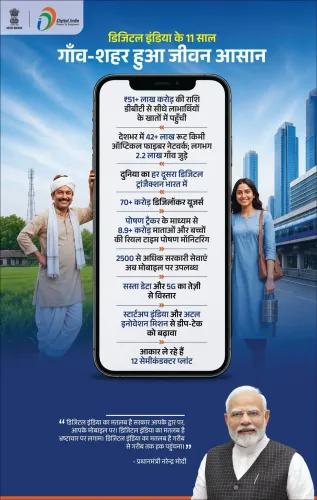
Prime Minister Narendra Modi on 1 July 2026 marked 11 years of the Digital India initiative, crediting it with redefining governance, enabling seamless digital payments, and delivering direct benefit transfers to citizens across the country.
Key Takeaways
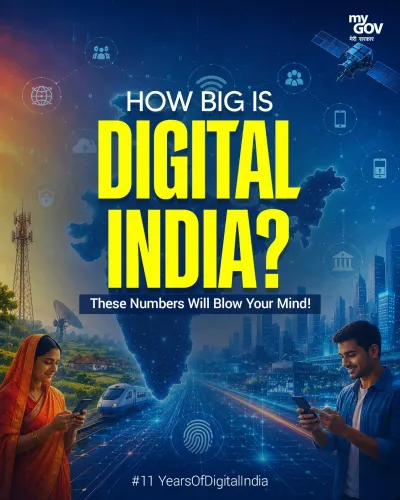
Digital India completed 11 years on 1 July 2026 , having been launched by PM Modi on 1 July 2015 .
The initiative was built on nine pillars spanning digital infrastructure, e-governance, and citizen empowerment.
The JAM trinity — Jan Dhan , Aadhaar , and Mobile — underpins the direct benefit transfer architecture that reduces welfare leakages.
UPI , developed by NPCI , emerged as a flagship product of the ecosystem, enabling real-time payments for millions of citizens and MSMEs .
The next phase is expected to include 5G/6G testbeds and AI-based public service delivery tools.
Data-protection legislation will be a key regulatory frontier shaping the future of India's e-governance platforms.
Prime Minister Narendra Modi on Wednesday, 1 July 2026, marked 11 years of the Digital India initiative, calling it a programme that has 'redefined governance, empowered citizens and accelerated all-round development' and affirming that it has 'touched every aspect of life.'
Context
Digital India was launched on 1 July 2015 by Prime Minister Narendra Modi as a flagship national programme anchored around nine pillars — from broadband highways and universal mobile connectivity to e-governance and digital literacy. The initiative brought together several existing schemes under a single umbrella to transform India into a digitally empowered society and knowledge economy.
In his post, Modi highlighted that the programme has enabled 'seamless digital payments and direct benefit transfers' reaching citizens across the country, underscoring the twin outcomes of financial inclusion and efficient welfare delivery that have defined the decade-long push.
Policy Backdrop
The groundwork for Digital India was laid over several years. The National e-Governance Plan, launched in 2006, first attempted to computerise government services at scale. The Aadhaar biometric identity project, initiated in 2009, created the foundational identity layer. The Pradhan Mantri Jan Dhan Yojana, announced in 2014, opened bank accounts for millions of previously unbanked households.
These converged into the JAM trinity — Jan Dhan, Aadhaar, and Mobile — articulated in 2015 as the architecture for direct benefit transfers, cutting out intermediaries and reducing leakages in subsidy delivery. The Unified Payments Interface (UPI), developed by the National Payments Corporation of India (NPCI), subsequently emerged as one of the most visible products of this ecosystem, enabling real-time digital transactions for common citizens and MSMEs alike.
The Ministry of Electronics and Information Technology (MeitY) has coordinated implementation across states, with programmes such as DigiLocker and rural broadband expansion complementing the payments and identity infrastructure.
Stakeholders and Impact
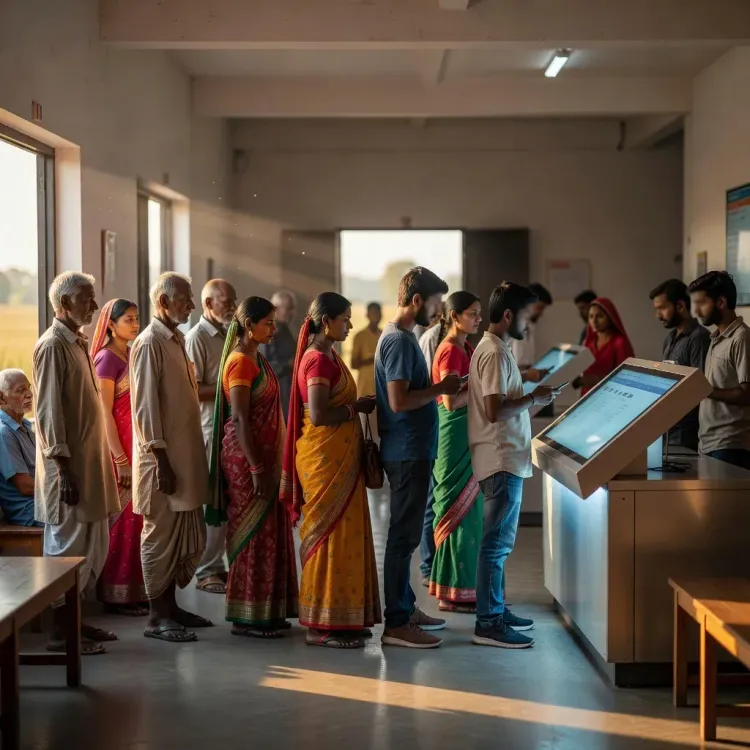
The initiative's reach extends to common citizens, subsidy recipients, rural households, and small businesses. Direct benefit transfers under the JAM framework have channelled welfare payments — from cooking-gas subsidies to scholarship disbursements — directly into beneficiaries' bank accounts, bypassing traditional bureaucratic chains.
UPI has become a daily transactional tool for hundreds of millions of Indians, reshaping retail commerce, peer-to-peer payments, and government fee collection. DigiLocker has allowed citizens to store and share official documents digitally, reducing paperwork in interactions with government offices and educational institutions.
India's digital-government model has drawn attention from other emerging economies seeking similar efficiency gains and formalisation of their informal sectors, positioning the country as a reference point for large-scale public digital infrastructure.
What's Next
The next phase of Digital India is expected to focus on 5G and 6G testbeds, and the integration of artificial intelligence into grievance redressal and public service delivery. Parliamentary action on data-protection rules will shape how citizen data collected across e-governance platforms is governed and safeguarded going forward.
As the programme enters its twelfth year, the government's stated ambition is to deepen last-mile connectivity and expand digital literacy, particularly in rural and semi-urban areas where the gains of the first decade remain uneven.
Point of View
' Modi is anchoring the programme's legacy to two outcomes — UPI adoption and DBT efficiency — that have the widest electoral resonance among beneficiary households. The framing also positions India's digital public infrastructure stack as a durable policy achievement that transcends any single scheme. With Phase 2 components such as AI integration and 5G testbeds on the horizon, the anniversary serves as a launchpad for the next chapter of the digital-governance agenda.
NationPress
1 Jul 2026
Frequently Asked Questions
When was Digital India launched?
Digital India was launched on 1 July 2015 by Prime Minister Narendra Modi , making 2026 its 11th anniversary .
What are the main achievements of Digital India?
Key achievements include the scaling of UPI for real-time digital payments, the JAM trinity framework for direct benefit transfers, the DigiLocker platform for digital document storage, and expanded broadband connectivity across states.
What is the JAM trinity in Digital India?
The JAM trinity stands for Jan Dhan (bank accounts), Aadhaar (biometric identity), and Mobile (connectivity). Together they form the architecture that enables welfare payments to reach beneficiaries directly without intermediaries.
What is Digital India Phase 2?
Digital India Phase 2 is expected to include 5G and 6G testbeds, AI-based grievance redressal systems, and deeper digital literacy programmes, building on the infrastructure established in the first decade.
Which ministry oversees Digital India?
The Ministry of Electronics and Information Technology (MeitY) is the nodal ministry responsible for coordinating the implementation of Digital India across central and state government departments.