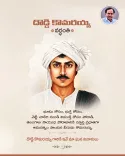
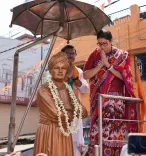
PM Modi pays tribute to Swami Vivekananda on Nirvan Diwas
Synopsis
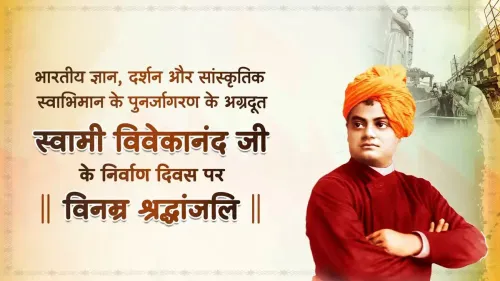
Prime Minister Narendra Modi marked Swami Vivekananda's Nirvan Diwas on 4 July 2026 with a Hindi tribute on X, calling his contributions to Indian culture and spirituality incomparable and connecting his enduring message to the Viksit Bharat 2047 vision.
Key Takeaways
Prime Minister Narendra Modi paid tribute to Swami Vivekananda on his death anniversary, Nirvan Diwas , on 4 July 2026 .
Modi described Vivekananda's contribution to Indian culture, spirituality, and national consciousness as 'incomparable' ( atulniya ).
The Prime Minister noted that Vivekananda's ideas continue to guide crores of young Indians .
The tribute linked Vivekananda's spiritual message to the Viksit Bharat (Developed India by 2047) vision.
Swami Vivekananda passed away on 4 July 1902 and is renowned for his 1893 address at the Parliament of the World's Religions in Chicago .
Modi has issued such tributes consistently since 2014 , connecting civilisational heritage to contemporary national development goals.
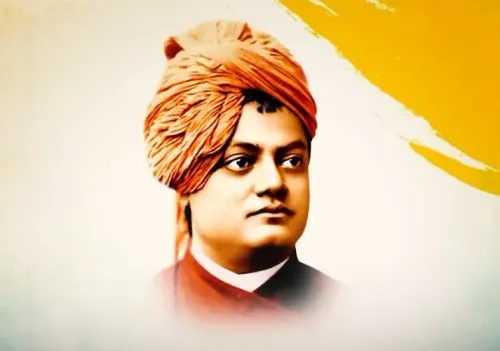
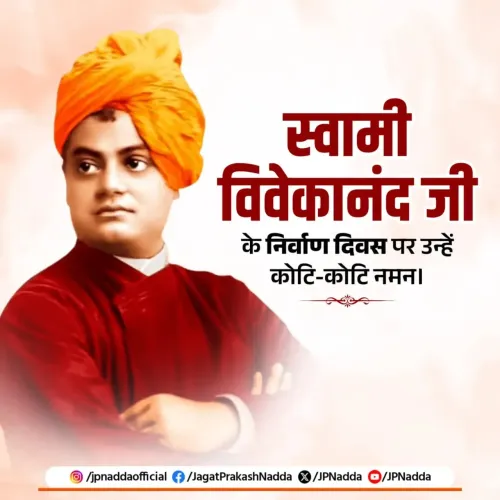
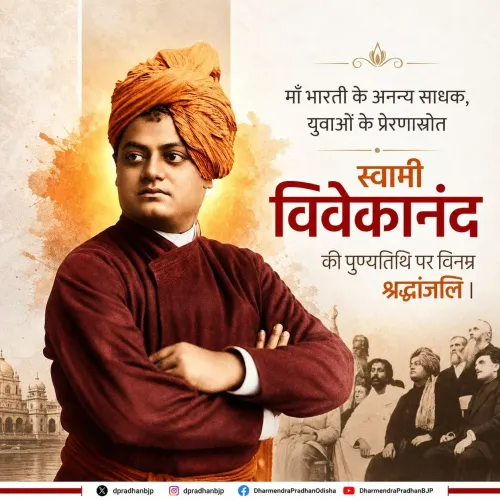
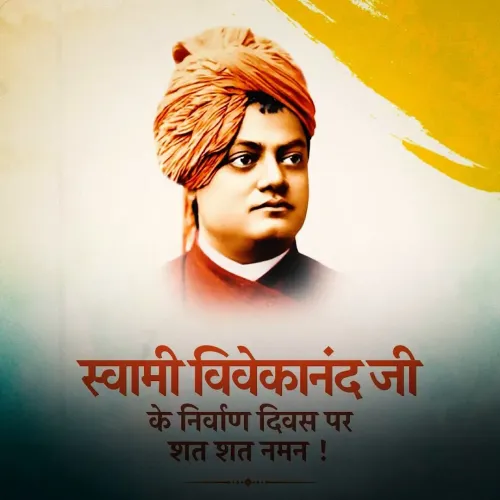
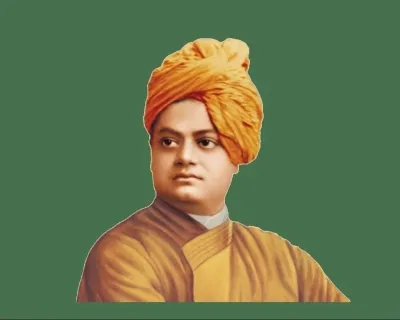
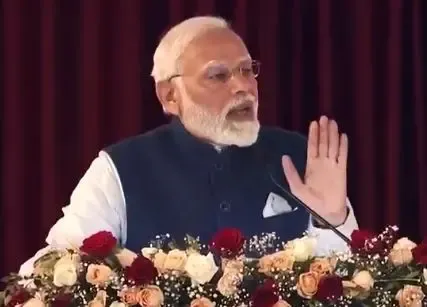
Prime Minister Narendra Modi on Saturday, 4 July 2026, paid homage to Swami Vivekananda on his death anniversary, Nirvan Diwas, calling the 19th-century monk's contribution to Indian culture, spirituality, and national consciousness 'incomparable' and noting that his inspiring ideas continue to guide crores of young Indians today.
In a post in Hindi on X, the Prime Minister wrote: 'स्वामी विवेकानंद जी के निर्वाण दिवस पर उन्हें कोटि-कोटि नमन' — 'I bow in reverence, crore upon crore times, to Swami Vivekananda on his Nirvan Diwas.' Modi added that Vivekananda's intellectual legacy and motivating thoughts 'are still guiding crores of youth' and linked his spiritual message to the vision of a Viksit Bharat (Developed India).
Context
Swami Vivekananda passed away on 4 July 1902 at the age of 39 at Belur Math, West Bengal. He is best remembered for his landmark address at the Parliament of the World's Religions in Chicago in 1893, where he introduced Vedanta and Yoga to a global audience and opened India's philosophical traditions to the world stage. He founded the Ramakrishna Mission, which continues to run educational and humanitarian institutions across India and abroad.
Policy Backdrop
Since 2014, Prime Minister Modi has consistently issued tributes to Vivekananda on both his birth anniversary — observed as National Youth Day on 12 January — and his death anniversary. This pattern reflects a deliberate effort to frame India's contemporary rise as rooted in civilisational strength and universal values, not merely economic metrics. The Viksit Bharat 2047 vision, which seeks to transform India into a fully developed nation by the centenary of independence, draws on this cultural self-confidence as a pillar alongside infrastructure, technology, and economic growth.
Modi has also frequently invoked Vivekananda's philosophy to lend ideological grounding to initiatives such as International Yoga Day — observed globally on 21 June — and India's broader soft-power projection through its philosophical heritage.
Stakeholders and Impact
The tribute is directed most visibly at Indian youth, the demographic Vivekananda himself addressed most passionately in his writings and speeches. By tying Vivekananda's spiritual message to the Viksit Bharat framework, the Prime Minister's communication signals that national development is envisioned as a project with both material and moral dimensions. Organisations such as the Ramakrishna Mission and youth wings of cultural bodies that draw inspiration from Vivekananda's teachings are likely to amplify the tribute.
What's Next
References to Swami Vivekananda are expected to intensify in official messaging as 2047 milestones approach, particularly around National Youth Day in January. Policy announcements linked to youth empowerment, education, and India's cultural diplomacy agenda are likely to continue invoking his legacy as a civilisational anchor for the Viksit Bharat narrative.
Point of View
The Prime Minister frames India's global ambitions as rooted in spiritual heritage rather than purely transactional interests. The incomplete final sentence in the post, which trails off at 'Viksit Bharat ke,' suggests the message was likely truncated before publishing — a minor anomaly that does not alter the tribute's substance or its political signalling. Continued use of this framing points to a long-term strategy of weaving civilisational identity into the government's policy communication ahead of the 2047 centenary milestone.
NationPress
4 Jul 2026
Frequently Asked Questions
Why did PM Modi pay tribute to Swami Vivekananda on 4 July?
4 July marks Swami Vivekananda's Nirvan Diwas — the anniversary of his death in 1902 at Belur Math, West Bengal . Prime Minister Modi issues tributes on this day annually to honour Vivekananda's legacy.
What is Swami Vivekananda's Nirvan Diwas?
Nirvan Diwas is the death anniversary of Swami Vivekananda , observed on 4 July each year. Vivekananda passed away on 4 July 1902 at the age of 39.
What is the connection between Swami Vivekananda and Viksit Bharat?
The Viksit Bharat (Developed India) vision aims to transform India into a developed nation by 2047 . PM Modi has linked Vivekananda's spiritual and philosophical legacy to this goal, framing national development as rooted in civilisational strength alongside economic progress.
What is Swami Vivekananda known for?
Swami Vivekananda is best known for his address at the Parliament of the World's Religions in Chicago in 1893 , where he introduced Vedanta and Yoga to a global audience. He also founded the Ramakrishna Mission .
When is Swami Vivekananda's birth anniversary observed in India?
Swami Vivekananda's birth anniversary falls on 12 January and is observed as National Youth Day across India, recognising his enduring influence on youth and national consciousness.