PM Modi Shares Sanskrit Verse Praising Goddess Ambika
Synopsis
Prime Minister Narendra Modi shared a classical Sanskrit shloka on X on 16 October 2026, praising Goddess Ambika as the embodiment of all language and all forms — a devotional gesture consistent with his established practice of posting Sanskrit verses around major Hindu festivals.
Key Takeaways
PM Narendra Modi posted a Sanskrit verse on 16 October 2026 praising Goddess Ambika , an epithet of Durga and Parvati.
The verse describes Ambika as sakaḷashabdamayī — 'one whose body is composed of all words' — drawing on Shakta philosophical tradition.
The post was made in the early hours of the morning, aligning with the auspicious brahma muhurta period.
Modi has an established pattern of sharing Sanskrit devotional content around major Hindu festivals.
The verse's philosophical register is rooted in the non-dualist concept of Vāk , or cosmic sacred speech.
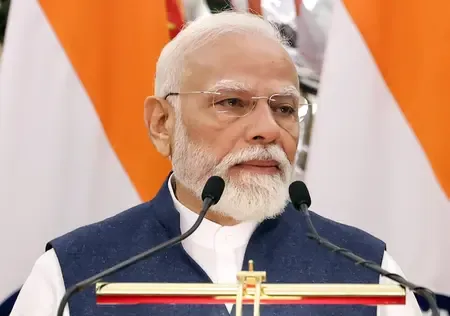
A Sanskrit shloka honouring the divine feminine echoed across Prime Minister Narendra Modi's X timeline in the early hours of Friday, 16 October 2026 — a devotional offering steeped in classical Shakta literature addressed to Goddess Ambika.
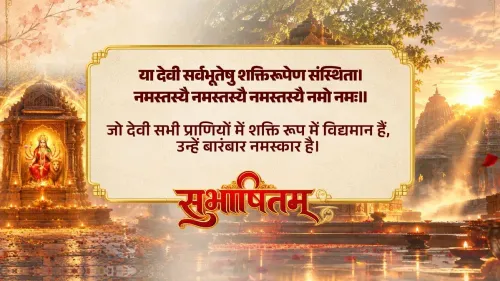
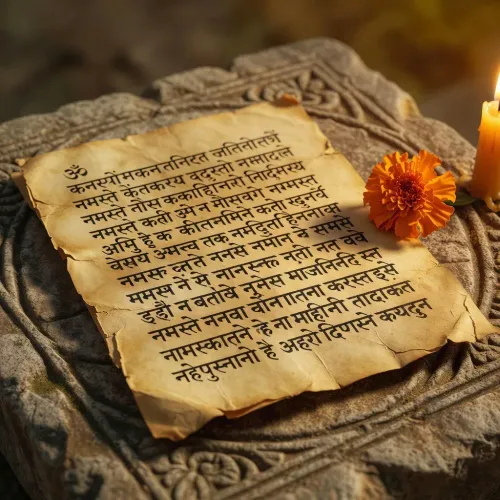
The verse, rendered in classical Sanskrit, translates broadly as: 'तव च का किल न स्तुतिरम्बिके' — 'What praise of you, O Ambika, is there that has not been sung? Your entire form is made of all words. In every form I behold your lineage, in the outward-flowing thoughts of the mind born of love.'
Ambika — the goddess at the heart of the verse
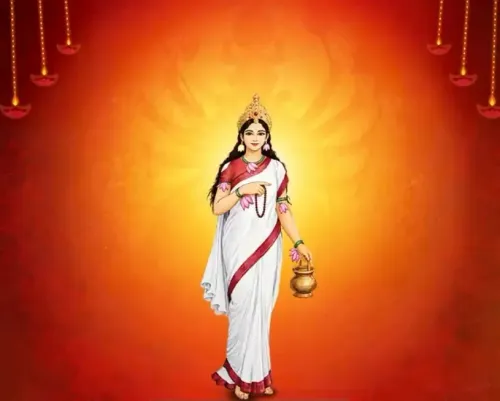
Ambika is a revered epithet of the goddess Durga and Parvati, central to Shakta devotional tradition and among the most celebrated figures in Sanskrit stotra literature. The verse praises her as the very substance of all language — sakaḷashabdamayī, 'one whose body is composed of all words' — a philosophical idea rooted in the concept of Vāk, the cosmic sacred speech that pervades existence.
The imagery places the divine not in a distant heaven but in every perceivable form and in every movement of the conscious mind — a characteristically non-dualist Shakta philosophical register.
Modi's pattern of Sanskrit devotional expression
Prime Minister Modi has periodically shared Sanskrit verses and devotional content around major Hindu festivals. These posts draw from a deep classical corpus and reflect a consistent strand of his public cultural and spiritual identity. The post's release in the early morning hours aligns with the traditional time of brahma muhurta, considered auspicious for prayer and recitation.
While the precise source text or the specific festival occasion for this verse has not been independently confirmed, the devotional register — and the choice of Ambika as its subject — places it firmly within the Navaratri or post-Navaratri cultural moment that defines mid-October on the Hindu calendar.
In a media environment saturated with political noise, a Prime Minister pausing to let a two-thousand-year-old language do the talking is its own kind of statement — one that millions of followers receive not as policy, but as shared reverence.
Point of View
Signalling cultural continuity to a base that prizes classical heritage. The choice of Ambika, goddess of speech and power, is not incidental: it reinforces a Shakta-inclusive identity alongside his more commonly noted Vaishnava associations. Over time, these posts have built a cumulative image of a leader at ease in the classical tradition, which functions as soft cultural capital even when no explicit policy message is attached. The practice also quietly normalises Sanskrit in mainstream public discourse, a long-standing cultural aspiration of the broader Sangh ecosystem.
NationPress
16 Oct 2026
Frequently Asked Questions
What Sanskrit verse did PM Modi post on 16 October 2026?
PM Modi posted a classical Sanskrit shloka praising Goddess Ambika, describing her as the form of all words and present in every form and every movement of the mind.
Who is Ambika in Hinduism?
Ambika is a revered name for the goddess Durga or Parvati, central to Shakta devotional tradition and widely celebrated in Sanskrit stotra literature as the embodiment of divine feminine power.
Why does PM Modi post Sanskrit verses on X?
PM Modi has an established practice of posting Sanskrit devotional content, particularly around major Hindu festivals, as part of his public expression of India's classical cultural heritage.
What does 'sakaḷashabdamayī' mean in the verse?
'Sakaḷashabdamayī' translates as 'one whose entire body or form is composed of all words' — a philosophical concept from Shakta tradition linking the goddess to cosmic sacred speech, or Vāk.
When did PM Modi post this Sanskrit shloka?
The post was made in the early morning hours of Friday, 16 October 2026 , aligning with the auspicious brahma muhurta period traditionally associated with prayer and scripture recitation.