PM Modi Speaks With Iran President on West Asia Peace

Synopsis
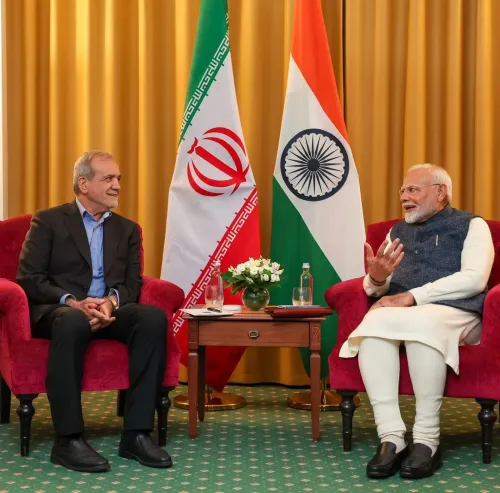
Prime Minister Narendra Modi spoke with Iranian President Dr. Masoud Pezeshkian on June 30, 2026, welcoming progress in West Asia negotiations, expressing hope for lasting peace, and reiterating India's commitment to freedom of navigation in the region.
Key Takeaways
Prime Minister Narendra Modi held a phone call with Iranian President Dr.
Masoud Pezeshkian on June 30, 2026 .
PM Modi welcomed progress in ongoing diplomatic negotiations related to West Asia .
He expressed hope that continued efforts would lead to lasting peace in the region.
Freedom of navigation — critical to India's energy imports and trade — was reiterated as a key Indian priority.
The call underscores India 's policy of strategic engagement with all major stakeholders in West Asia .
India 's economic interests, including Chabahar Port connectivity and crude oil supply, are directly tied to regional stability.
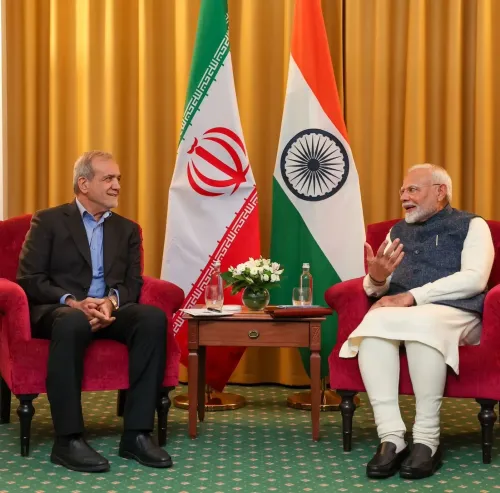
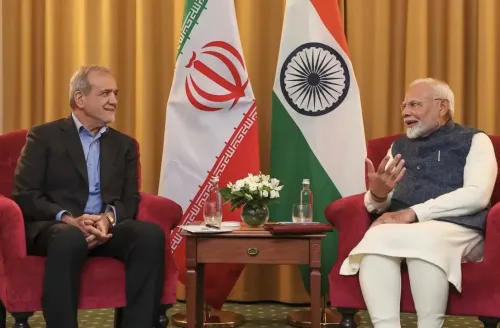
Prime Minister Narendra Modi spoke with Iranian President Dr. Masoud Pezeshkian on Tuesday, June 30, 2026, discussing the latest developments in West Asia and expressing hope that ongoing diplomatic negotiations would lead to lasting peace in the region.
Context
The phone call comes amid heightened diplomatic activity across West Asia, a region that has seen sustained turbulence in recent years. Prime Minister Modi welcomed the progress made in ongoing negotiations, signalling India's support for a peaceful resolution to regional tensions. He also reiterated the importance of freedom of navigation — a principle of direct economic consequence to India, which depends heavily on the Persian Gulf and surrounding sea lanes for energy imports and trade.
Policy Backdrop
India has historically maintained a policy of strategic autonomy in West Asia, cultivating ties with Iran, Israel, Saudi Arabia, and the Gulf Cooperation Council states simultaneously. New Delhi's relationship with Tehran is rooted in energy cooperation, the Chabahar Port development agreement, and connectivity to Central Asia and Afghanistan. Freedom of navigation through the Strait of Hormuz is a longstanding Indian priority, as disruptions directly affect oil supply and shipping costs for Indian businesses and consumers.
India is among the world's largest importers of crude oil, with a significant share sourced from West Asian producers. Any prolonged conflict or blockade in the region carries serious implications for India's energy security and inflation outlook.
Stakeholders and Impact
The call reflects India's active diplomatic engagement as a responsible stakeholder in regional stability. For Iran, engagement with a major non-Western democracy like India provides diplomatic bandwidth at a time when Tehran faces pressure from multiple directions. Indian businesses operating in the region, the Indian diaspora across Gulf nations, and domestic consumers sensitive to fuel prices all have a stake in the outcome of peace negotiations in West Asia.
The emphasis on freedom of navigation also resonates with India's broader maritime security posture, which it has articulated in multilateral forums including the United Nations and the Indian Ocean Rim Association.
What's Next
Prime Minister Modi's call is likely to be followed by continued diplomatic engagement through both bilateral and multilateral channels. India is expected to support confidence-building measures that keep sea lanes open and trade flowing, while avoiding direct entanglement in the conflict. If negotiations in West Asia advance, India could play a facilitating role given its unique position as a nation trusted by multiple parties in the region.
Point of View
New Delhi is protecting its own economic interests while framing its stance in universally acceptable terms. This fits a broader pattern in India's foreign policy under Modi — active engagement on multiple fronts, avoiding binary choices, and leveraging relationships with rival powers to amplify strategic influence.
NationPress
30 Jun 2026
Frequently Asked Questions
Why did PM Modi call Iranian President Pezeshkian?
PM Modi called Iranian President Dr. Masoud Pezeshkian to discuss recent developments in West Asia , welcome progress in peace negotiations, and stress the importance of freedom of navigation in the region.
What is India's position on the West Asia conflict?
India supports a peaceful resolution to tensions in West Asia through dialogue and negotiations. New Delhi maintains ties with multiple regional powers and advocates for freedom of navigation as a matter of economic and strategic priority.
Why is freedom of navigation important for India in West Asia?
Freedom of navigation through sea lanes such as the Strait of Hormuz is vital for India because a large share of its crude oil imports and trade passes through these waters. Any disruption directly affects India 's energy security and consumer prices.
What is India's relationship with Iran?
India and Iran share longstanding ties rooted in energy trade, the Chabahar Port development project, and connectivity to Central Asia . New Delhi has maintained engagement with Tehran even during periods of international pressure on Iran .
Who is Iranian President Dr. Masoud Pezeshkian?
Dr. Masoud Pezeshkian is the President of Iran , a cardiac surgeon by training who assumed the presidency following the 2024 Iranian presidential election . He is considered a reformist figure within Iran 's political landscape.