Pradhan Hails India-UK CETA, Flags Skilling Imperative

Synopsis
Union Education Minister Dharmendra Pradhan on 15 July 2026 hailed the India–UK CETA, highlighting near-total zero-duty access for Indian exports and greater professional mobility, while calling on universities and skilling institutions to prepare young Indians for the opportunities the landmark pact creates.
Key Takeaways
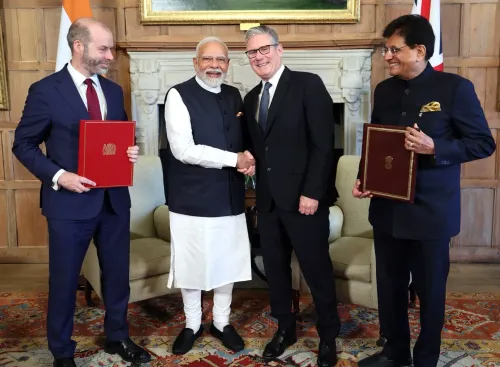
Union Education Minister Dharmendra Pradhan welcomed the India–UK CETA on 15 July 2026 , framing it as a milestone under PM Narendra Modi's leadership.
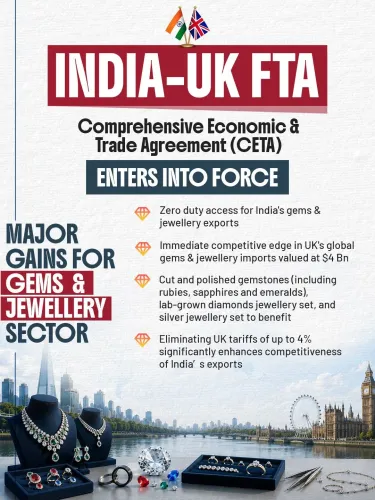
The agreement is stated to provide zero-duty access for nearly 99% of India's exports to the United Kingdom .
Key beneficiaries identified include farmers, MSMEs, manufacturers and the services sector , along with Indian professionals seeking greater mobility.
Pradhan directly called on Indian universities and skilling institutions to align with the demands the pact creates, underscoring an education–trade policy link.
The deal is positioned as a concrete step toward the Viksit Bharat 2047 vision of making India a developed economy by its centenary of independence.
India–UK trade negotiations were formally launched in January 2022 under the Roadmap 2030 framework, making CETA the culmination of over four years of talks.
Union Education Minister Dharmendra Pradhan on Wednesday, 15 July 2026 welcomed the India–UK Comprehensive Economic and Trade Agreement (CETA), calling it a new chapter in bilateral economic ties and stressing that Indian universities and skilling institutions must now rise to the challenge of preparing youth for the opportunities the pact unlocks.
Context
Posting on X, Pradhan said the agreement — struck under the leadership of Prime Minister Narendra Modi — would deliver 'zero-duty access for nearly 99% of India's exports to the UK,' benefiting farmers, MSMEs, manufacturers and the services sector. He also highlighted greater mobility for Indian professionals as a key feature, describing it as a step that 'will further strengthen employment and growth across sectors.' The minister concluded by linking the deal to the long-term national vision of #ViksitBharat2047, writing that 'the strength of a nation lies not only in what it produces but also in the capabilities of its people.'
Policy Backdrop
Formal negotiations for an India–UK Free Trade Agreement were launched in January 2022, following the Roadmap 2030 bilateral framework agreed in 2021. The deal — now branded as CETA — is part of India's broader push since 2021 to diversify export markets through bilateral agreements, a strategy that has already produced pacts with the UAE and Australia. The professional-mobility provisions build on India's established strengths in IT, healthcare and education services, sectors where Indian talent commands strong global demand.
On the domestic side, the National Education Policy 2020 had already introduced provisions for internationalisation of higher education and vocational skilling. The Skill India Mission, launched in 2015, set out to train over 400 million people for domestic and global employment. Pradhan's statement explicitly connects these domestic policy pillars to the external trade architecture that CETA now adds.
Stakeholders and Impact
Indian farmers and MSMEs stand to gain from preferential tariff access to the United Kingdom, one of the world's largest consumer markets. For the services sector, the professional-mobility chapter is expected to ease movement of skilled workers — a long-standing Indian demand in trade negotiations with developed economies. Higher education institutions and universities are directly called out by the minister as having 'an even greater responsibility' to align curricula and skilling modules to the competencies the UK market will demand.
The explicit linkage of a trade agreement to the education and skilling mandate is notable coming from the Ministry of Education, signalling an integrated approach where external liberalisation and internal capability-building are treated as two sides of the same policy coin.
What's Next
Attention will now turn to the parliamentary ratification process for CETA in both countries, as well as potential fresh memoranda of understanding between Indian universities and UK institutions. The Ministry of Education and the Ministry of Skill Development and Entrepreneurship are expected to roll out targeted skilling modules aligned to sectors where UK demand for Indian professionals is highest. If the professional-mobility commitments translate into measurable visa and work-permit pathways, CETA could mark a significant shift in how India's human-capital strengths are monetised through trade diplomacy — and place fresh pressure on institutions to deliver job-ready graduates at scale.
Point of View
But as a signal that the Ministry of Education intends to position itself as an active stakeholder in India's trade diplomacy — a departure from the traditional separation between commerce and education portfolios. By invoking Viksit Bharat 2047, the minister anchors CETA within the ruling dispensation's overarching development narrative, making the agreement politically legible to a domestic audience beyond the trade community. The emphasis on professional mobility also reflects India's consistent negotiating priority in services-heavy FTAs, suggesting New Delhi views CETA's human-capital provisions as potentially its most durable dividend. Whether institutions can actually recalibrate fast enough to meet UK-market skill demands will be the real test of this integrated rhetoric.
NationPress
15 Jul 2026
Frequently Asked Questions
What is the India-UK CETA and what does it mean for India?
The India–UK Comprehensive Economic and Trade Agreement (CETA) is a bilateral trade pact that is stated to offer zero-duty access for nearly 99% of India's exports to the United Kingdom, along with greater mobility for Indian professionals. It is expected to benefit Indian farmers, MSMEs, manufacturers and the services sector.
Why did Education Minister Dharmendra Pradhan comment on the India-UK trade deal?
Pradhan commented because the agreement includes provisions for professional mobility that directly affect India's skilled workforce. As Education Minister, he used the occasion to call on Indian universities and skilling institutions to prepare young Indians for the new global opportunities CETA creates.
What is Viksit Bharat 2047 and how does CETA relate to it?
Viksit Bharat 2047 is India's long-term national vision to achieve developed-economy status by the centenary of its independence in 2047. Pradhan described CETA as 'another step towards building that strength,' linking the trade agreement to the broader goal of human-capital and economic development.
When did India-UK FTA negotiations begin?
Formal negotiations for an India–UK Free Trade Agreement were launched in January 2022, following the Roadmap 2030 bilateral framework agreed between the two countries in 2021. CETA represents the outcome of those multi-year talks.
How does the India-UK CETA affect Indian students and professionals?
The agreement includes a professional-mobility chapter expected to ease the movement of skilled Indian workers to the United Kingdom. Education Minister Pradhan has called on universities and skilling institutions to align curricula to the competencies UK sectors will demand, potentially expanding career pathways for Indian graduates.