India's PRAHAAR doctrine: Pre-emptive strikes bust terror plots before attacks
Synopsis
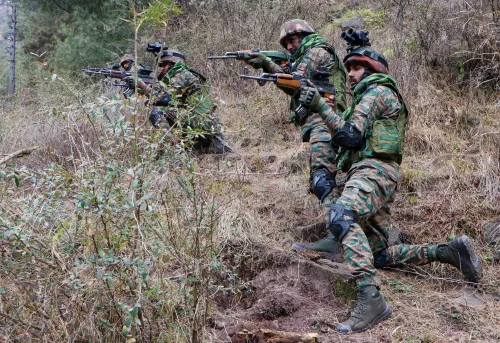
India has formalised a doctrinal shift in counter-terrorism with PRAHAAR, a pre-emptive strategy launched in February 2026 that directs agencies to bust terror modules before attacks occur. From neutralising ISI-linked networks in Kashmir to dismantling IS-inspired radicalisation cells across eight states, the doctrine marks the most institutionalised security pivot of the Modi era — and its durability against adaptive, digital-first threats remains the key test.
Key Takeaways
India's PRAHAAR counter-terrorism doctrine, introduced in February 2026 , mandates a pre-emptive rather than reactive approach to terror threats.
Security agencies in Jammu and Kashmir have neutralised multiple ISI -linked modules and suppressed the overground worker (OGW) network.
Radicalisation modules have reportedly been active across eight states : Maharashtra, Andhra Pradesh, Telangana, Bihar, Delhi, Rajasthan, West Bengal, and Kerala.
A pan-India Islamic State -linked radicalisation module based in Andhra Pradesh was dismantled under the new framework.
A Jaish-e-Mohammad -affiliated cell in Gujarat was busted after large quantities of extremist material were recovered.
Attempts by HuJI and JMB to target West Bengal and northeastern states from Bangladesh have been thwarted.
India's counter-terrorism apparatus has undergone a fundamental strategic overhaul, shifting from a reactive posture to a pre-emptive, intelligence-led doctrine focused on dismantling terror modules before they can execute attacks, according to senior security officials. The pivot, formalised under a national counter-terrorism strategy named PRAHAAR (Policy for Response Against Hostile Activities and Radicalism), was introduced in February 2026 and is already showing operational results, officials said.
What PRAHAAR Changes
The new doctrine issues a clear directive to intelligence and security agencies: do not wait for an incident to unfold before acting. 'The focus is on preventing terror attacks and ensuring that terror modules do not grow to such an extent that bringing them under control becomes a Herculean task,' a senior security official said. Crucially, PRAHAAR has also ensured seamless coordination between central intelligence agencies, state police forces, and field operatives — a structural integration that officials say was missing under the earlier reactive model.
Jammu and Kashmir: The ISI Front
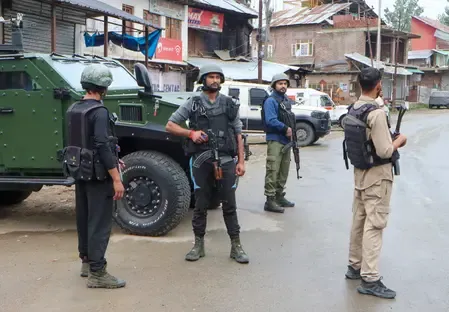
Officials point to Jammu and Kashmir as the most immediate theatre where the new doctrine is being tested. According to an Intelligence Bureau (IB) official, Pakistan's Inter-Services Intelligence (ISI) has been in what was described as 'overdrive mode', attempting to activate its overground worker (OGW) network and push infiltrations into the Valley. However, the success rate for these operations has been markedly low. 'Security agencies in Jammu and Kashmir have neutralised terrorists, busted multiple modules and ensured that the overground worker network remains grounded,' the IB official said, adding that plotting and carrying out attacks is now considerably harder than the ISI may have anticipated.
Pan-India Radicalisation: The Bigger Challenge
Beyond Kashmir, officials identify radicalisation as a threat of equal or greater long-term concern, and one that has spread across multiple states. Modules have reportedly been active in Maharashtra, Andhra Pradesh, Telangana, Bihar, Delhi, Rajasthan, West Bengal, and Kerala. The Islamic State, officials said, has focused predominantly on radicalisation rather than direct violence, and has reportedly made significant inroads into youth networks. The busting of a pan-India radicalisation module centred in Andhra Pradesh is cited as a key example of early intervention under the new framework — a network that officials say was 'nipped in the bud in the nick of time.'
Gujarat and the Bangladesh Threat Vector
In Gujarat, a self-styled module linked to ideological affiliates of Jaish-e-Mohammad was dismantled after agencies found large caches of extremist material. Officials described the cell as a 'ticking time bomb' that was neutralised before it could escalate. Meanwhile, at India's eastern frontier, multiple attempts by Harkat-ul-Jihadi Islami (HuJI) and Jamaat-ul Mujahideen Bangladesh (JMB) to target West Bengal and the northeastern states have reportedly been thwarted. 'If intelligence is actionable, the agencies move immediately to disrupt the module and prevent it from developing further,' officials said, describing the stance as non-negotiable.
What Comes Next
The Narendra Modi government has maintained a stated zero-tolerance policy on terrorism since taking office, and PRAHAAR represents the most institutionalised expression of that stance to date. Security officials indicate that the doctrine will continue to evolve, with inter-agency integration remaining the cornerstone. Whether the pre-emptive model can keep pace with adaptive threat networks — particularly those exploiting digital channels for radicalisation — will be the defining test of PRAHAAR's durability.
Point of View
But the proof will lie in what stays unreported — the attacks that never happened. Pre-emptive counter-terrorism is inherently unverifiable by design, which creates a structural accountability gap: success is defined by absence of events, making independent scrutiny difficult. The spread of radicalisation across eight geographically diverse states also signals that the threat is no longer tethered to a single ideology or region, and that a Kashmir-centric security lens is no longer sufficient. The doctrine's emphasis on inter-agency integration addresses a long-standing structural failure, but digital radicalisation — the Islamic State's primary tool today — demands capabilities well beyond traditional intelligence fusion.
NationPress
19 Sept 2026
Frequently Asked Questions
What is India's PRAHAAR counter-terrorism doctrine?
PRAHAAR stands for Policy for Response Against Hostile Activities and Radicalism, a national counter-terrorism strategy introduced in February 2026. It mandates that security agencies adopt a pre-emptive, intelligence-driven approach — identifying and dismantling terror modules before attacks can be executed, rather than responding after the fact.
How is PRAHAAR being applied in Jammu and Kashmir?
Security agencies in Jammu and Kashmir have used the doctrine to neutralise ISI-linked terror modules, suppress the overground worker (OGW) network, and disrupt infiltration attempts. Officials say the ISI's efforts in the Valley have seen very low success rates as a direct result of this pre-emptive posture.
Which states are affected by radicalisation modules in India?
According to senior officials, radicalisation networks have been reported across Maharashtra, Andhra Pradesh, Telangana, Bihar, Delhi, Rajasthan, West Bengal, and Kerala. The Islamic State has been particularly active in radicalising youth across these regions, focusing on ideological infiltration rather than direct violence.
What terror threats from Bangladesh have been thwarted?
Security agencies have reportedly foiled multiple attempts by Harkat-ul-Jihadi Islami (HuJI) and Jamaat-ul Mujahideen Bangladesh (JMB) to target West Bengal and India's northeastern states. Officials attribute these successes to the PRAHAAR doctrine's emphasis on acting on actionable intelligence immediately.
What does the shift from reactive to pre-emptive counter-terrorism mean in practice?
Under the pre-emptive model, agencies do not wait for a terror incident to occur before mobilising. When intelligence is deemed actionable, agencies immediately move to disrupt the module. PRAHAAR has also formalised coordination between central intelligence agencies, state police, and field units to enable faster and more integrated responses.