Pralhad Joshi Addresses 7th AgriVoltaics World Conference 2026
Synopsis
Union Minister Pralhad Joshi addressed the 7th AgriVoltaics World Conference 2026 on 21 October, representing India's push to integrate solar power with agriculture through schemes like PM-KUSUM as the country races toward its 500 GW non-fossil energy target by 2030.
Key Takeaways
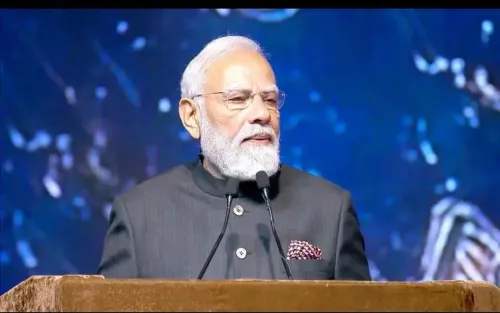
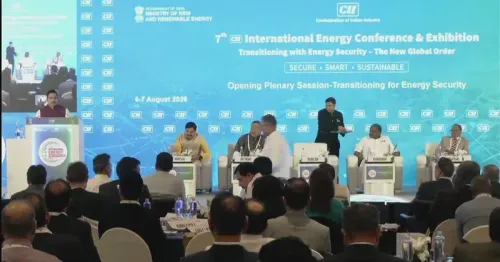
Pralhad Joshi , Union Minister of New and Renewable Energy, spoke live at the 7th AgriVoltaics World Conference 2026 on 21 October 2026 .
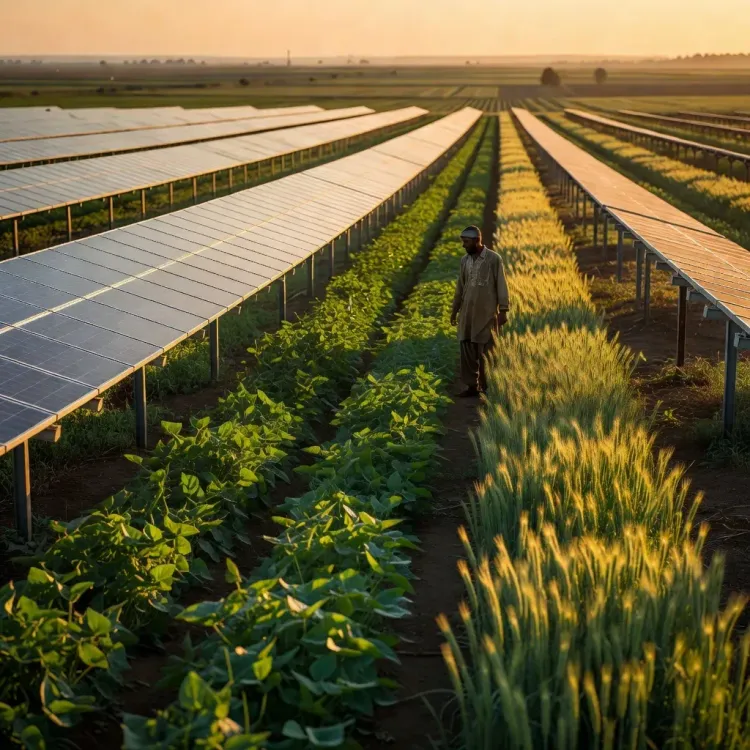
Agri-voltaics involves co-locating solar PV arrays with active agricultural land , enabling dual use of the same plot.
India's PM-KUSUM scheme (notified 2019 ) already deploys solar plants on farmland, making India a significant reference case globally.
The National Solar Mission (launched 2010 ) laid the policy foundation for India's scaled solar deployment.
India targets 500 GW of non-fossil energy capacity by 2030 , with land-use conflicts making agri-voltaics strategically important.
Post-conference follow-up on pilot projects or state-level agri-voltaics guidelines will be the key indicator of actionable outcomes.
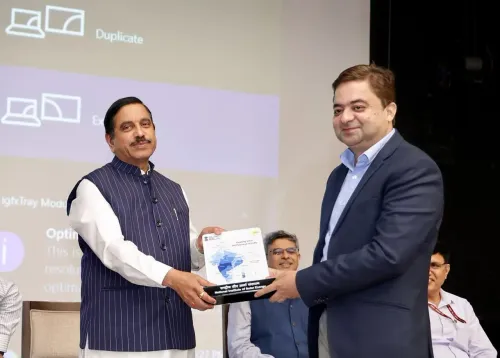
Where a solar panel meets a wheat field, India's energy future and food security converge — and on Wednesday, 21 October 2026, Union Minister of New and Renewable Energy Pralhad Joshi took that intersection to a global stage, addressing the 7th AgriVoltaics World Conference 2026 live.
A global forum for farming under solar panels
The AgriVoltaics World Conference is an international series dedicated to the science and policy of co-locating solar photovoltaic arrays with active agricultural land — a discipline that allows the same plot of ground to generate electricity and grow crops simultaneously. The 7th edition brings together researchers, policymakers, and solar developers from across the world to advance both the technology and the regulatory frameworks around it.
For India, the stakes are unusually high. The country faces a structural tension between its ambition to deploy 500 GW of non-fossil energy capacity by 2030 and the finite availability of land in a densely populated agricultural nation. Agri-voltaics is, in theory, a clean answer to that tension.
PM-KUSUM and the farmland solar push
India's engagement with agri-voltaics is not new. The National Solar Mission, launched in 2010, set the country on a path of scaled solar deployment. The PM-KUSUM scheme, notified in 2019, sharpened that focus to farmland — funding solar pumps and decentralised solar plants on agricultural plots, putting farmers at the centre of the renewable transition rather than at its margins.
The Ministry of New and Renewable Energy, which Joshi heads alongside the Consumer Affairs portfolio, oversees both schemes. His presence at an international agri-voltaics conference signals that India sees this dual-use technology not as a niche experiment but as a scalable pillar of its solar strategy.
Why dual land-use matters now
Land-use conflict is among the sharpest bottlenecks in India's renewable buildout. Large solar parks require vast tracts, often pitting energy developers against farming communities. Agri-voltaic designs — where panels are elevated or spaced to permit crop growth below — can defuse that conflict, offering farmers a supplementary income stream while keeping agricultural output intact.
With global attention now focused on food-energy nexus solutions, India's PM-KUSUM experience positions it as a reference case for other developing economies navigating the same trade-off.
Whether the 7th AgriVoltaics World Conference produces fresh pilot commitments or state-level guidelines for India will be the concrete test of the momentum Joshi's address helped generate.
Point of View
Elevating agri-voltaics to ministerial-level diplomacy signals that the government sees dual land-use as a structural, not incremental, fix. The timing also underscores a broader BJP electoral calculus — keeping farmers economically engaged in the renewable transition rather than alienated by it. The real test will come in whether the conference produces binding follow-on commitments at the state level, where land allocation decisions ultimately reside.
NationPress
21 Oct 2026
Frequently Asked Questions
What is the AgriVoltaics World Conference?
The AgriVoltaics World Conference is an international series focused on co-locating solar photovoltaic panels with active agricultural land, allowing a single plot to generate electricity and grow crops simultaneously. The 7th edition took place in 2026.
What is India's PM-KUSUM scheme?
PM-KUSUM, notified in 2019, is a central government scheme that funds solar pumps and decentralised solar plants on farmland, placing farmers at the centre of India's renewable energy expansion.
What is India's renewable energy target for 2030?
India aims to install 500 GW of non-fossil energy capacity by 2030, a target that makes agri-voltaics — which allows solar deployment without taking farmland out of production — strategically important.
Why is Pralhad Joshi relevant to solar and agriculture policy?
Pralhad Joshi holds the Union portfolios of both New and Renewable Energy and Consumer Affairs, Food and Public Distribution, making him the Cabinet-level point of intersection between India's solar ambitions and its farm economy.
How does agri-voltaics help resolve India's land conflict in solar deployment?
Large solar parks often compete with farming communities for land. Agri-voltaic designs — where panels are elevated or spaced to permit crop growth below — allow both uses on the same plot, offering farmers additional income while preserving agricultural output.