Pralhad Joshi Hails India's Near-Complete Naxal-Free Milestone
Synopsis
Union Minister Pralhad Joshi on 25 June 2026 highlighted India's near-complete elimination of Left-Wing Extremism, citing a drop in LWE-affected districts from 126 in 2014 to just 2 in 2026, attributing the outcome to PM Modi's integrated security-and-development strategy.
Key Takeaways
Union Minister Pralhad Joshi posted on 25 June 2026 marking what he called a historic milestone in India's fight against Left-Wing Extremism.
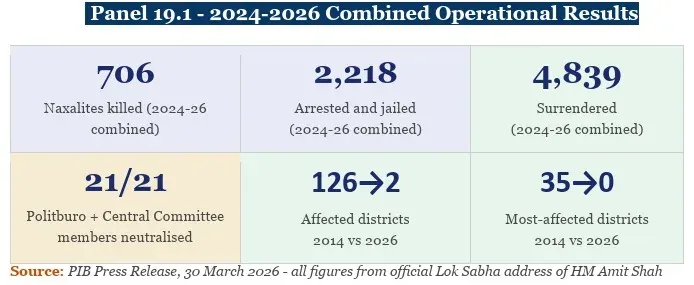
LWE-affected districts fell from 126 in 2014 to 2 in 2026 , according to the minister's post.
The number of 'most-affected' districts dropped from 35 to zero over the same period.
The SAMADHAN doctrine (2017) and a combined security-plus-development approach have underpinned the government's LWE strategy since 2014.
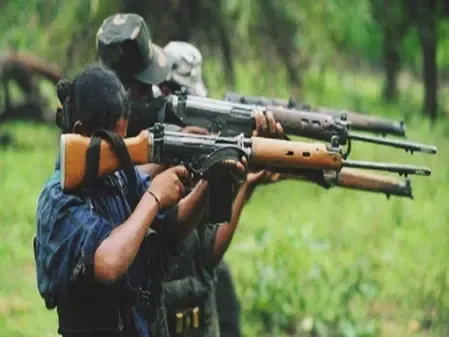
Tribal communities across the former Red Corridor — spanning Chhattisgarh, Jharkhand, Odisha and Maharashtra — are the primary civilian beneficiaries of reduced insurgent activity.
The Ministry of Home Affairs annual district classification will be the next formal verification point for these figures.
Union Consumer Affairs Minister Pralhad Joshi on Thursday, 25 June 2026 hailed what he described as a historic milestone in India's internal security landscape, citing a dramatic reduction in Left-Wing Extremism (LWE)-affected districts — from 126 districts in 2014 to just 2 in 2026 — and crediting the achievement to the sustained policy framework of the Narendra Modi government.
Context
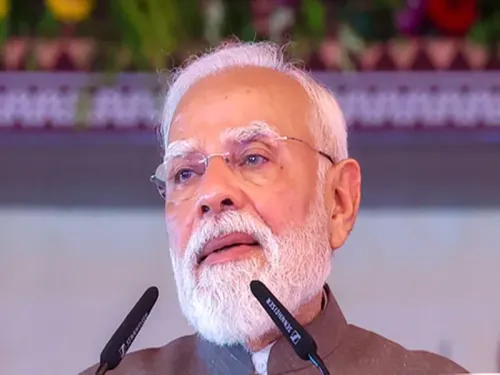
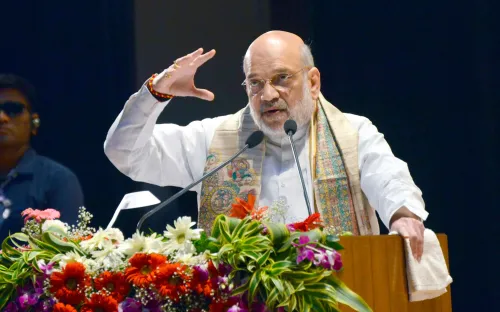
Joshi's post, shared on 25 June 2026, states that the number of 'most-affected' LWE districts has fallen from 35 to zero over the same period. 'From 126 affected districts in 2014 to just 2 in 2026, and from 35 most-affected districts to zero, New India is moving forward with confidence and resolve,' he wrote, tagging Prime Minister Narendra Modi and Union Home Minister Amit Shah. The post was accompanied by an image and carried the hashtags #NaxalFreeIndia and #ViksitBharat.
The Ministry of Home Affairs (MHA) is the nodal authority for classifying LWE-affected districts and coordinating both security operations and development funding in those areas. Annual district-level reviews by the MHA have, over successive years, shown a contraction in the geographic footprint of Maoist violence.
Policy Backdrop
The Modi government, since taking office in 2014, adopted an integrated counter-insurgency strategy that pairs kinetic security operations with infrastructure investment — roads, mobile connectivity towers, schools, and financial inclusion drives — in what the government describes as a 'whole-of-government' approach. The SAMADHAN doctrine, formally articulated by the Home Ministry in 2017, codified short- and long-term measures against Naxalism under a single strategic umbrella.
The approach mirrors a broader internal-security template the government has applied across multiple theatres, including the Northeast and Jammu and Kashmir, where the pairing of security pressure with accelerated welfare delivery has been the stated policy rationale. The LWE campaign has been a consistent priority for Home Minister Amit Shah, who has chaired multiple high-level review meetings on the subject.
Stakeholders and Impact
Tribal communities across central and eastern India — historically concentrated in what was termed the 'Red Corridor' spanning parts of Chhattisgarh, Jharkhand, Odisha, Maharashtra and neighbouring states — stand as the primary civilian stakeholders in this shift. For decades, Maoist violence disrupted access to government programmes, schooling, healthcare and economic opportunity in these regions.
Central Armed Police Forces (CAPFs), deployed extensively in LWE zones, have borne the operational burden of security operations. A reduction in the number of affected districts, if sustained, would allow redeployment of these forces and a shift of administrative focus toward rehabilitation and development consolidation in formerly insurgency-hit areas.
What's Next
The next formal benchmark will be the MHA's annual statement on LWE district classification, which will either confirm or revise the figures cited by the minister. Parliamentary discussions on rehabilitation packages and development spending for districts exiting the LWE list are also expected to gain prominence as the government moves to consolidate gains.
If the 2-district figure is formally ratified in the MHA's classification cycle, it would mark a near-complete geographic elimination of the LWE footprint that spanned over a hundred districts just over a decade ago — a development with significant implications for internal security planning and for the delivery of welfare schemes to some of India's most marginalised communities.
Point of View
The post reinforces a dual-credit political architecture that has become standard in ruling-party messaging on security wins. The shift from 126 to 2 affected districts, if borne out by MHA's formal classification, would represent a genuinely significant governance outcome that transcends partisan framing — decades of insurgency caused real human cost in tribal India. The harder policy question now moves to rehabilitation: whether development infrastructure and welfare delivery can be consolidated in formerly affected districts before any residual extremist networks attempt to re-entrench.
NationPress
25 Jun 2026
Frequently Asked Questions
How many districts in India are still affected by Naxalism in 2026?
According to a post by Union Minister Pralhad Joshi on 25 June 2026, only 2 districts remain classified as LWE-affected in 2026, down from 126 in 2014. The Ministry of Home Affairs annual classification will formally confirm this figure.
What is the SAMADHAN doctrine for Naxal areas?
The SAMADHAN doctrine is a counter-LWE strategy formally articulated by the Union Home Ministry in 2017. It outlines short- and long-term measures combining security operations with infrastructure and welfare delivery in Naxal-affected regions.
Which states were most affected by Naxalism in India?
The so-called Red Corridor historically spanned central and eastern Indian states including Chhattisgarh, Jharkhand, Odisha, and Maharashtra, where Maoist groups disrupted governance and civilian life for decades.
What has the Modi government done to reduce Naxal violence?
Since 2014 the government has pursued an integrated approach pairing security operations by Central Armed Police Forces with road connectivity, mobile towers, schools, and financial inclusion in LWE districts — a model formalised under the SAMADHAN doctrine in 2017.
What does Naxal-Free India mean for tribal communities?
A reduction in LWE-affected districts means tribal communities in formerly insurgency-hit areas gain improved access to government welfare schemes, healthcare, schooling, and economic opportunity that were disrupted by decades of Maoist violence.