Pralhad Joshi: No Developed India Without Mining, Power, Chips
Synopsis
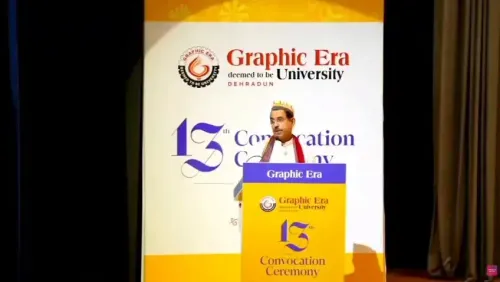
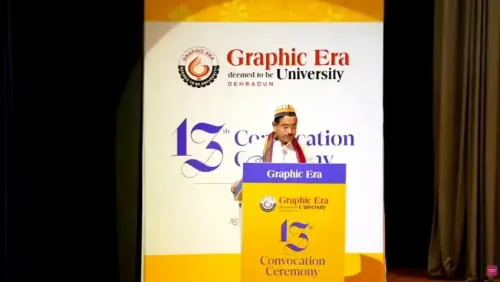
Union Minister Pralhad Joshi on June 23, 2026 challenged what he called a fundamental contradiction: demanding modern technology and round-the-clock power while opposing the mines, data centres and semiconductor plants that make them possible. His remarks signal the government's intent to push infrastructure projects forward under India's Viksit Bharat vision.
Key Takeaways
Pralhad Joshi posted on June 23, 2026 arguing that opposition to power, mining and semiconductor projects contradicts demands for modern technology.
He specifically cited 24x7 electricity , EVs , AI , data centres and semiconductor manufacturing as areas where consistency is needed.
The India Semiconductor Mission (launched 2021 ) and Production Linked Incentive scheme underpin India's chip self-reliance push.
Approved semiconductor fabs are being set up in Gujarat , Assam and Uttar Pradesh .
India targets developed-nation status by 2047 under the Viksit Bharat framework, requiring large-scale energy and manufacturing investment.
Environmental groups, tech manufacturers and power consumers are the key stakeholders in this ongoing policy tension.
Union Consumer Affairs and New and Renewable Energy Minister Pralhad Joshi on Tuesday, June 23, 2026, issued a pointed defence of India's infrastructure and technology ambitions, arguing that demands for modern conveniences cannot coexist with blanket opposition to the projects that make them possible.
Context
In a post on X, Joshi drew a direct line between public expectations and project resistance: 'You cannot demand 24x7 electricity while opposing power generation projects. You cannot seek leadership in EVs, AI and advanced technologies while resisting mining, data centres and semiconductor manufacturing.' The statement, while not naming a specific protest or policy dispute, reflects a pattern of friction that has accompanied large-scale energy, mining and electronics investments across multiple Indian states.
The minister framed the tension as a contradiction that must be resolved in favour of forward momentum. 'A developed India will be built through innovation, infrastructure and a commitment to progress, not by opposing every step forward,' he wrote.
Policy Backdrop
India's push for technology self-reliance has accelerated through flagship programmes including the India Semiconductor Mission, launched in 2021, which seeks to attract chip fabrication units and build a domestic semiconductor ecosystem. The Production Linked Incentive scheme for semiconductors, notified the same year, is designed to draw global manufacturers to facilities being set up in Gujarat, Assam and Uttar Pradesh.
The National Policy on Electronics 2019 had earlier set targets for electronics manufacturing and semiconductor packaging within India. Parallel to these, the government's Make in India and Atmanirbhar Bharat initiatives have sought to reduce import dependence across sectors from defence to consumer electronics. Each of these ambitions carries significant requirements for reliable electricity, raw material extraction, and large-scale data infrastructure.
Stakeholders and Impact
The minister's remarks touch on a recurring fault line between industrial expansion and community or environmental concerns. Projects involving coal and hydro power, lithium and rare-earth mining, and proposed hyperscale data-centre clusters have each faced resistance over land acquisition, environmental clearances and ecological risk — even as the same constituencies that raise objections benefit from the outputs those projects generate.
Technology manufacturers, power consumers and environmental groups sit at the centre of this debate. For EV producers and AI infrastructure developers, dependable electricity and a domestic supply of critical minerals are not optional — they are foundational. Joshi's intervention signals that the government intends to press ahead with approvals and investments rather than yield to what it characterises as contradictory opposition.
What's Next
Attention will turn to the rollout timeline for approved semiconductor fabrication plants and any fresh guidelines the government issues for allocating grid power to hyperscale data centres. With India targeting developed-nation status by 2047 under the Viksit Bharat vision, the pace at which critical infrastructure clears regulatory and social hurdles will be a key indicator of whether that ambition stays on track. Joshi's post suggests the political leadership is prepared to make the case publicly — and forcefully — for consistency between what citizens demand and what they are willing to permit.
Point of View
The BJP is attempting to shift the burden of proof onto critics of large-scale projects. The timing — as semiconductor fabs and data-centre clusters approach construction phases — suggests the government is laying rhetorical groundwork for overriding objections. It is a posture consistent with the broader Viksit Bharat communication strategy: casting industrial ambition as a national duty rather than a partisan choice.
NationPress
23 Jun 2026
Frequently Asked Questions
What did Pralhad Joshi say about EVs and mining?
Joshi argued on June 23, 2026 that India cannot aspire to EV and AI leadership while simultaneously resisting the mining, data centres and semiconductor manufacturing those industries depend on.
What is the India Semiconductor Mission?
The India Semiconductor Mission is a central government programme launched in 2021 to attract chip fabrication units and build a domestic semiconductor ecosystem, backed by a Production Linked Incentive scheme for manufacturers.
Where are India's semiconductor fabs being built?
Approved semiconductor fabrication plants are being set up in Gujarat, Assam and Uttar Pradesh as part of India's push for chip self-reliance.
What is Viksit Bharat and when is the target year?
Viksit Bharat is India's vision to achieve developed-nation status by 2047, requiring large-scale investment in energy, manufacturing, technology infrastructure and innovation.
Why is there opposition to mining and data centres in India?
Resistance typically centres on land acquisition disputes, environmental clearances and ecological risks — concerns that have accompanied coal, hydro, lithium and rare-earth projects as well as proposed hyperscale data-centre clusters across multiple states.