Pralhad Joshi: PM-KUSUM Turning Rajasthan Farmers Into Energy Producers
Synopsis
Union Minister Pralhad Joshi has spotlighted PM-KUSUM's role in Rajasthan, saying the central solar scheme is making farmers energy producers, generating rural income and turning barren land into sustainable assets under PM Modi's Viksit Bharat vision.
Key Takeaways
PM-KUSUM , launched in 2019 , provides central financial assistance for solar pumps and grid-connected solar plants for farmers.
Union Minister Pralhad Joshi highlighted the scheme's progress in Rajasthan on 13 July 2026 , citing farmer income gains and barren land utilisation.
The scheme allows farmers to sell surplus solar power to state distribution companies, creating a secondary income stream.
Beneficiaries include farmers, rural women and youth , linking the programme to broader rural livelihood goals.
PM-KUSUM is part of India's target to achieve 500 GW of non-fossil fuel capacity by 2030 .
The minister framed the scheme within the Viksit Bharat vision for a developed India by 2047 .
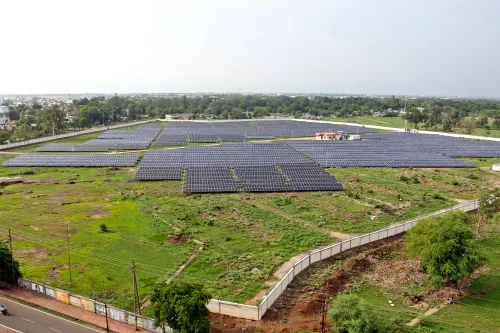
Union Minister for New and Renewable Energy Pralhad Joshi on Monday, 13 July 2026, highlighted the PM-KUSUM scheme's impact in Rajasthan, saying the programme is converting farmers into energy producers and turning barren land into a source of sustainable income.
Context
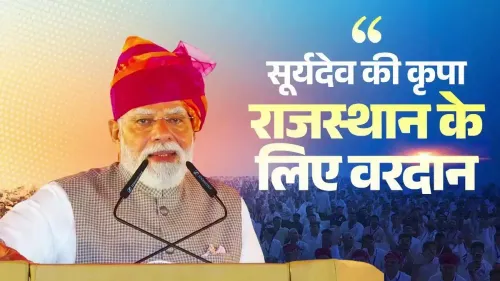
Sharing a video on social media, Joshi said 'PM-KUSUM is transforming Rajasthan into a powerhouse of clean energy and rural prosperity.' He added that farmers are 'no longer just feeding the nation' but are now generating renewable power and 'significantly increasing their incomes.' The post credited the progress to the 'visionary leadership' of Prime Minister Narendra Modi.
Policy Backdrop
The Pradhan Mantri Kisan Urja Suraksha evam Utthaan Mahabhiyan (PM-KUSUM) was launched in 2019 with central financial assistance to install solar pumps, standalone solar power plants and grid-connected renewable systems across rural India. The scheme targets three components: solarisation of individual pumps, feeder-level solarisation, and installation of decentralised solar plants on barren or cultivable land.
Rajasthan, with its vast arid stretches and high solar irradiance, has been among the early adopters of central solar programmes. The state's geography makes it particularly suited to the scheme's provision for converting unproductive land into grid-connected solar generation assets, allowing farmers to sell surplus electricity to state distribution companies.
PM-KUSUM sits within India's broader push toward 500 GW of non-fossil fuel capacity by 2030 under the National Solar Mission. By replacing diesel-powered irrigation pumps with solar alternatives, the scheme simultaneously reduces input costs for farmers and cuts carbon emissions from the agriculture sector.
Stakeholders and Impact
The minister specifically named farmers, women and youth as beneficiaries, framing the scheme as a rural livelihood intervention beyond its energy mandate. Under the model, a farmer who installs a solar plant on barren land earns lease income or direct revenue from power sales, providing a secondary income stream independent of crop cycles or monsoon variability.
The emphasis on women and youth signals the government's intent to position distributed solar as an entry point into the rural green economy — linking PM-KUSUM to parallel programmes on skill development and rural entrepreneurship under the Atmanirbhar Bharat framework. Joshi's post also invoked the Viksit Bharat vision — the government's roadmap for a developed India by 2047 — framing every solar panel installed as 'a step towards a greener, stronger and more prosperous' nation.
What's Next
Attention will now turn to the next phase of PM-KUSUM's implementation targets and budget allocations, particularly as parliamentary discussions on renewable energy policy approach. Rajasthan is expected to remain a focus state given its solar potential, and any expansion of the scheme's financial outlay or beneficiary targets in the forthcoming Union Budget will be closely watched by state governments and the farming community alike. The minister's public communication underscores the Centre's intent to keep agricultural solar energy at the centre of its clean-energy narrative ahead of policy reviews.
Point of View
The minister is weaving PM-KUSUM into the ruling party's development-and-self-reliance arc rather than presenting it as routine administrative progress. The specific mention of women and youth alongside farmers suggests an effort to broaden the scheme's political constituency beyond the traditional agrarian vote bank. As India's renewable energy targets for 2030 come under closer scrutiny, ministerial amplification of agri-solar programmes signals that the Centre intends to keep the farm-energy nexus at the forefront of its policy messaging.
NationPress
13 Jul 2026
Frequently Asked Questions
What is PM-KUSUM and how does it benefit farmers?
PM-KUSUM (Pradhan Mantri Kisan Urja Suraksha evam Utthaan Mahabhiyan) is a central government scheme launched in 2019 that provides financial assistance to farmers for installing solar pumps and grid-connected solar plants, allowing them to reduce irrigation costs and earn income by selling surplus power to state electricity boards.
How is Rajasthan using PM-KUSUM for solar energy?
Rajasthan's large arid and barren land areas make it well-suited for PM-KUSUM's provision to install decentralised solar plants, converting unproductive land into grid-connected generation assets and giving farmers an additional income stream from power sales.
What did Pralhad Joshi say about PM-KUSUM in July 2026?
Union Minister Pralhad Joshi said on 13 July 2026 that PM-KUSUM is transforming Rajasthan into a 'powerhouse of clean energy and rural prosperity,' with farmers becoming energy producers and barren land being turned into a source of sustainable growth.
What is Viksit Bharat and how does it relate to solar energy?
Viksit Bharat is the Indian government's vision for a developed India by 2047. The government frequently links clean energy schemes like PM-KUSUM to this vision, framing rural solar adoption as a step toward energy self-reliance and national prosperity.
What is India's renewable energy target for 2030?
India has set a target of achieving 500 GW of non-fossil fuel-based electricity capacity by 2030, with PM-KUSUM forming the agriculture-linked component of this push by replacing diesel pumps and enabling farmer-level solar generation.