How Did President Murmu Lead the Commemoration of the 1971 War Victory?
Synopsis
On December 15, President Droupadi Murmu commemorated the 1971 War victory at the Indian Army's Vijay Diwas 'At Home' event. The celebration highlighted advanced homegrown technologies that signify India's growing defense capabilities and self-reliance.
Key Takeaways
Significant Commemoration: The event marked the 1971 War victory.
Showcase of Technology: Featured advanced indigenous technologies.
Focus on Self-Reliance: Emphasized India's commitment to defense innovation.
Global Engagement: Highlighted India's growing defense collaboration.
AI Advancements: Demonstrated the application of AI in military and civilian sectors.
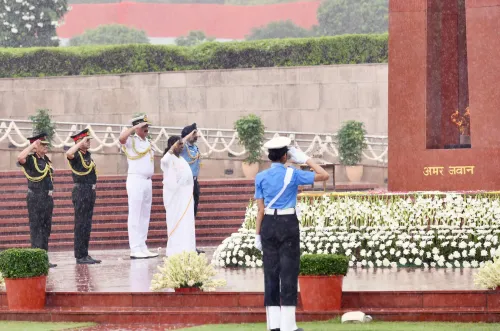
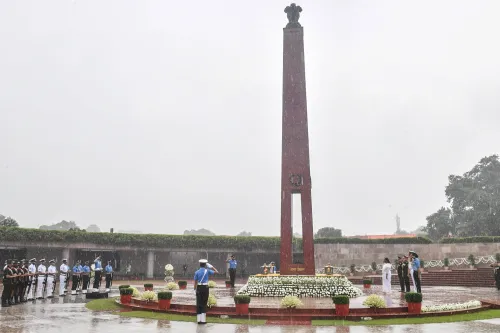
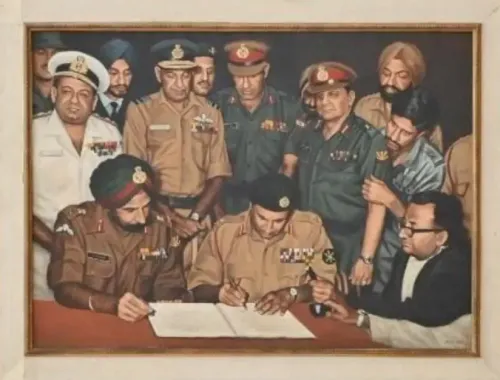
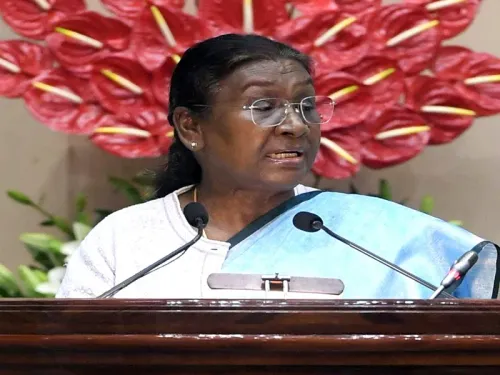
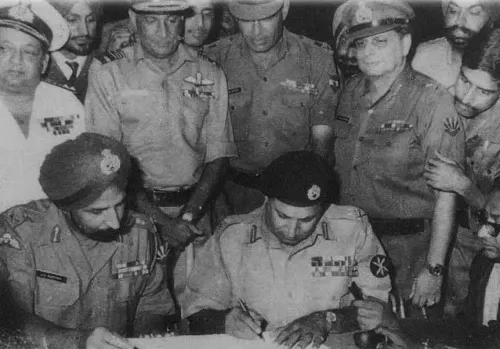
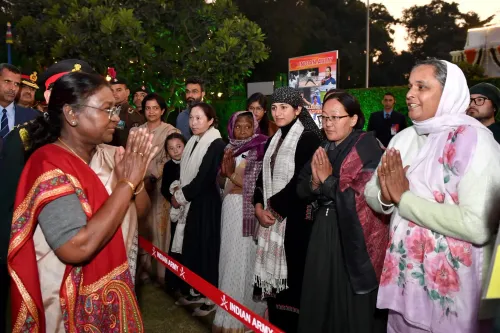
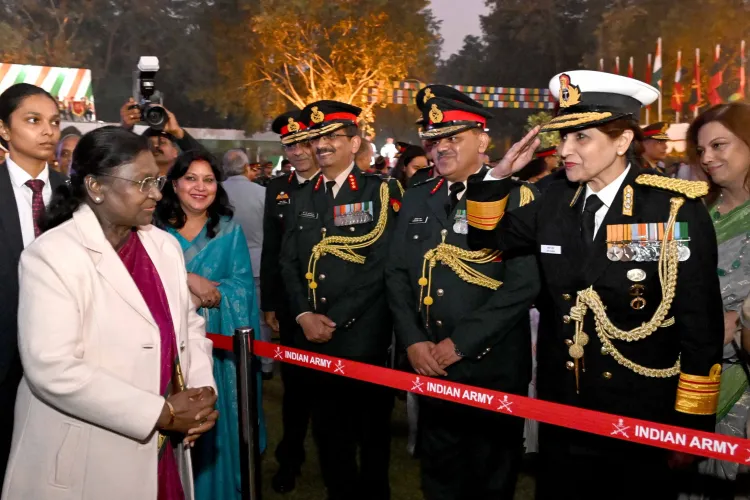
New Delhi, Dec 15 (NationPress) President Droupadi Murmu spearheaded the commemorative events for the triumphant outcome of the 1971 War at the Indian Army's Vijay Diwas 'At Home' gathering held at Army House, as reported by an official source.
The festivities included an exhibition of indigenously developed technologies and specialized capabilities, showcasing the Indian Army's ongoing evolution into a cutting-edge, innovative, and self-sufficient force, according to a statement from the Ministry of Defence.
During the Vijay Diwas celebrations, the Indian Army highlighted a plethora of homegrown technologies and innovations, reaffirming its transformation into a contemporary, self-sufficient, and future-ready entity.
The exhibits illustrated the collaborative efforts of Indian soldiers, engineers, startups, and academic institutions in creating solutions that bolster national security while also providing significant advantages for disaster response, infrastructure enhancements, and sustainability, as mentioned in the statement.
The presence of numerous guests, including 73 Ambassadors and High Commissioners, alongside Gallantry Award recipients, sports personalities, and distinguished individuals from various sectors, emphasized India’s growing global defense outreach and increasing international trust in the nation's indigenous military technologies.
A standout feature of the display was an AI-based satellite imagery analysis system that rapidly and accurately interprets satellite images.
Rather than depending on manual image analysis, this system employs artificial intelligence to detect changes, monitor developments, and highlight key observations.
“Created with the collaboration of Indian startups and academic institutions, this technology enhances planning, monitoring, and decision-making capabilities. While improving the Army’s situational awareness and readiness, it can also assist civilian agencies in areas such as disaster surveillance, land management, agricultural assessment, and infrastructure development,” the statement elaborated.
This initiative illustrates how advanced defense technologies can directly contribute to national growth.
The Indian Army also unveiled a compact, portable AI system designed to operate in areas devoid of internet or network access.
This 'AI-in-a-Box' allows users to analyze data, plan activities, and receive decision support autonomously. Engineered for challenging conditions, this system guarantees technology availability even in remote environments, as noted in the statement.
Developed in partnership with Indian research institutions and industry, it underscores the adaptability of artificial intelligence to Indian contexts, moving away from reliance on imported solutions.
The same technology can also aid disaster relief teams and emergency planners working in isolated areas.
The Indian Army further showcased Ekam AI, a fully indigenous and secured artificial intelligence platform designed for sensitive environments. This platform empowers users to analyze information, manage documents, and facilitate decision-making without relying on foreign software or external cloud services.
The Army also demonstrated an indigenous drone analysis system aimed at examining recovered drones and extracting valuable insights. This tool enhances understanding of drone utilization and strengthens preparedness against emerging threats.
Point of View
The commemoration led by President Droupadi Murmu emphasizes the importance of recognizing our military achievements while showcasing our commitment to self-reliance in defense technology. This event is a testament to India's growing capabilities and its strategic focus on innovation and collaboration across sectors.
NationPress
21 Sept 2026
Frequently Asked Questions
What was the purpose of the Vijay Diwas event?
The Vijay Diwas event commemorates the decisive victory of India in the 1971 War, celebrating the valor of the armed forces and showcasing advancements in defense technology.
What technologies were showcased at the event?
The event highlighted various indigenous technologies, including an AI-based satellite imagery analysis system and a portable AI system designed for use in remote areas.
How does the AI technology support civilian applications?
The AI technologies developed for military purposes can also assist civilian agencies in disaster management, land management, agriculture assessment, and infrastructure planning.
Who attended the Vijay Diwas celebrations?
The celebrations were attended by 73 Ambassadors and High Commissioners, Gallantry Award winners, sports personalities, and other distinguished guests, reflecting India's expanding global defense engagement.