Punjab Police Hits Day 595 of Yudh Nashian Virudh Drive
Synopsis
Punjab Police marked 595 consecutive days of the Yudh Nashian Virudh anti-drug campaign on October 18, 2026, seizing 2.2 kg heroin, 225 kg poppy husk and more, pushing cumulative arrests to 86,091 while referring 23 persons to rehabilitation.
Key Takeaways
Day 595 of Yudh Nashian Virudh completed on October 18, 2026 .
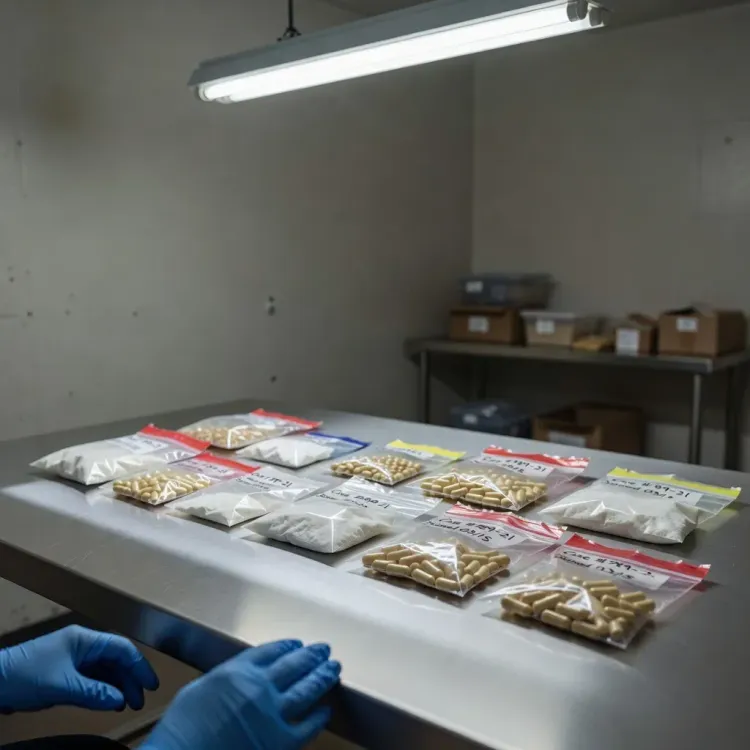
Single-day seizures included 2.2 kg heroin , 7.2 kg opium , 225 kg poppy husk , and 6,622 intoxicant pills .
Cumulative drug smuggler arrests since campaign launch reached 86,091 .
23 persons were convinced to enter de-addiction and rehabilitation treatment on day 595.
The campaign was launched by Bhagwant Mann's AAP government shortly after taking office in March 2022 .
The drive combines daily enforcement reporting with rehabilitation referrals, targeting both supply and demand sides of the drug crisis.
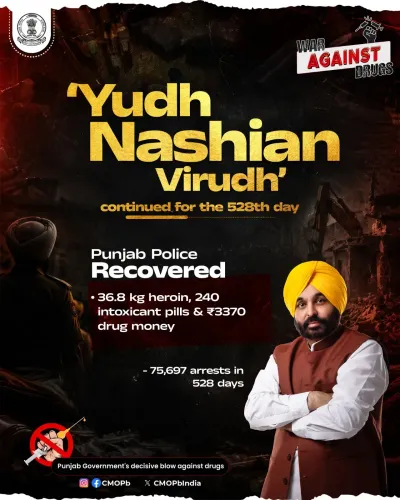
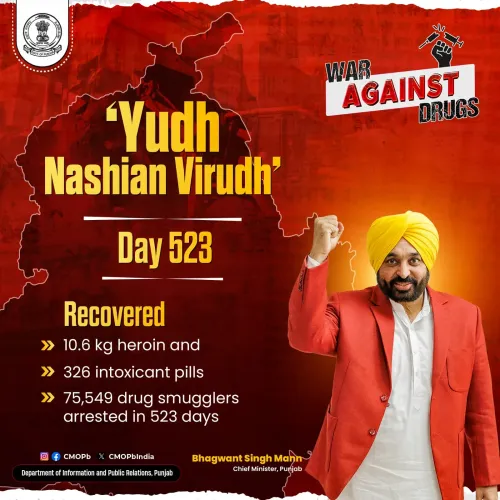
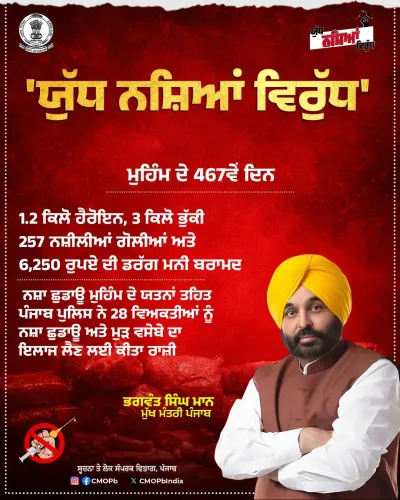
Nearly a year and a half of daily enforcement — and Punjab Police is not letting up. On Sunday, October 18, 2026, the Chief Minister's Office of Punjab announced that the state's signature anti-drug campaign, Yudh Nashian Virudh, has entered its 595th consecutive day — with fresh arrests, significant recoveries, and two dozen more citizens steered toward rehabilitation.
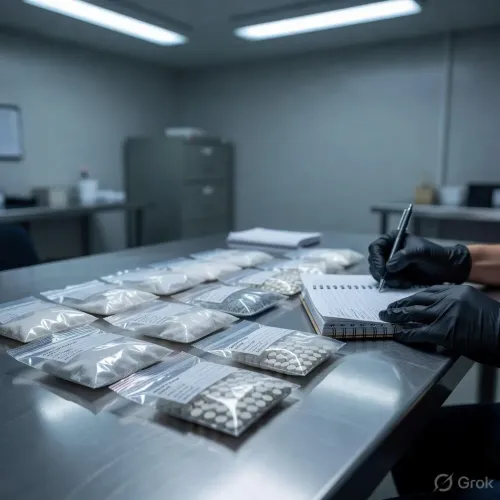
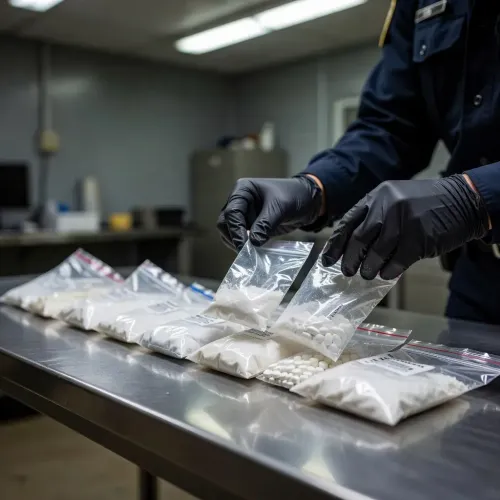
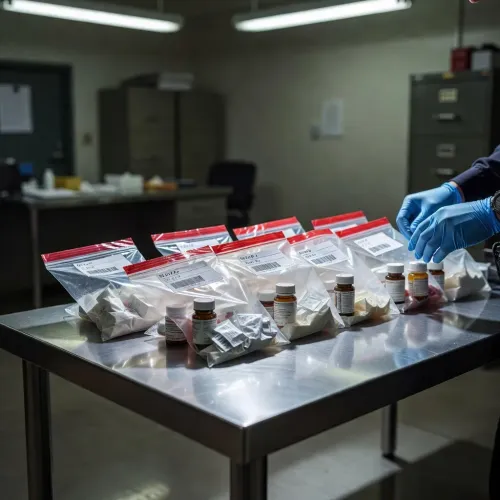
In a single day's haul, Punjab Police arrested multiple drug smugglers and seized 2.2 kg of heroin, 7.2 kg of opium, 225 kg of poppy husk, 6,622 intoxicant pills, and ₹2,000 in drug money. The numbers are precise, granular, and deliberate — a daily drumbeat designed to signal that the pressure is constant.
86,091 Arrested in 595 Days — The Weight of That Number
The cumulative arrest figure now stands at 86,091 drug smugglers since the campaign began. To put that in perspective: that is more than the population of many Indian district towns, detained over less than two years on drug-related charges in a single state. The sheer scale of the operation reflects the depth of Punjab's drug supply problem — rooted in well-documented cross-border trafficking networks that have fed the state's addiction crisis for decades.
Bhagwant Mann's Aam Aadmi Party government launched Yudh Nashian Virudh — literally, 'War Against Drugs' — shortly after coming to power in March 2022. Successive Punjab governments had run periodic crackdowns before, but the AAP administration chose a different framing: continuous, publicised, daily reporting, turning each day's seizure into a visible accountability metric.
Beyond Arrests: 23 More Convinced to Seek Help
Enforcement alone has never solved a drug crisis anywhere. On day 595, Punjab Police also reported convincing 23 persons to voluntarily undergo de-addiction and rehabilitation treatment — a quieter number, but arguably the more consequential one.
The de-addiction component of the drive targets the demand side of the equation. Every person steered into treatment is one fewer potential customer, one family spared a deeper spiral. The campaign tracks these referrals daily alongside arrest figures, embedding rehabilitation into what might otherwise be a purely punitive operation.
Punjab's Long War With Its Borders
Punjab's geography makes it uniquely vulnerable. Sharing a border with Pakistan, the state sits on transit routes for opiates — heroin in particular — that flow from Afghanistan through Pakistan into India. Law enforcement analysts have long noted that supply-side crackdowns without parallel border management and demand-reduction measures tend to produce temporary dips rather than structural change. The Yudh Nashian Virudh drive's dual focus — arresting smugglers while pushing addicts toward treatment — reflects an awareness of this dynamic, even if the structural border challenge remains largely outside state government control.
At 595 days, the campaign has outlasted most political attention spans. Whether the daily cadence of arrests and recoveries translates into measurable reduction in drug availability on Punjab's streets is the question the next phase of data will need to answer.
Point of View
Using cumulative arrest tallies as proof of institutional will. With 86,091 arrests in under two years, the scale of the operation is undeniable, but it also surfaces an uncomfortable question: if smuggling networks are this vast, enforcement alone cannot close the tap. The parallel de-addiction referral count — tracked daily alongside seizures — suggests the government understands this, but the state lacks sovereign control over the cross-border supply routes that underpin Punjab's heroin market. The campaign's true test will come when independent data on street-level drug availability, overdose rates and rehabilitation outcomes is placed alongside the arrest numbers.
NationPress
18 Oct 2026
Frequently Asked Questions
What is Yudh Nashian Virudh?
Yudh Nashian Virudh, meaning 'War Against Drugs,' is an anti-drug enforcement and de-addiction campaign launched by the Bhagwant Mann-led AAP government in Punjab shortly after it took office in March 2022. It involves daily police operations targeting drug smugglers alongside efforts to refer addicts to rehabilitation.
How many drug smugglers have been arrested in Punjab's anti-drug drive?
As of day 595 of the Yudh Nashian Virudh campaign on October 18, 2026, the total number of drug smugglers arrested has reached 86,091.
What drugs were seized by Punjab Police on day 595?
On the 595th day of the drive, Punjab Police recovered 2.2 kg of heroin, 7.2 kg of opium, 225 kg of poppy husk, 6,622 intoxicant pills, and ₹2,000 in drug money.
What is Punjab Police doing for drug de-addiction?
As part of the campaign's de-addiction component, Punjab Police officers convince drug users to voluntarily seek treatment. On day 595 alone, 23 persons were persuaded to undergo de-addiction and rehabilitation.
Why is Punjab particularly affected by drug trafficking?
Punjab shares a border with Pakistan and sits on trafficking routes used to move opiates — including heroin — from Afghanistan through Pakistan into India, making it especially vulnerable to cross-border drug supply networks.