Punjab Launches Direct PSEB Textbook Supply to 10 Lakh Private School Students
Synopsis
Punjab's PSEB will bypass bookshop middlemen to directly supply textbooks to over 10 lakh private school students from Class I–XII. A 15% discount previously reserved for booksellers will now reach families directly. A new e-commerce portal with individual student login IDs will digitise the entire process — a first-of-its-kind reform in Punjab's private school ecosystem.
Key Takeaways
PSEB will directly supply textbooks to over 10 lakh students in affiliated private schools from Class I to XII starting the 2025-26 academic session .
A 15% discount previously reserved for authorised booksellers will now be passed directly to students, reducing the financial burden on families.
Education Minister Harjot Singh Bains announced that schools can only facilitate distribution and cannot generate any revenue from the process.
PSEB has launched a dedicated e-commerce portal and mobile application , with individual student login credentials for direct parental ordering.
PSEB Chairman Amarpal Singh confirmed integration of a secure online payment gateway to ensure transparent, overcharge-free transactions.
Schools must submit a formal undertaking confirming compliance with the no-extra-charge policy, ensuring accountability at the institutional level.
The Punjab government has rolled out a landmark reform in school textbook distribution, directing the Punjab School Education Board (PSEB) to supply books directly to every student from Class I to Class XII enrolled in PSEB-affiliated private schools — effective from the 2025-26 academic session. The move, announced on Thursday, April 23, is set to benefit over 10 lakh private school students across the state, eliminating the long-standing role of authorised agencies and bookshops as intermediaries.
End of the Middleman Era in Punjab's Textbook Supply Chain
For years, private school textbook distribution in Punjab operated through a network of authorised dealers and bookshops, a system widely criticised for price inflation, delayed availability, and lack of transparency. Parents frequently complained of being charged well above the printed price, with little recourse available.
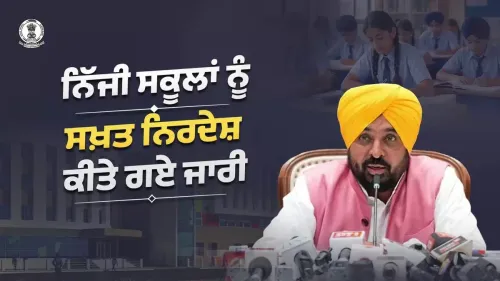
Education Minister Harjot Singh Bains confirmed that the reform is specifically designed to dismantle this ecosystem. Schools will now act only as distribution facilitators — they cannot generate any revenue from the process. No amount beyond the discounted printed bill price will be charged, and schools will be required to submit a formal undertaking confirming compliance with this directive.
"Schools will strictly ensure that no amount beyond the discounted printed bill price is charged. They will only facilitate distribution without generating any revenue. This will benefit more than 10 lakh students of private schools," an official statement quoting Minister Bains said.
The 15% Discount Now Goes Directly to Students
One of the most financially significant aspects of this reform is the redirection of the 15 per cent discount that was previously extended exclusively to booksellers. Under the new framework, this discount will flow directly to students through schools — translating into real savings for millions of families.
This is particularly impactful for lower-income households in semi-urban and rural Punjab, where the cumulative cost of textbooks across multiple children can represent a significant portion of monthly earnings. By institutionalising the discount at the point of distribution, the government has effectively created a price-control mechanism that was absent before.
PSEB's New E-Commerce Portal and Digital Order System
Minister Bains elaborated that PSEB has developed a dedicated e-commerce portal to manage the entire supply chain digitally. Students and parents will be able to place textbook orders through a mobile application or the online portal. Schools will upload class-wise and subject-wise requirements on the platform.
"Each student will be provided with individual login credentials, enabling parents to place orders directly if required," Bains added. This digital framework is designed to create an auditable trail of every order, payment, and delivery — making overcharging or diversion of books significantly harder.
PSEB Chairman Amarpal Singh confirmed that the portal has been integrated with a secure online payment gateway to ensure transparent and efficient transactions. He stated the system has been specifically engineered to eliminate any scope for overcharging and to maintain complete transparency throughout the process.
Based on orders received, PSEB's regional offices will prepare subject-wise and class-wise textbook bundles for timely collection by schools and students, ensuring supply matches demand without surplus or shortage.
Broader Implications: Accountability, Access, and Education Reform
This reform arrives at a time when Punjab is aggressively positioning its education sector as a model for other states. The Aam Aadmi Party (AAP) government, which made education a flagship issue in Delhi before replicating efforts in Punjab, has been pushing systemic changes in both government and private school ecosystems.
Notably, private school textbook overcharging has been a recurring grievance in Punjab, with parent bodies and consumer forums filing complaints for over a decade. This policy directly addresses that structural failure by removing the financial incentive for intermediaries to mark up prices.
Critics and education policy analysts will likely watch implementation closely — particularly whether the digital portal is accessible to parents in low-connectivity rural areas and whether schools genuinely comply with the undertaking requirement or find workarounds. The success of this model could serve as a template for other states grappling with similar textbook supply chain issues.
With the 2025-26 academic session now underway, the Punjab government is expected to release further operational guidelines on portal registration, order deadlines, and grievance redressal mechanisms in the coming weeks.
Point of View
Which built its brand on education in Delhi, is now systematically dismantling the patronage networks embedded in Punjab's private school ecosystem, where authorised booksellers often had political backing. The 15% discount redirection is small in absolute terms but enormous symbolically — it tells parents the government is watching the last mile. The real test, however, will be digital access: if the e-commerce portal fails rural parents with poor internet connectivity, this reform risks becoming an urban privilege dressed as universal equity.
NationPress
21 Sept 2026
Frequently Asked Questions
What is Punjab's new PSEB textbook distribution policy for private schools?
The Punjab government has directed PSEB to directly supply textbooks to all Class I–XII students in PSEB-affiliated private schools from the 2025-26 academic session. This eliminates authorised booksellers as intermediaries and ensures the 15% discount reaches students instead of dealers.
How many students will benefit from Punjab's new textbook supply reform?
Over 10 lakh students enrolled in PSEB-affiliated private schools across Punjab will benefit from this reform. The policy covers all classes from Class I to Class XII.
How can parents order textbooks under the new PSEB portal system?
Parents can place textbook orders through a dedicated PSEB e-commerce portal or a mobile application. Each student will receive individual login credentials, allowing parents to order directly online.
Can private schools charge extra for textbooks under the new Punjab policy?
No. Schools are strictly prohibited from charging any amount beyond the discounted printed bill price. Schools must submit a formal undertaking confirming they will not levy additional charges.
What discount will students get on PSEB textbooks in private schools?
Students will receive a 15 per cent discount on textbooks — the same discount that was previously extended only to authorised booksellers. This discount will now be passed directly to students through schools.