Puri: Ethanol blending saved India ₹1.90 lakh cr in forex
Synopsis
Union Petroleum Minister Hardeep Singh Puri says India's Ethanol Blending Programme saved over ₹1.90 lakh crore in foreign exchange and delivered ₹1.60 lakh crore in additional farmer income, while challenging critics to justify their opposition to the scheme.
Key Takeaways
Without ethanol blending, India would have required an additional 310 lakh metric tonnes of crude oil imports, according to Puri .
The programme has saved more than ₹1.90 lakh crore in foreign exchange, the minister stated.
Sugarcane and other farmers earned over ₹1.60 lakh crore in additional income through the programme.
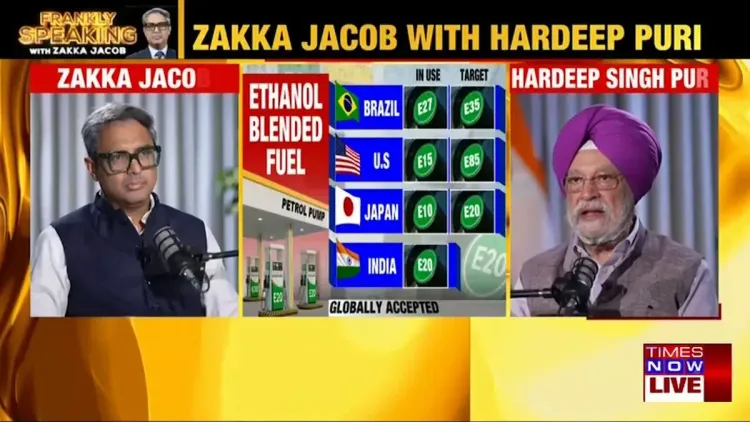
India's ethanol blending target of 20 per cent was advanced from 2030 to 2025-26 under the National Policy on Biofuels 2018 framework.
Puri framed ethanol blending as central to Atmanirbhar Bharat , India's energy security, and agricultural prosperity.
The minister publicly challenged opponents to explain their objections to farmer income growth and reduced import dependence.
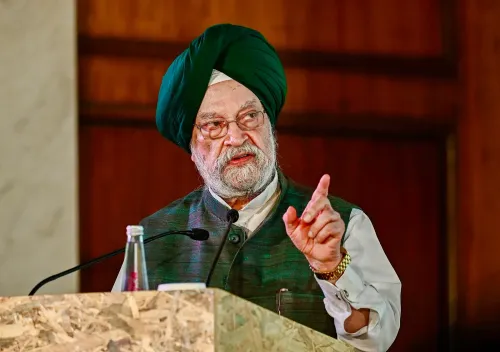
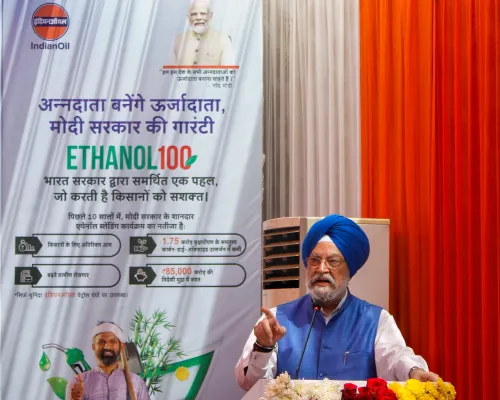
Union Petroleum Minister Hardeep Singh Puri on Friday, 10 July 2026, defended India's Ethanol Blending Programme in a sharp post on X, citing figures on foreign exchange savings and additional farmer income while challenging critics to explain their opposition to the scheme.
Context
In his post, Puri stated that without ethanol blending, India would have needed an additional 310 lakh metric tonnes of crude oil. He credited the programme with saving more than ₹1.90 lakh crore in foreign exchange and generating over ₹1.60 lakh crore in additional income for farmers. Translating from the original Hindi, he wrote: 'Ethanol kewal petrol mein milaya jane wala indhan nahin hai' — 'Ethanol is not merely a fuel blended into petrol; it is the shield of India's energy security, the means of farmers' prosperity, and the strong foundation of an Atmanirbhar Bharat.'
He concluded with a pointed question aimed at opponents: 'Those who are opposing this should explain what exactly is their problem with farmers' rising income, foreign exchange savings, and India's energy self-reliance?'
Policy Backdrop
India's Ethanol Blended Petrol programme was first launched on a pilot basis in 2003 across sugar-producing states with a modest 5 per cent blending target. The National Policy on Biofuels 2018 significantly broadened the programme's ambition, raising indicative blending targets and expanding eligible feedstocks beyond molasses to include grains, sugarcane juice, and damaged food produce.
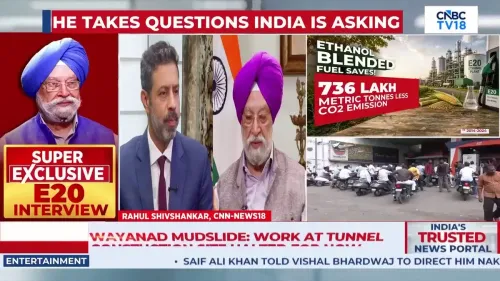
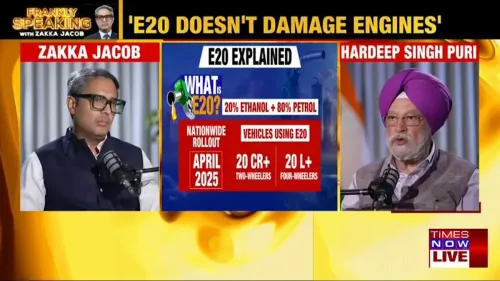
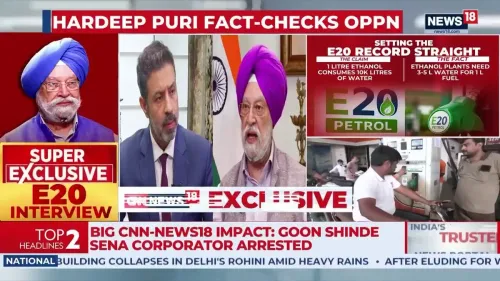
In 2021-22, the government advanced the target for 20 per cent ethanol blending from 2030 to 2025-26, directing oil marketing companies to ramp up procurement. The programme sits within the broader Atmanirbhar Bharat framework launched in 2020, which identifies domestic biofuel production as a pillar of energy security. Nationwide rollout and vehicle compatibility testing for E20 fuel — petrol containing 20 per cent ethanol — are among the key milestones being tracked.
Stakeholders and Impact
Sugarcane farmers are the primary beneficiaries on the agricultural side, as the programme provides an assured off-take channel for sugarcane by-products, chiefly molasses, at government-set procurement prices. Oil marketing companies are the principal buyers and blenders, operating under mandated targets set by the petroleum ministry.
On the import side, the reduction in crude oil demand directly eases pressure on India's current account, given that the country imports roughly 85 per cent of its crude oil requirements. Lower vehicular emissions are an additional environmental co-benefit cited by the government in linking the programme to India's climate commitments. Any revision to feedstock procurement prices or blending mandates in the next Union Budget or petroleum ministry review will be closely watched by both the agricultural and refining sectors.
What's Next
Puri's post arrives as the government tracks progress toward the advanced 2025-26 blending target, with E20-compatible vehicles and fuel infrastructure being rolled out across the country. The minister's public challenge to critics signals that the programme is likely to remain a political as well as a policy flashpoint in the months ahead.
Broader biofuel ambitions — including compressed biogas and biodiesel — are also being pursued under the same energy transition umbrella, suggesting the ethanol programme's logic may be extended further as India works to reduce its structural dependence on crude oil imports.
Point of View
Using programme metrics to put critics — implicitly opposition parties and industry sceptics — on the defensive by framing any opposition to ethanol blending as opposition to farmer welfare and national self-reliance. The dual framing of economic benefit (forex savings) and rural income gain is consistent with the BJP's strategy of linking energy policy to its agricultural base ahead of any electoral cycle. The minister's sharpness also signals that the government anticipates pushback — possibly from the food-versus-fuel debate or from concerns about E20 vehicle compatibility — and is pre-empting it with a data-led narrative. Broader biofuel targets and the advanced 2025-26 deadline make this a policy area where the government has staked significant credibility.
NationPress
10 Jul 2026
Frequently Asked Questions
What is India's Ethanol Blending Programme?
India's Ethanol Blending Programme mandates that oil marketing companies mix a set percentage of ethanol — derived mainly from sugarcane by-products and grains — into petrol to reduce crude oil imports and support farmer incomes. It was first piloted in 2003 and now targets 20 per cent blending by 2025-26.
How much foreign exchange has India saved through ethanol blending?
Union Petroleum Minister Hardeep Singh Puri stated on 10 July 2026 that the ethanol blending programme has saved more than ₹1.90 lakh crore in foreign exchange by reducing crude oil import volumes.
How have farmers benefited from ethanol blending in India?
According to Minister Puri, farmers — primarily sugarcane growers — have earned over ₹1.60 lakh crore in additional income through the programme, which provides an assured government-backed off-take channel for sugarcane by-products used to produce ethanol.
What is India's ethanol blending target and when will it be achieved?
India's target is 20 per cent ethanol blending in petrol, a goal that was advanced from 2030 to 2025-26 by the government in 2021-22 under the National Policy on Biofuels 2018 framework.
What is E20 fuel and is it safe for all vehicles?
E20 is petrol blended with 20 per cent ethanol. The government is conducting nationwide rollout alongside vehicle compatibility testing, as older engines may require modifications; newer vehicles are being manufactured to be E20-compatible.